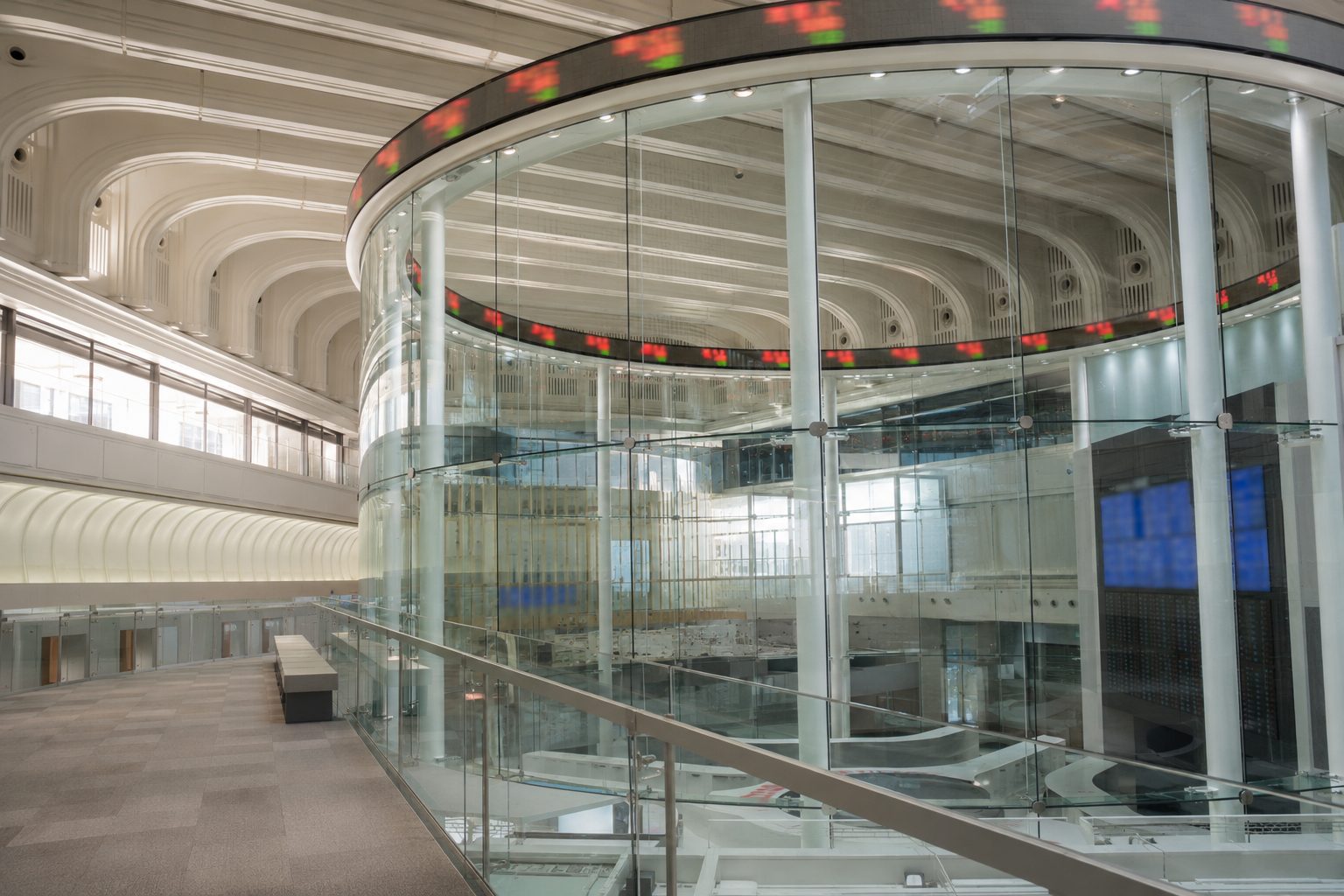

JPMorgan Chase & Co. stock (NYSE: JPM) is trading higher on Friday, December 19, 2025, as investors weigh a renewed wave of 2026 rate-cut expectations against a central near-term debate for the bank: how fast expenses rise versus how much revenue growth (and capital return) can offset it.
As of the latest trade update available this morning, JPM shares were around $316.65, up about 1.17% on the day, after opening near $313.79 and trading in a roughly $313–$317 range.
Below is a full roundup of the key JPM stock drivers, analyst forecasts, and the most important company and market developments shaping the story as of 19.12.2025.
JPM stock price action on December 19, 2025: a bounce after a choppy December
JPMorgan stock’s move today is notable because it follows a December stretch where shares have swung with conference commentary, rate expectations, and year-end positioning. Real-time data shows the stock opened lower than where it’s now trading and has steadily pushed toward the high end of the day’s range.
The big picture: JPM remains one of the most closely watched bellwethers for U.S. banking, so its day-to-day action often reflects a larger tug-of-war between:
- The direction of interest rates (a major driver of net interest income)
- The health of consumers and small businesses
- The pace of dealmaking and capital markets issuance
- The cost curve (technology, staffing, marketing, regulatory compliance)
The macro backdrop: why rate-cut expectations matter for JPMorgan stock
A major tailwind for equities today is growing optimism that the Federal Reserve could cut rates more aggressively in 2026, following a downside surprise in inflation data and shifting expectations around policy. In markets commentary on December 19, Reuters reported traders were pricing in at least two 25-basis-point cuts next year, with a probability assigned to cuts starting as early as January (per LSEG data cited by Reuters).
At the same time, equity strategists are getting louder about the upside case if rate cuts arrive while growth holds up. Axios highlighted comments from JPMorgan strategist Dubravko Lakos-Bujas suggesting the S&P 500 could move beyond 8,000 in 2026 under a deeper-cut scenario.
Why this is a JPM stock issue (not just a market issue)
For JPMorgan specifically, the rate path affects:
- Net interest income (NII): Cuts can compress yields on assets faster than funding costs fall (especially if deposit betas rise), though the exact impact depends on the curve and deposit mix.
- Credit trends: Lower rates can ease pressure on borrowers, but recessionary rate cuts would be a different story.
- Investment banking and trading: A stable-to-easing rate environment can unlock issuance, refinancing, and M&A activity—often supportive for fees.
So when the market starts repricing the Fed, JPM usually sits in the center of that conversation.
The biggest JPM-specific overhang: 2026 expenses (and how investors are reframing it)
A key reason JPM stock has been sensitive in December is management’s updated expense outlook for 2026.
Reuters reported earlier this month that JPMorgan expects expenses to rise to about $105 billion in 2026, citing growth- and volume-related costs and strategic investment—comments delivered at an investor conference by consumer and community banking chief Marianne Lake.
The Financial Times also characterized this as a major catalyst for a sharp down move at the time, describing how the cost outlook—driven by areas such as technology and AI investment, marketing, adviser pay, and branch expansion—spooked investors even as the bank argued the spending supports long-term strength.
What the market is really asking
For JPM stockholders, the core question is not “Are expenses rising?”—large banks are investing heavily across platforms and compliance. The question is:
Can JPM sustain premium profitability while spending at a premium?
That debate will likely stay front-and-center until JPM provides:
- clearer 2026 revenue and margin framing
- updated expectations for capital return (buybacks + dividends)
- additional color on how much spend is “growth” versus “run-rate inflation”
Analyst forecasts and price targets: modest consensus upside, wide bull-case range
The consensus setup (as of December 19, 2025)
Across major aggregators, the Street picture looks like this:
- One dataset shows an average price target near $329.46, implying roughly ~4% upside from current levels, with targets ranging $285 to $363 and a consensus leaning “Buy.” StockAnalysis
- Another widely-circulated consensus set shows an average target around $328, with a large mix of Buy/Hold/Sell ratings and an explicitly “Hold”-tilted consensus score (methodology differences matter here). MarketBeat
- A key takeaway: even bullish analysts increasingly appear to be debating valuation and cost visibility, not JPM’s franchise quality.
Today’s notable analyst move: Truist raises target to $330 (keeps Hold)
One of the most timely updates hitting the tape this week: Truist lifted its price target to $330 from $319 while keeping a Hold rating, explicitly tying the model update to management commentary and revised FY26 expense assumptions (and a better outlook for card net charge-offs).
Additional recaps circulating through analyst roundups also reference:
- KBW maintaining a Buy/Outperform-leaning stance with a higher target
- A wide range of “upper-end” targets extending into the mid-$300s GuruFocus+1
What it means for JPM stock right now: the Street is not positioned as “bearish JPM.” Instead, it’s positioned as “JPM is high-quality, but the upside may be incremental until costs, rates, and capital return get clearer.”
Earnings radar: JPMorgan sets Q4 and full-year 2025 results date
JPMorgan has already scheduled its next major catalyst: the firm will report fourth-quarter and full-year 2025 results on Tuesday, January 13, 2026, with results expected around 7:00 a.m. ET and an 8:30 a.m. ET conference call.
What analysts are expecting
Previews heading into that event cluster around:
- Q4 EPS around ~$4.93 (varies by model and source), implying low-single-digit year-over-year growth Barchart.com+1
- Full-year EPS around ~$20 and FY2026 EPS around ~$21 in some consolidated previews Barchart.com+1
And importantly, the market will likely focus less on one quarter’s EPS and more on:
- 2026 expense cadence and ROI
- NII sensitivity under multiple cut scenarios
- credit normalization (cards, auto, commercial)
- investment banking + trading trajectory into 2026
Dividend update: JPM declares $1.50 quarterly payout
JPMorgan’s board declared a $1.50 per share quarterly common dividend in December, payable January 31, 2026 to shareholders of record January 6, 2026.
At today’s price area (~$316), that implies an annualized dividend run-rate of $6.00, or roughly a ~1.9% yield (price-dependent).
Dividend investors will still be watching whether:
- buybacks re-accelerate after year-end capital planning, and
- capital rules and regulatory requirements keep payouts constrained or flexible.
JPMorgan’s balance sheet positioning: shifting cash from the Fed into Treasuries
One of the more consequential strategic stories this week comes from reporting that JPMorgan has reduced its balance held at the Federal Reserve and increased Treasury holdings, effectively repositioning liquidity to lock in yields and adapt to a world where rate cuts may reduce the attractiveness of leaving cash parked at the Fed.
For JPM stock, that matters because it ties into:
- sensitivity to the rate cycle
- interest income mix
- and how the bank optimizes its massive balance sheet as the policy regime changes.
Digital assets and tokenization: a growing narrative investors can’t ignore
Even for traditional bank investors, JPMorgan’s digital-asset and tokenization push is becoming harder to dismiss as “side news.”
Tokenized money-market fund: JPM deepens onchain strategy
Multiple outlets reported JPMorgan is launching a tokenized money market fund (branded My OnChain Net Yield Fund (MONY)), seeded with $100 million, with fund shares represented on blockchain rails (Ethereum), aimed at qualified investors.
Why it matters for JPM stock: tokenization is increasingly framed as a cost + distribution story—faster settlement, new product wrappers, and potentially stronger client “stickiness” in wealth and institutional channels.
Stablecoin market outlook: JPM projects growth, but not the hype case
On December 19, crypto-market coverage highlighted JPMorgan research arguing stablecoins could grow substantially—often framed in the $500–$600 billion range by 2028—but still far below the most bullish trillion-plus forecasts.
Investors should view this less as “JPM is becoming a crypto company” and more as:
- JPM trying to model payment infrastructure changes, and
- positioning for a future where regulated digital dollars compete with (or complement) bank deposits and tokenized deposits.
Investment banking positioning: leadership changes signal the fight for tech deal flow
JPMorgan also made a leadership move in its investment banking ecosystem: Reuters reported the firm named Edward Byun as global head of technology equity capital markets (ECM), while also naming Tegh Kapur as head of Americas technology ECM—moves framed as part of an effort to grow market share in a priority area.
That’s relevant to JPM stock because a big leg of the 2026 bull case for large banks is a more open capital markets window—IPOs, follow-ons, converts, and advisory work—particularly if volatility falls and rate uncertainty eases.
Labor and culture cost story: $1,000 award for lower-paid employees
Reuters also reported JPMorgan will provide up to $1,000 to employees earning under $80,000 annually, with U.S. workers receiving it as a 401(k) contribution and international workers in cash, paid in early 2026—another data point in the broader expense narrative investors have been tracking.
Legal and headline risk: Epstein records back in the spotlight
A separate risk bucket resurfacing today is reputational/legal headline risk tied to Jeffrey Epstein-related records. Barron’s noted the business world’s focus on an imminent release of additional Epstein-related documents and referenced prior settlements involving major banks including JPMorgan (without admissions of wrongdoing).
For JPM stock, this is not necessarily a fundamental earnings driver—but it can be a sentiment and headline-volatility factor, especially around high-profile document drops.
The bull case vs. bear case for JPM stock heading into 2026
Bull case: “best-in-class bank + easing rates + reopening deal flow”
Supporters of JPM stock typically point to:
- scale advantages across consumer, corporate, and markets
- a strong franchise that can keep investing through cycles
- upside if the 2026 environment brings easier policy and stronger issuance/M&A
Bear case: “premium valuation meets premium cost curve”
The skeptical case is increasingly about:
- cost growth outpacing revenue growth
- limited upside versus consensus price targets near the current trading range
- valuation: Simply Wall St highlighted JPM trading at a richer earnings multiple than many peers (while also suggesting that premium may be justified).
What to watch next for JPMorgan Chase stock
If you’re tracking JPM stock into year-end and early 2026, the calendar is straightforward:
- Rate-cut expectations and bond yields (daily driver for bank sentiment) Reuters+1
- Any further expense framing from management ahead of earnings Reuters
- Q4 and full-year results on January 13, 2026 (guidance is likely the bigger story than the quarter itself) JPMorgan Chase
- Capital return signals (dividend already declared; buyback appetite is the next key question) JPMorgan Chase
- Digital-asset product traction and institutional tokenization headlines The Wall Street Journal+1
Related articles: NYSE:JPM







![US Stock Market Today 08/26/2026 [UPDATE: 00:14 EDT] [Intuit Slides 10% as QQQ Starts New Trade Date Lower]](https://ts2.tech/wp-content/uploads/2026/08/US-market-dashboard-2026-08-26-0006-480x384.jpg "US Stock Market Today 08/26/2026 [UPDATE: 00:14 EDT] [Intuit Slides 10% as QQQ Starts New Trade Date Lower]")