
Walmart Inc. stock NASDAQ:WMT heads into the final stretch of 2025 with investors juggling a rare mix of “steady-eddy retailer” fundamentals and very un-retail-like headlines: a major CEO transition, a historic exchange switch to Nasdaq, rapid growth in advertising and e-commerce, and a cluster of legal and regulatory developments that could influence near-term sentiment.
Because December 21, 2025 is a Sunday (U.S. markets closed), the most current read on Walmart shares reflects the latest completed trading session. As of the most recent data available, WMT last traded around $114.36, modestly lower on the session, after moving between roughly the mid-$113s and mid-$115s, with a 52-week range spanning about $79.81 to $117.45.
Below is what matters most for Walmart stock right now—news, forecasts, and analysis relevant as of Dec. 21, 2025.
Walmart stock price today: where WMT stands heading into year-end
Walmart shares are trading near the upper end of their 12-month range, reflecting investors’ willingness to pay up for scale, grocery-heavy traffic, and an expanding mix of higher-margin businesses (notably advertising and memberships). The last reported session also showed heavy activity—about 50 million shares traded—suggesting continued institutional attention into year-end positioning.
The key takeaway: WMT is behaving like a “defensive growth” stock—less cyclical than many retailers because of groceries and consumables, but with growth levers (ads, marketplace, delivery speed) that look more like a platform business than a traditional big-box chain.
The biggest Walmart headlines investors are pricing in right now
1) CEO change is coming fast: Doug McMillon out Jan. 31, John Furner in Feb. 1
One of the most consequential items for Walmart stock isn’t a product launch or a holiday promotion—it’s leadership.
Reuters reports that CEO Doug McMillon is set to retire on January 31, 2026, with John Furner (currently CEO of Walmart U.S.) becoming President and CEO effective February 1, 2026. Walmart has also publicly detailed the transition, emphasizing continuity and internal succession.
Market implication: Succession risk is real even for best-in-class operators. But the flip side is that Walmart’s choice of a long-tenured “Walmart lifer” signals a desire to keep the current strategy—omnichannel speed + automation + higher-margin adjacency businesses—moving forward rather than reinventing the company mid-flight. Reuters+1
2) Walmart’s Nasdaq move is already done—and it’s bigger than symbolism
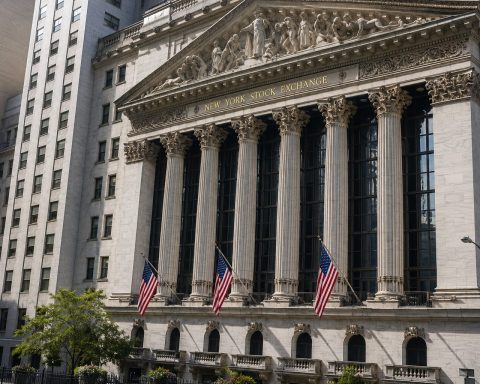
Walmart transferred its stock listing from the NYSE to the Nasdaq, keeping the ticker “WMT.” The company framed it as aligning with a “people-led, tech-powered” strategy and also moved multiple bond listings. Walmart Inc.+1
Formally, Walmart filed the paperwork tied to the NYSE removal (Form 25) ahead of the switch.
Reuters and other outlets characterized the move as a major “coup” for Nasdaq in the broader battle for marquee listings. Reuters+1
Market implication: A listing switch doesn’t change Walmart’s cash flows—but it can influence index mechanics, passive flows, and narrative (“Walmart as a tech-forward retail platform”). Investors should treat that as sentiment fuel, not a substitute for earnings power. Investopedia+1
3) Legal and regulatory risk is back in the headlines
Over the past week, Walmart has been pulled into several attention-grabbing developments:
- PepsiCo + Walmart price-fixing class action: A federal lawsuit alleges a long-running scheme involving pricing advantages and higher prices at other retailers. Walmart has said it’s committed to negotiating lower prices for customers.
- FDA warning letters over recalled baby formula: Reuters reports the FDA sent warning letters to multiple retailers (including Walmart) over alleged continued sales of a recalled infant formula tied to a serious illness outbreak.
- Swipe-fee settlement objection: Walmart and other retailers urged a judge to reject a proposed Visa/Mastercard settlement that critics argue offers limited relief from interchange fees.
Market implication: These aren’t “thesis breakers” on their own, but they can affect headline risk, reputational risk, and legal costs—and they matter more when a stock is priced near its highs.
Fundamentals: Walmart’s latest quarter and raised FY26 outlook (the numbers that matter)
Walmart’s most recent major fundamental anchor remains its Q3 FY2026 report (released Nov. 20, 2025). In its SEC-furnished earnings release, Walmart reported:
- Revenue of $179.5 billion, up 5.8%
- Walmart U.S. comparable sales (ex-fuel) up 4.5%
- Global e-commerce sales up 27%
- GAAP EPS of $0.77; adjusted EPS of $0.62
- Global advertising business up 53% (including VIZIO); Walmart Connect U.S. up 33%
- Membership income up 16.7% (within “membership and other income”) Walmart Inc.+1
Just as important: Walmart raised its fiscal 2026 guidance again. The company’s updated outlook (as of Nov. 20, 2025) included:
- Net sales growth: 4.8% to 5.1% (constant currency)
- Adjusted operating income: 4.8% to 5.5% (constant currency)
- Adjusted EPS: $2.58 to $2.63 (with a small currency headwind) Walmart Inc.+1
Walmart also highlighted balance sheet and capital-return items—useful for investors modeling downside protection:
- Operating cash flow: $27.5 billion (up $4.5 billion)
- Free cash flow: $8.8 billion (up $2.6 billion)
- Share repurchases: $7.0 billion year-to-date (75.3 million shares), with $5.1 billion remaining under a $20 billion authorization Walmart Inc.+1
What it suggests: Walmart is still executing the classic playbook—scale + price leadership + logistics—but the growth engine is increasingly “digital attach”: delivery, marketplace, advertising, and membership economics.
The Walmart Connect + VIZIO angle: why investors keep talking about ads
Walmart’s earnings release explicitly called out that advertising is growing fast, including contributions from VIZIO and continued growth at Walmart Connect in the U.S.
Industry coverage helps explain why investors care: retail media and connected TV are converging, and Walmart is pushing to sell ads across multiple “surfaces,” including the VIZIO home screen and Walmart’s own app. Marketing Dive reported Walmart has opened advertising on the VIZIO home screen and is working on bundled placements across platforms, with plans to roll out VIZIO’s operating system on Walmart’s Onn private-label TVs—potentially expanding OS reach significantly. Marketing Dive
eMarketer’s analysis adds a useful investor wrinkle: it expects the VIZIO acquisition to provide a net sales tailwind, while also creating profit pressure from integration expenses in the near term.
Bull case logic: Ads can lift margins because they monetize the same traffic twice—once at checkout, and again via marketing dollars.
Bear case logic: Integration complexity and measurement/privacy constraints can delay the payoff, and ad cyclicality can show up fast in a downturn.
Analyst forecasts: where Wall Street sees Walmart stock in 2026
Analyst views remain broadly constructive, but not unanimously euphoric—more “high-quality compounder” than “rocket ship.”
- Wells Fargo raised its price target to $130 from $120 and maintained an Overweight rating (reported Dec. 19, 2025).
- A broader consensus snapshot shows Walmart with a “Strong Buy”-leaning stance and an average price target around ~$119, with a range from roughly $91 to $130 depending on the analyst set. StockAnalysis
How to interpret that spread:
The upper targets tend to assume Walmart can keep expanding higher-margin revenue streams (ads, marketplace, membership) while holding price leadership in groceries. The lower-end targets are basically the “what if margins stall and valuation cools” scenario.
Near-term catalysts: dates investors will watch after Dec. 21, 2025
Walmart’s own events calendar flags two notable upcoming milestones:
- Jan. 13, 2026: 2026 ICR Conference
- Feb. 19, 2026: FY2026 Q4 Earnings Release Walmart Corporate
Layer on the leadership handoff:
- Feb. 1, 2026: John Furner becomes CEO (with Doug McMillon retiring Jan. 31).
Why these matter for the stock:
- ICR often drives strategy updates and segment-level commentary.
- Q4 earnings will be the market’s cleanest read on holiday performance, e-commerce profitability, and whether advertising momentum is sustaining.
- The CEO transition invites the market to ask: “Continuity… or a strategic pivot?”
Risks investors shouldn’t hand-wave away
Walmart’s scale is a moat—but it also puts a target on the company’s back. Three risk buckets deserve attention:
- Regulatory and litigation risk: The Pepsi price-fixing class action, FDA recall-related warnings, and payment-fee disputes can create costly distractions and reputational drag.
- Consumer and macro sensitivity: Even “value winners” can get hit if consumer budgets tighten sharply. Recent U.S. retail data painted a mixed picture—flat headline sales in one recent report, but resilience in certain categories and a still-positive holiday outlook from industry groups. AP News
- Execution risk in the high-margin growth engines: Advertising + marketplace + delivery speed are powerful, but they’re also operationally complex—and competitors aren’t standing still. Walmart’s advantage comes from execution discipline, not magic.
Bottom line: what Walmart stock is “about” right now
As of Dec. 21, 2025, Walmart stock is being valued less like a pure retailer and more like a hybrid of essentials + logistics platform + advertising network—with leadership transition and legal headlines adding extra noise into the signal.
The core debate for 2026 investors is simple (and very un-poetic):
Can Walmart keep comp sales steady, grow e-commerce profitably, and scale advertising/membership fast enough to expand margins—without getting derailed by regulatory and execution risk? Walmart Inc.+2Walmart Inc.+2
Related articles: NASDAQ:WMT