
Published: December 21, 2025
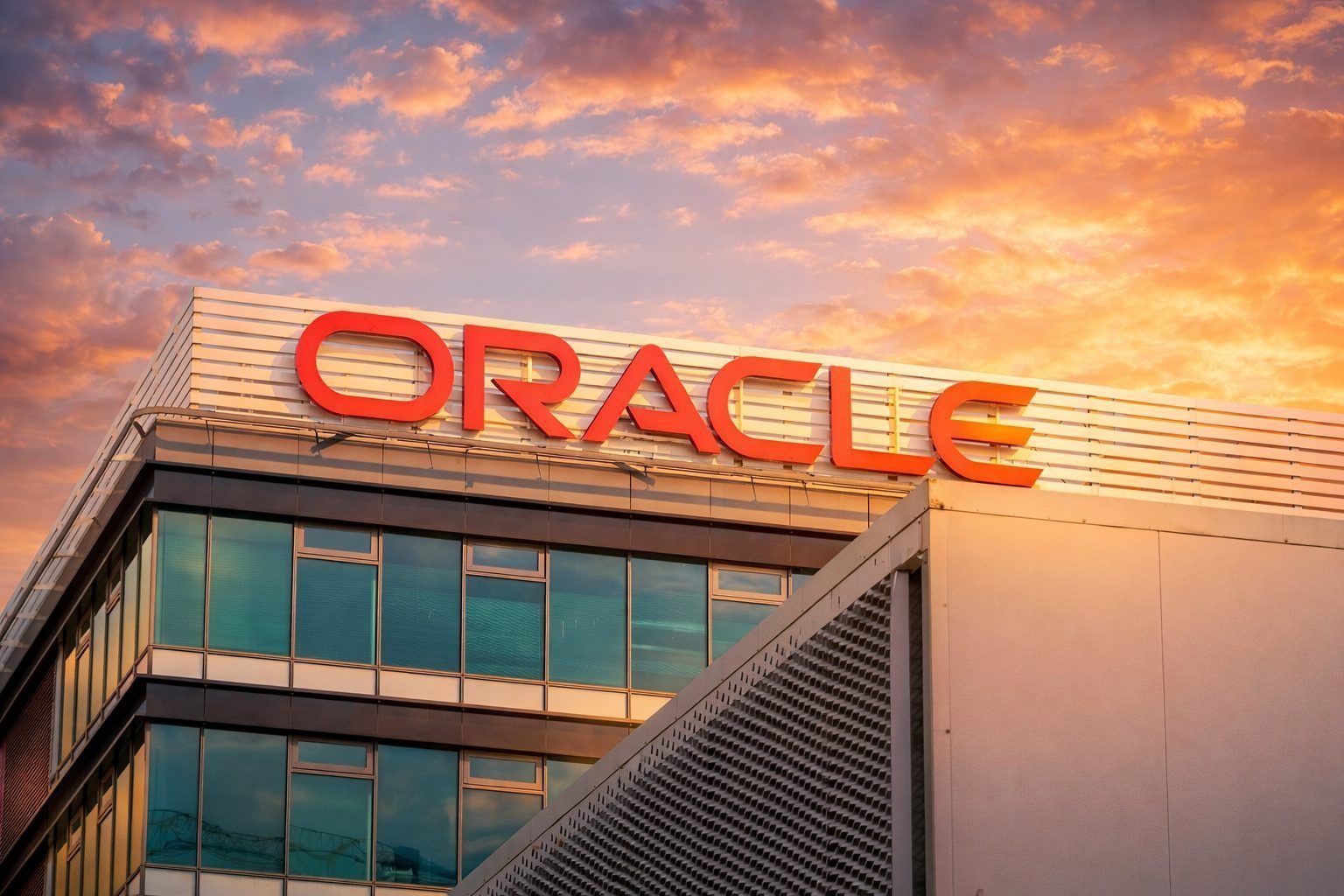
Oracle Corporation (NYSE: ORCL) heads into a holiday-shortened Christmas trading week with two powerful forces pulling the stock in opposite directions: a fresh catalyst from the newly signed TikTok U.S. joint venture agreement, and ongoing investor anxiety over Oracle’s debt-fueled AI data center buildout tied to OpenAI and the broader “Stargate” infrastructure push.
The result is a stock that can move sharply on headlines—especially when liquidity thins around the holidays. For traders and longer-term investors alike, the coming week (Dec. 22–26) is less about Oracle-specific scheduled events and more about macro data, year-end positioning, and any incremental news on TikTok, OpenAI capacity, and data center financing.
Oracle stock snapshot: where ORCL stands into Christmas week
Oracle shares were last around $191.97, after a strong one-day jump in the latest session.
Key context from widely followed market dashboards:
- Market cap: about $551–$553 billion StockAnalysis+1
- 52-week range:$118.86 to $345.72 MarketBeat
- 50-day moving average: ~$236.73; 200-day moving average: ~$213.56 (ORCL remains below both, a sign of damaged intermediate momentum) StockAnalysis
- RSI: ~39 (often interpreted as “weak/oversold-ish,” though not a timing tool by itself) StockAnalysis
That “below the big moving averages” setup helps explain why ORCL can rally hard on good news yet still feel heavy: many market participants view rebounds as opportunities to reduce exposure unless the fundamental narrative improves.
The biggest near-term catalyst: TikTok U.S. deal signed, Oracle in a central role
The most concrete piece of “new” news impacting Oracle into this week is the signed agreement restructuring TikTok’s U.S. operations.
According to Reuters, ByteDance signed binding agreements to hand control of TikTok’s U.S. operations to a group of investors including Oracle, Silver Lake, and MGX, with the new entity structured so the investor group holds 80.1% and ByteDance retains 19.9%. Reuters reported the transaction is set to close on January 22.
AP’s reporting adds operational detail that matters for Oracle investors: U.S. user data is expected to be stored locally in a system run by Oracle, and the joint venture is framed around U.S. data protection and security oversight.
Why this matters for ORCL stock this week:
Even though the closing date is in late January, TikTok headlines can continue to move the stock because they (1) reinforce Oracle’s relevance as a “trusted cloud/security partner” and (2) create the possibility of incremental cloud revenue and longer-term infrastructure demand—exact dollar amounts have not been disclosed in the public reporting.
Key risk to watch: any political, regulatory, or geopolitical complications around the final structure, oversight, or algorithm control could reintroduce uncertainty. Reuters explicitly noted that questions remain about the ongoing relationships between the new U.S. entity and ByteDance.
The core debate still driving ORCL: AI growth story vs. the cost of building it
Oracle’s Q2 results showed strong cloud growth—and an enormous backlog number
Oracle’s most recent earnings event was fiscal 2026 Q2, reported December 10, 2025. Oracle highlighted:
- Total revenue:$16.1B (up 14%)
- Cloud revenue (IaaS + SaaS):$8.0B (up 34%)
- Cloud Infrastructure (IaaS):$4.1B (up 68%)
- Remaining Performance Obligations (RPO):$523B, up 438% year over year Oracle Investor Relations
That RPO figure is the headline bulls point to: it suggests a massive contracted backlog that could translate into years of revenue.
Oracle also noted that GAAP and non-GAAP earnings per share benefited from a $2.7B pre-tax gain tied to the sale of Oracle’s interest in its Ampere chip company.
But investors are fixated on spending, funding, and timing
Reuters coverage around the earnings period captured what has been pressuring the stock: Oracle’s capex expectations jumped, and the market is demanding clarity on how quickly those investments turn into revenue and cash flow. Reuters quoted Visible Alpha’s Melissa Otto pointing to uncertainty driven by rising capex and unclear debt needs.
Separately, Reuters’ pre-earnings preview framed the bigger market concern: analysts have tied a significant portion of Oracle’s AI buildout to OpenAI-related data centers, raising questions about customer concentration and the ultimate funding of enormous compute demand.
The number that keeps coming up: $248 billion in additional lease commitments
One reason the “AI buildout” debate has become so intense is what Oracle disclosed in its quarterly filing.
In Oracle’s Form 10‑Q for the quarter ended November 30, 2025, the company stated it had $248 billion of additional lease commitments, substantially all related to data centers and cloud capacity arrangements, expected to commence between fiscal Q3 2026 and fiscal 2028 with terms of 15 to 19 years.
The same filing also disclosed $10 billion in unconditional purchase and certain other obligations primarily related to cloud capacity arrangements.
How the market is interpreting this into the week ahead:
- Bull view: leasing and long-term commitments can be a rational way to scale quickly in an AI-driven capacity crunch—especially if RPO converts as expected.
- Bear view: long-dated fixed obligations raise the consequences of any slowdown in AI demand, delays in customer ramp, or margin pressure, and they can amplify credit-risk concerns.
That tension is likely to persist as a driver of day-to-day volatility—particularly if any new data center financing headlines emerge.
OpenAI “Stargate” backdrop: why it’s still moving Oracle sentiment
Oracle’s AI narrative is tightly bound to OpenAI’s “Stargate” capacity push. OpenAI has publicly stated that Oracle and OpenAI entered an agreement to develop 4.5 gigawatts of additional Stargate data center capacity in the U.S., and described progress at the Abilene, Texas site (including Oracle delivering Nvidia GB200 racks and beginning early workloads). OpenAI
OpenAI also stated that the broader Stargate plan (with partners including Oracle and SoftBank) was moving toward multi‑gigawatt capacity and large investment commitments.
From a stock perspective, this is a double-edged sword:
- It supports the “Oracle is a real AI infrastructure contender” thesis.
- It intensifies questions about capital intensity, financing, and how much of Oracle’s future revenue becomes dependent on a small number of hyperscale AI customers.
Reuters explicitly highlighted those concerns around OpenAI reliance and the broader market’s scrutiny of AI infrastructure spending.
Analyst forecasts and price targets: what Wall Street is signaling now
Consensus targets remain high, but dispersion is wide
One widely cited consensus compilation shows:
- Consensus rating: “Buy”
- Average price target: about $312.88
- Low / high target:$175 to $400 StockAnalysis
That wide range itself is a message: analysts don’t agree on how to value Oracle’s AI backlog versus its balance-sheet and cash-flow risks.
Fresh cuts after earnings show the market is repricing risk, not the AI theme
A good example is the Piper Sandler move reported by Investing.com: the firm cut its Oracle price target to $290 from $380, while keeping an Overweight stance, explicitly citing the capex jump and investor scrutiny around customer concentration, funding, and monetization timing—yet still calling Oracle a potential “secular winner” in AI infrastructure. Investing.com
StockAnalysis’ tracker also shows multiple firms adjusting targets in mid‑December following Oracle’s earnings release (illustrating the “reset” in expectations). StockAnalysis
What to take from this into Dec. 22–26:
Analyst sentiment isn’t collapsing into “sell everything.” Instead, the street appears to be shifting from celebration of backlog headlines to a harder question: how profitable is the backlog, and how quickly does it convert?
Week-ahead calendar: what can move ORCL when Oracle itself is quiet
1) Holiday-shortened trading hours can amplify swings
This is a structurally important week for stock trading mechanics:
- NYSE markets are closed Christmas Day (Thu., Dec. 25) and will close early at 1:00 p.m. ET on Wed., Dec. 24 (1:15 p.m. for eligible options).
- Nasdaq’s holiday schedule similarly lists an early close at 1:00 p.m. on Dec. 24 and closed Dec. 25.
Lower liquidity often means headline-driven names—especially AI infrastructure plays—can show larger-than-usual percentage moves.
2) Macro data: GDP, consumer confidence, jobless claims
Investopedia’s week-ahead calendar highlights:
- Tue., Dec. 23: Q3 GDP (initial estimate), plus durable-goods orders, industrial production/capacity utilization, and consumer confidence
- Wed., Dec. 24: initial jobless claims
- Thu., Dec. 25: markets closed Investopedia
Oracle is sensitive to the macro backdrop because rates and growth expectations influence how investors discount long-duration cash flows—and because the market is currently debating whether AI capex is getting ahead of realized demand.
3) “AI spend scrutiny” remains a market-wide theme
Reuters’ reporting (republished by Investing.com) noted that recent equity swings have been driven in part by scrutiny of massive corporate spending for the AI buildout, alongside shifting expectations about future Federal Reserve rate cuts.
That’s directly relevant to Oracle: ORCL is arguably one of the most visible “AI capex” battleground stocks in large-cap software right now.
ORCL technical levels to watch (no hype—just what the numbers imply)
Without relying on charts, the widely followed indicators still paint a clear map for the week:
- $200 area: psychologically important round number. A clean move above can attract short-term momentum; failure near it can reinforce “sell the rally” behavior (especially in thin holiday trade).
- ~$180 area: the prior close implied by the latest session’s move (about $191.97 minus a ~$12.13 gain) sits near $179.84, which can act as a practical reference for near-term support if volatility returns.
- ~$214–$237 zone: the region where the 200-day (~$213.56) and 50-day (~$236.73) moving averages sit—often treated as “overhead resistance” until convincingly reclaimed. StockAnalysis
How to interpret this for the week ahead:
If ORCL keeps bouncing but cannot reclaim the 200-day area, many systematic and trend-following strategies will still classify the stock as “in repair.” If it does reclaim it, sentiment can change quickly—especially if the move coincides with calming headlines on capex funding.
Base case, bull case, bear case for Oracle stock this week
Base case: choppy, headline-driven trade
With no Oracle earnings or scheduled corporate events, ORCL’s day-to-day direction is likely to hinge on:
- any incremental TikTok JV details,
- any AI data center financing/capacity headlines,
- macro data and rate expectations,
- thin holiday liquidity.
Bull case: TikTok + AI narrative stabilizes
Upside can be driven by:
- continued optimism that TikTok’s structure reduces regulatory overhang and supports Oracle’s “trusted cloud” positioning, Reuters+1
- investor willingness to look through near-term cash burn toward the enormous RPO figure, Oracle Investor Relations
- a supportive macro tone (cooling inflation / lower yields), which often helps long-duration growth stories.
Bear case: financing and cash-flow worries resurface
Downside can reappear quickly if:
- any new reporting intensifies questions about how Oracle funds capex and lease commitments, Securities and Exchange Commission+1
- investor focus shifts back to customer concentration and OpenAI funding uncertainty, Reuters
- holiday liquidity turns a modest sell program into an outsized move.
Bottom line: what to monitor from Dec. 22–26
For the coming week, Oracle stock is likely to trade less like a “steady enterprise software compounder” and more like an AI infrastructure bellwether:
- TikTok joint venture headlines (any new details before the Jan. 22 targeted closing).
- Any incremental clarity on AI capacity buildout economics—capex, leases, and conversion of RPO into revenue and cash flow.
- Macro data and rate expectations, because they influence how much the market will tolerate heavy upfront investment.
- Holiday-shortened trading conditions, which can exaggerate both rallies and pullbacks.