
As of Sunday, December 21, 2025, quantum computing stocks are heading into one of the strangest trading stretches of the year: a holiday-shortened week with thinner liquidity, fewer scheduled catalysts, and a sector that can swing hard on a single analyst note.
That’s a big deal for investors tracking IonQ (IONQ), D-Wave Quantum (QBTS), Rigetti Computing (RGTI) and Quantum Computing Inc. (QUBT)—a group often dubbed the “pure-play” quantum cohort—because the last few days brought something the space has been craving: more formal Wall Street coverage, clearer price targets, and more structured debates about which business models may actually scale. Investopedia+2TradingView+2
Below is a week-ahead investor briefing built from the most current headlines and analyst framing available on 12/21/2025, plus the macro calendar that could influence high-beta tech names into year-end.
The setup: why quantum computing stocks can move fast in a slow week
Quantum computing equities have become a magnet for speculative capital in 2025—partly because the technology narrative overlaps with AI’s infrastructure arms race, and partly because the market is still trying to price businesses that are early, volatile, and (in many cases) not yet sustainably profitable. Reuters has described the valuation challenge bluntly: pricing quantum names is “more of an art than science,” and timing uncertainty remains the core risk. Reuters
That matters even more in the coming week because:
- Christmas week historically brings thinner trading conditions, which can exaggerate moves in smaller, retail-heavy themes.
- Quantum pure plays can react sharply to coverage initiations, contract headlines, and partnership announcements—even when the underlying financial impact is longer-dated.
Week-ahead calendar (Dec 22–26): market hours and macro triggers that can spill into quantum stocks
Even though this is a “quiet” week for corporate calendars, it is not a blank slate for markets.
Key dates to know
- Wednesday, Dec. 24, 2025: U.S. stock markets close early at 1:00 p.m. ET (NYSE standard holiday schedule).
- Thursday, Dec. 25, 2025: markets closed for Christmas.
- Friday, Dec. 26, 2025: markets open for a full session, despite a federal government closure order that does not apply to exchanges.
Macro data that can move risk appetite
Investopedia’s week-ahead calendar flags several releases that can influence risk-on/risk-off sentiment, which matters for quantum stocks because they trade more like high-duration, story-driven tech than like mature cash-flow franchises: Investopedia
- Tuesday, Dec. 23: initial estimate of Q3 GDP, plus delayed reports (durable goods, industrial production/capacity utilization) and December consumer confidence.
- Wednesday, Dec. 24:jobless claims, then early close.
Why this matters for quantum computing stocks: if GDP/consumer data shifts expectations for 2026 rate policy or growth durability, it can quickly change appetite for the most volatile corners of tech—exactly where quantum sits.
The biggest sector headline into Dec 21: analysts are finally “building the category” in public
Jefferies: Buy IonQ and D-Wave, Hold Rigetti
A Reuters/Refinitiv item carried by TradingView reports Jefferies initiating coverage with:
- D-Wave (QBTS): Buy, $45 price target
- IonQ (IONQ): Buy, $100 price target
- Rigetti (RGTI): Hold, $30 price target TradingView
Jefferies’ rationale (as summarized in the same Reuters item) sketches the market’s current “story hierarchy”:
- D-Wave: supported by ecosystem growth, a two-pronged roadmap, a full-stack platform, and enterprise workload “stickiness.” TradingView
- IonQ: benefits from ecosystem growth, trapped-ion advantages, a fault-tolerant roadmap, expansion into networking/sensing, and strong government/enterprise partnerships.
- Rigetti: a balanced outlook—tailwinds and chiplet scalability vs. execution challenges and reliance on government revenue.
Wedbush: “Outperform” on the Quantum 4 with explicit price targets
Investopedia reports that Wedbush initiated coverage on four U.S.-listed quantum pure plays—IonQ, Rigetti, D-Wave, and Quantum Computing Inc.—with “outperform” ratings, while acknowledging the group could stay pressured near term. Investopedia
Wedbush price targets cited by Investopedia:
- IONQ: $60
- RGTI: $35
- QBTS: $35
- QUBT: $12 Investopedia
Wedbush also frames quantum as a technology that could “supercharge” AI and become a larger share of overall compute spending by decade’s end (from a small base today). Investopedia
What investors should take from this:
The exact targets will be debated, but the signal is powerful: mainstream coverage is expanding, and the market is shifting from “quantum hype” to comparative underwriting—balance sheet strength, go-to-market credibility, and which architectures are more commercially relevant in the 2026–2030 window. TradingView+2Investopedia+2
Company-by-company: the week-ahead watchlist for top quantum computing stocks
1) IonQ (IONQ): partnerships in Europe + bullish Street framing
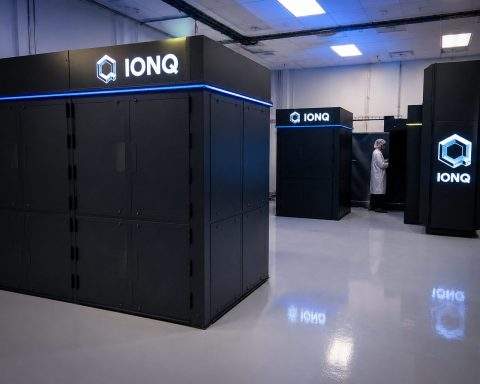
IonQ’s most tangible recent catalyst is its expanded agreement with QuantumBasel (Switzerland). In IonQ’s Dec. 17 release, the company says the extension:
- Brings total partnership value to over $60 million
- Extends IonQ’s on-site presence through 2029
- Includes QuantumBasel ownership of an existing IonQ Forte Enterprise system and secures ownership of a next-generation Tempo system IonQ
From a “stocks” perspective, this matters because investors want evidence of:
- Longer-duration commercial demand (not just pilots),
- A path toward repeatable deployments and upgrades,
- International footprint expansion that can translate into enterprise adoption.
On the Street, Jefferies’ coverage initiation is notably aggressive on IonQ, pointing to trapped-ion advantages and partnerships.
Week-ahead angle: With no major scheduled company event in the holiday week, IONQ may trade as a sentiment barometer for the whole quantum group—especially if macro data drives risk appetite Tuesday.
2) D-Wave Quantum (QBTS): government push + “commercial today” narrative
D-Wave continues to be positioned by analysts as the “commercially mature today” quantum story because of its focus on quantum annealing and near-term applications, even as gate-model systems chase longer-term fault-tolerance. Barron’s
A concrete corporate development investors may revisit into year-end: D-Wave’s Dec. 2 announcement of a dedicated U.S. Government business unit, led by government contracting executive Jack Sears Jr., aimed at accelerating adoption of its systems and services across federal use cases.
Jefferies’ Reuters-cited initiation also highlights D-Wave’s platform and “stickiness” of enterprise workloads. TradingView
Week-ahead angle: QBTS can be extremely momentum-sensitive. In a thin week, traders may react more sharply to sector commentary, flows, or even broad tech swings tied to GDP/confidence data.
3) Rigetti (RGTI): the “execution discount” debate is now out in the open
Rigetti sits at the center of the market’s most important near-term question: which pure play can scale hardware and reduce errors fast enough to stay investable—without constant dilution or narrative resets?
Jefferies (per Reuters) put Rigetti at Hold, explicitly balancing industry tailwinds and chiplet scalability against execution challenges and government revenue reliance. TradingView
Wedbush, by contrast, was willing to call it Outperform with a $35 target (per Investopedia).
Week-ahead angle: RGTI may see “tug-of-war” trading—buyers leaning on the idea that institutional coverage legitimizes the category, sellers leaning on execution risk and the reality that a holiday week can punish crowded trades quickly.
4) Quantum Computing Inc. (QUBT): M&A + optics/photonics pivot meets scrutiny
QUBT has one of the more headline-friendly corporate catalysts into year-end: it agreed to acquire Luminar Semiconductor in an all-cash deal valued at $110 million, according to both QUBT’s deal announcement and third-party reporting on Luminar’s restructuring.
In QUBT’s PRNewswire release, the company describes itself as focused on quantum optics and integrated photonics, with products designed for room-temperature, low-power operation.
Meanwhile, the broader Luminar context matters: The Wall Street Journal and The Verge report that Luminar filed for Chapter 11 bankruptcy, and that the semiconductor unit sale to Quantum Computing is part of the restructuring process.
Week-ahead angle: QUBT often trades like the highest-beta name in the group. Expect it to be sensitive to:
- Any fresh commentary on the acquisition and integration,
- Broader sector sentiment after the new analyst coverage,
- Holiday-week liquidity effects.
Beyond pure plays: Big Tech quantum exposure is back in focus
A recurring theme in December commentary is that Big Tech may be the steadier way to invest in the quantum boom, because hyperscalers can monetize cloud ecosystems while quantum hardware matures. MarketWatch argues Microsoft, Alphabet, and IBM are structurally better positioned than the volatile pure plays, while noting the quantum market could become a $97 billion opportunity by 2035.
Two concrete Big Tech datapoints investors are weighing into 2026:
- IBM reiterated progress toward quantum advantage by the end of 2026 and a roadmap toward fault-tolerant quantum computing by 2029, alongside hardware and fabrication updates (including 300mm wafer work) at its Quantum Developer Conference.
- Microsoft expanded its quantum facility near Copenhagen with a second lab, tied to development of its Majorana 1 chip concept, and said quantum investments in Denmark have surpassed 1 billion Danish crowns.
Why this matters for the week ahead: Even if pure plays trade mostly on momentum, big-tech quantum headlines can influence the entire narrative—especially if the market starts to treat “quantum” as a real 2026–2030 capex theme rather than a niche story.
Quantum ETFs: a diversified way the theme is being packaged
For investors who want thematic exposure without single-stock volatility, the Defiance Quantum Computing ETF (QTUM) remains one of the best-known “quantum + enabling tech” baskets. Its index description emphasizes exposure to companies tied to quantum computing and machine learning activity. Defiance ETFs
A fresh item relevant to December rebalancing: BTQ Technologies was added to the Defiance Quantum ETF (QTUM), according to a PRNewswire release.
Week-ahead angle: ETFs can matter in thin weeks because flows (not fundamentals) can dominate price action—especially around year-end positioning.
Policy and funding headlines investors shouldn’t ignore
Quantum is not just a corporate R&D story—it’s increasingly a national strategy domain. Two Reuters items stand out in the current news flow:
- U.S. pauses implementation of a $40B U.S.-UK “Tech Prosperity Deal” that covered AI, quantum computing, and civil nuclear energy, amid broader trade and regulation friction. Even if this doesn’t hit any single stock immediately, it underscores that cross-border tech collaboration is now policy-sensitive. Reuters
- The U.S. Department of Energy’s Genesis Mission signed agreements with 24 organizations—including Microsoft, Google, Nvidia, IBM, Intel, AMD, and others—to accelerate AI-powered scientific research, and Reuters notes the partnerships include focus areas spanning quantum computing among other domains.
Week-ahead angle: Policy headlines can act like “sentiment accelerants” for quantum stocks—especially when investors are already primed to trade the theme.
Risks to monitor this week (and why they’re amplified into year-end)
Quantum computing stocks can deliver extraordinary upside—but the risk profile is not subtle. Into the holiday week, watch for:
- Liquidity gaps and outsized swings: early close on Dec. 24 and holiday scheduling can widen spreads and amplify moves.
- Valuation fragility: investors and analysts repeatedly emphasize the difficulty of valuing quantum businesses today—timelines are uncertain, and “art not science” pricing can flip fast. Reuters
- Execution and revenue concentration: Jefferies explicitly flags Rigetti’s execution and government-revenue reliance as key issues.
- Deal integration risk: QUBT’s Luminar Semiconductor purchase may accelerate a roadmap—or become a distraction if integration and supply chain complexity rise.
- Macro sensitivity: GDP/confidence surprises can move rate expectations, and quantum tends to behave like a high-beta tech trade.
Bottom line for the week ahead: what investors will actually be trading
In the Dec 22–26, 2025 window, quantum computing stocks are likely to trade on three forces:
- Analyst narrative momentum (Jefferies and Wedbush “category building” is still being digested). TradingView+1
- Company-specific headlines that reinforce (or challenge) commercialization paths—IonQ’s Europe footprint, D-Wave’s government push, and QUBT’s acquisition-driven optics/photonics strategy.
- Holiday-week market structure—thin liquidity plus macro prints Tuesday/Wednesday that can shift risk appetite quickly.
Related articles: NASDAQ:IONQ