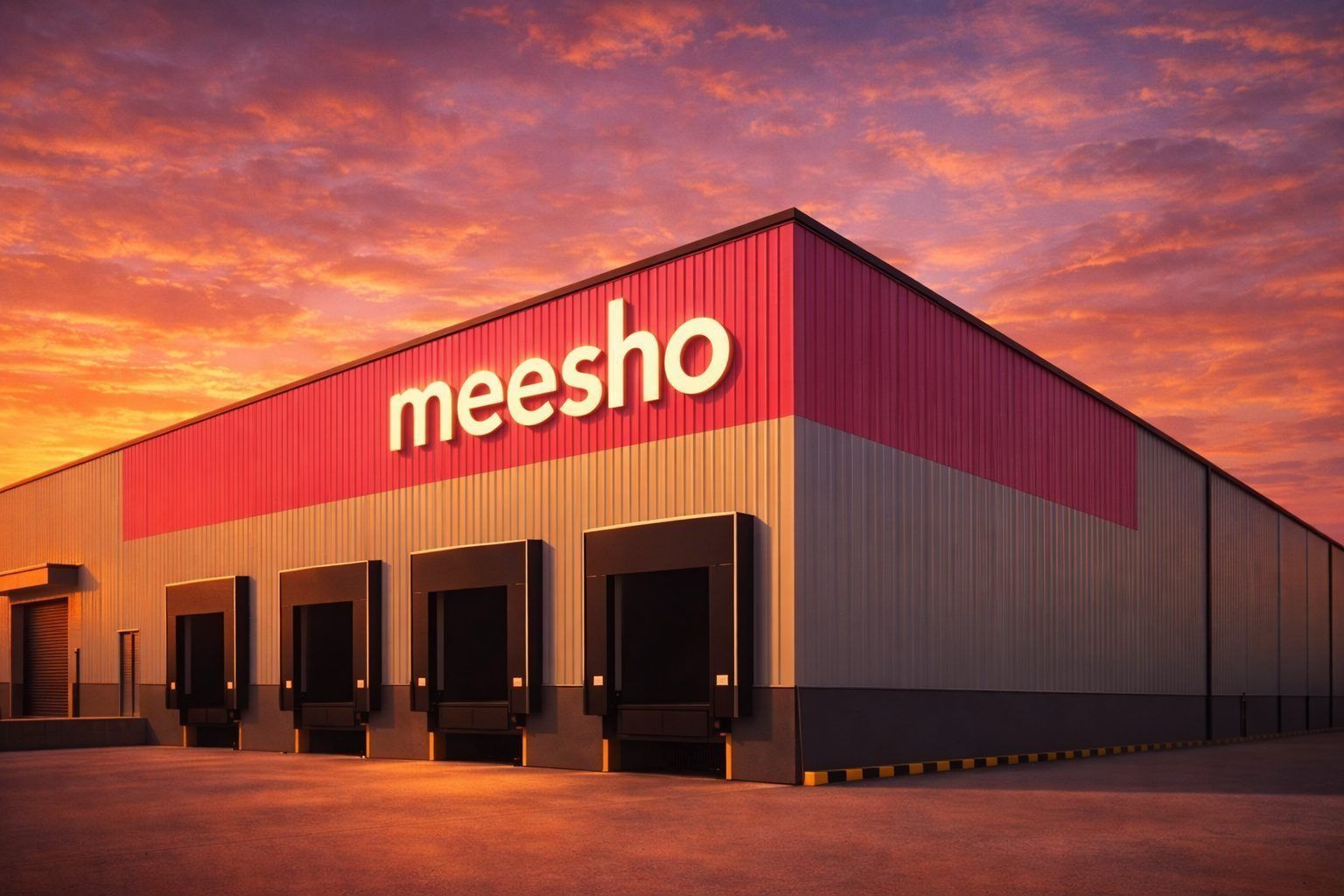

Meesho Limited’s newly listed stock is doing what freshly public, hotly debated consumer-tech names often do: sprint, stumble, then dare investors to tell a coherent story about what “fair value” even means.
On Monday, December 22, 2025, Meesho shares were trading around ₹209–₹212 by midday, down roughly 6–7% versus the prior close, after an eye-catching post-IPO surge that briefly pushed the company’s market cap toward (and in prior sessions above) the ₹1 trillion milestone.
Below is a full roundup of the current news, forecasts, and market analysis as of 22.12.2025—from the latest selloff narrative to brokerage targets, trading mechanics (yes, the weird “short delivery” stuff), and the key dates that could matter next.
Meesho stock snapshot on Dec 22, 2025: price dip after a rocket ride
By early afternoon in India, Meesho was quoted near ₹209.15 on the day, with the session’s low/high range around ₹210–₹223 depending on the venue/data feed.
For quick identifiers frequently used by investors and screeners:
- NSE symbol: MEESHO
- BSE code: 544632
- ISIN: INE0VDM01015 mint+1
The bigger point isn’t whether the tape says ₹209 or ₹212 at a particular minute. The point is that a stock that more than doubled from its IPO price in days is now correcting hard enough to remind everyone it can go down, too—and the debate has shifted from “IPO euphoria” to “what’s actually driving liquidity and price discovery?”
What’s the latest news today: Meesho slides for a second straight session
The day’s headline driver is straightforward: Meesho has fallen about 8% over two consecutive sessions, after a dizzying run that took the stock to more than 2x the issue price in just over a week. Market commentary attributes the pullback to a familiar cocktail—profit-taking, scarce tradable supply, and short-covering dynamics that amplified the earlier upside.
In other words: the stock didn’t suddenly “break.” It’s reverting from a chaos-driven melt-up to something closer to two-way trading.
Context check: Meesho’s blockbuster listing and why the bar is now brutally high
Meesho’s public-market story began with a bang.
On December 10, 2025, Reuters reported that Meesho shares jumped about 58% on debut, listing around ₹162.5 and hitting ₹175, versus an issue price of ₹111—implying a valuation around ₹789.3 billion (about $8.8 billion) at the time.
Reuters also captured the core bull argument in a single idea: Meesho has “levers” to expand earnings—notably that it doesn’t charge seller commissions and that advertising revenue as a percentage of net merchandise value was cited at ~2.5% versus 5–10% globally (a potential monetisation runway, in theory). Reuters
That early explosion is exactly why today’s dip matters: Meesho didn’t just list— it listed with expectations already inflated.
The strange plumbing behind Meesho’s volatility: “free float,” short delivery, and auctions
If you’re wondering why Meesho can look calm one minute and possessed the next, the less glamorous answer is: tradable supply is tight.
Economic Times reporting in recent days highlighted that Meesho had only about ~6% free float in the market initially—meaning most shares sit with promoters and early investors subject to lock-ins, leaving very few shares actually available to trade. With that kind of scarcity, even modest buying can push prices sharply higher.
Then there’s the post-IPO phenomenon retail investors typically don’t think about until it bites: short delivery and settlement auctions.
- Business Standard cited Zerodha CEO Nithin Kamath pointing to technical factors—like short delivery—as a reason some newly listed IPO stocks can show sharp, exaggerated moves (particularly when traders short a stock and later struggle to source shares for delivery).
- Economic Times has also covered how short-sellers can get trapped post-listing as scarcity forces buy-backs at higher prices during auctions, feeding the squeeze.
This is why Meesho’s early tape looked like a highlight reel: it wasn’t only “fundamentals.” Market microstructure (how trading and settlement actually work) was part of the story.
Analyst forecasts and targets: UBS at ₹220, Choice at ₹200 — and why that spread matters
Because Meesho listed only this month, formal coverage is still ramping up. But a few forecasts are already shaping the narrative.
UBS: “Buy” initiation with ₹220 target
UBS initiated coverage with a “Buy” rating and a ₹220 target price, a call that helped fuel earlier sessions’ momentum and headlines. Moneycontrol+1
Choice Broking: target at ₹200, plus a growth forecast
Business Standard reported that Choice Broking’s target stands at ₹200, below the then-prevailing market price in that report—effectively a more cautious stance. The same report said Choice expects Meesho to deliver about a 31% revenue CAGR from FY25 to FY28, supported by deeper value-commerce penetration and improving logistics efficiency as Valmo scales.
What the targets imply on Dec 22
With Meesho trading around ₹209–₹212 today, UBS’s ₹220 target looks like limited upside, while Choice’s ₹200 target suggests downside risk—a rare situation where the stock, after all its drama, is suddenly trading near the middle of a still-nascent target range.
That’s not a buy/sell signal. It’s a reminder that the market may be moving faster than analysts can update spreadsheets.
Technical analysis angle: RSI hit “overheated” levels before profit booking
NDTV Profit noted that Meesho’s relative strength index (RSI)—a momentum indicator traders use to gauge “overbought/oversold” conditions—reached as high as ~87 at one point during the surge, before the stock pulled back. The outlet framed recent weakness as consistent with profit booking after a doubling from listing levels. NDTV Profit
Translation: when momentum gets that stretched, you don’t need bad news to fall—you just need fewer new buyers than yesterday.
Fundamentals: what Meesho says it’s building (and why markets care)
The long-term bull/bear debate will likely come down to whether Meesho can convert scale into durable profitability without breaking what made it work.
Reuters reporting ahead of the IPO described Meesho’s push on multiple fronts:
- heavier use of AI (including chat/voice agents) aimed at first-time and rural shoppers
- expanding Valmo, its logistics aggregator platform, to reduce delivery costs
- exploring financial services (including buy-now-pay-later and credit for sellers)
- and even exploring a move into grocery, a brutally competitive category Reuters
Reuters also reported key financial trendlines disclosed in the IPO process: in the first half of fiscal 2026, Meesho’s revenue rose ~29.4% to ₹55.78 billion, while losses narrowed ~72.1% to ₹7 billion.
Those numbers are why investors can justify paying up for a growth story—losses shrinking while revenue grows is the classic “maybe this one becomes profitable” arc. The open question is whether that arc continues once the easy efficiency gains are taken.
The bigger 22.12.2025 backdrop: India’s startup IPO machine is roaring
Meesho isn’t trading in a vacuum. It’s one of the flagship listings in what looks like a genuine public-market moment for Indian consumer-tech.
A Moneycontrol analysis dated December 22, 2025 said 15 startup and consumer-tech IPOs raised nearly ₹40,000 crore in 2025, over 35% more than 2024, as profitability paths became clearer and investor demand deepened.
The same report noted that late-stage private funding tightened, pushing scaled startups toward public listings—another reason the market has seen such a crowded “new-age” calendar. Moneycontrol
This matters for Meesho shareholders because when a market is flooded with shiny new listings, attention and capital rotate fast. Winners can become big winners—but volatility can increase when the crowd moves on.
Key dates to watch next: lock-in expiries that could increase supply
One of the most practical, near-term variables for Meesho is simple supply.
Business Standard reported that Meesho is among the major main-board names with scheduled anchor lock-in expiries, including an unlock cited on January 7, 2026 (and additional references later in the quarter).
Zerodha’s IPO schedule page for Meesho also lists:
- Lock-in end date for anchor investors (50%): 07 Jan 2026
- Lock-in end date for anchor investors (remaining): 08 Mar 2026 Zerodha
Lock-in expiry does not mean everyone sells. But it can change the market’s balance because a low-free-float stock can stop being low-free-float, which often reduces the “squeeze premium” and increases two-way liquidity.
So… what’s the outlook for Meesho stock from here?
Here’s the cleanest way to think about it (without pretending anyone controls the universe):
Meesho’s early rally was powered by three engines:
- IPO enthusiasm + brand recognition,
- scarce supply/free float,
- and technical squeezes that punished shorts.
Today’s pullback is the mirror image:
- profit-taking after a fast doubling,
- a market starting to price in upcoming supply,
- and traders cooling off from momentum extremes.
The “forecast” side of the street is, for now, dominated by a small set of published targets—UBS at ₹220 and Choice at ₹200, with Choice also forecasting a 31% FY25–FY28 revenue CAGR in its thesis. Moneycontrol+1
The “fundamentals” side hinges on whether Meesho can keep expanding monetisation levers (ads, logistics, fintech) without losing its mass-market edge—exactly the strategic runway Reuters highlighted around AI, Valmo, and new business lines. Reuters+1
Bottom line (for readers who just want the signal)
Meesho stock on 22.12.2025 is best described as a high-profile IPO transitioning from scarcity-driven price discovery to fundamentals-driven scrutiny—with lock-in expiries and analyst initiations likely to shape the next leg of trading.
Related articles: NSE:MEESHO