
Palantir Technologies Inc. stock (ticker: PLTR) traded higher on Monday, December 22, 2025, as the AI-software heavyweight stayed in the spotlight for a familiar reason: investors are trying to balance powerful contract momentum and AI-adoption narratives against growing concerns about valuation—and, increasingly, political scrutiny in Europe.
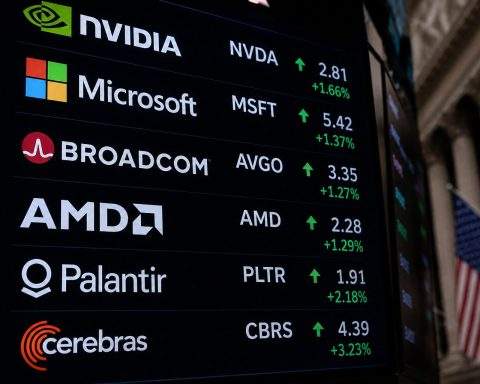
As of 14:27 UTC on Dec. 22, PLTR was up 4.18% at $193.38, after opening at $187.10. The session range was $186.73–$193.69 on volume of about 19.23 million shares at that time.
That price left Palantir roughly 6.8% below its 52-week high of $207.52, underscoring how close the stock remains to the top of its recent range even after periods of volatility.
Why Palantir stock is moving on December 22, 2025
Monday’s upside move in PLTR comes as U.S. equities entered a holiday-shortened stretch with a risk-on tone. Investors Business Daily (IBD) described major indexes opening higher into Christmas week with tech leadership back in focus, while also noting that some economic releases have been delayed amid a U.S. government shutdown. Investors.com Reuters also pointed to higher futures and a market that has recently leaned on big-tech and AI sentiment, with holiday-thinned trading conditions potentially amplifying moves.
For Palantir specifically, today’s price action sits at the intersection of three forces:
- A market bid for “AI winners” into year-end (helped by broader tech strength). Investors.com
- A steady drip of contract/partnership headlines—particularly around defense and AI infrastructure.
- A loud valuation debate heading into 2026, with published forecasts ranging from “still upside” to “meaningful downside.” The Motley Fool+3MarketBeat+3TipRanks+3
The biggest Palantir headline risk today: UK MPs question contracts
One of the most consequential pieces of news published on Dec. 22 wasn’t about earnings or a new deal—it was political.
The Guardian reported that UK MPs are questioning government contracts with Palantir after a Swiss investigation described security concerns, including a Swiss army report raising the possibility that sensitive data could be accessible to U.S. authorities because Palantir is a U.S. company. The report also highlighted concerns around cost and dependence on Palantir specialists being onsite. Palantir disputed the allegation about potential access to customer data and said customers remain in control through contractual, procedural, and technical controls.
Why this matters for PLTR stock: Palantir’s brand and growth story are tightly linked to government and defense-adjacent work. Any perception of data sovereignty risk—especially in Europe—can influence procurement decisions, slow deployments, or increase compliance burdens. Even if this doesn’t change existing contracts immediately, it can affect future pipeline conversion and “time-to-signature” for public-sector deals.
Contract momentum still dominates the bull case: ShipOS and the U.S. Navy
On the other side of the ledger, Palantir’s defense and government narrative remains strong.
Earlier this month, a Business Wire release detailed a “groundbreaking partnership” with the United States Navy to deploy Palantir’s Foundry and Artificial Intelligence Platform (AIP) across the U.S. Maritime Industrial Base under an initiative branded ShipOS, authorizing up to $448 million to accelerate AI and autonomy adoption across the industrial base. Business Wire
This is the kind of headline that tends to resonate with PLTR investors because it checks multiple boxes at once:
- Large potential contract value (up to $448M authorization cited in the announcement).
- Deep “platform” embed (Foundry + AIP across an industrial ecosystem, not just a narrow workflow). Business Wire
- Durable use case (supply chain and shipbuilding modernization are multi-year efforts).
It also reinforces Palantir’s positioning as an operational AI vendor—less about “AI demos” and more about systems that run logistics, planning, and execution in high-stakes environments.
Nvidia partnership and “Chain Reaction”: Palantir’s AI-infrastructure pitch
Another major theme investors are weighing into Dec. 22 is Palantir’s push to place itself at the center of the AI infrastructure buildout—particularly where power, compute, and complex supply chains collide.
Palantir announced Chain Reaction, described as an “operating system for American AI infrastructure,” with founding partners including CenterPoint Energy and NVIDIA. The release frames the key bottleneck for AI innovation as power and compute, and positions Chain Reaction as software meant to accelerate power generation upgrades, grid expansion, and hyperscale data-center buildouts. Business Wire
Crucially for AI investors, Palantir says NVIDIA and Palantir are expanding their partnership into Chain Reaction—using Palantir’s AIP and Ontology alongside NVIDIA’s Nemotron models and CUDA-X libraries to streamline the complexity of gigawatt-scale AI “factory” supply chains and installations. Business Wire Reuters also covered the initiative as a step tied to power constraints and broader AI infrastructure buildout pressure points. Reuters
What it means for PLTR stock: If Palantir can become “system software” for energy + compute deployment (not just for analytics inside enterprises), it potentially expands total addressable market and strengthens strategic relevance. But investors also know these initiatives can take time to convert into material revenue—so the valuation question immediately comes back into focus.
Europe remains a mixed picture: France DGSI renewal vs. sovereignty scrutiny
While today’s UK/Swiss-linked political scrutiny is a headwind, Palantir also continues to renew and extend certain European relationships.
A Financial Times-hosted company announcement (via Business Wire) states Palantir renewed a three-year contract with France’s DGSI, extending a relationship that has been ongoing for nearly a decade, including software supply plus integration/support services.
In practical terms, Europe is showing two opposing dynamics at the same time:
- Continued adoption/renewals in some areas (as with DGSI).
- Heightened scrutiny of U.S. vendors in public-sector systems (as highlighted by the Guardian report and the broader debate it describes).
That tension is likely to remain a recurring headline driver for PLTR in 2026.
Forecasts for Palantir stock: what analysts and commentators are saying on Dec. 22, 2025
Wall Street consensus: “Hold,” with targets clustered below recent prices
MarketBeat’s compiled view (as shown on Dec. 22) lists Palantir with a consensus “Hold” rating, based on 23 analyst ratings: 2 sells, 16 holds, 5 buys. It shows an average 12‑month price target of $172.28, with a wide dispersion (high $255, low $18.50). MarketBeat
If PLTR is trading around the low-$190s, that consensus target implies modest downside on average—one of the clearest signals that, despite enthusiasm about Palantir’s AI momentum, many analysts remain unwilling to “chase” the stock at elevated multiples.
“Expect drastic changes”: a prominent bearish 2026 call published today
A TipRanks article published on Dec. 22 highlights an investor’s view that Palantir’s valuation is “egregious,” citing a P/E ratio north of 400x, and arguing that the coming year could see a meaningful correction. The investor forecast cited in the piece suggests PLTR could finish below $100 by the end of 2026, with an “outside chance” of falling below $50. TipRanks
The same TipRanks piece also notes a more cautious overall stance among analysts in its dataset and references a 12‑month average price target of $187.87 (a different figure than MarketBeat’s compiled average, reflecting methodology and coverage differences).
24/7 Wall St.: base case 25% downside, bear case “cut in half”
Another Dec. 22 commentary piece from 24/7 Wall St. argues that valuation compression is likely in 2026, pointing to very high forward valuation multiples and suggesting that even a single quarterly miss could hit a stock “priced for perfection.” It lays out a base-case 25% drawdown for 2026 and a more bearish scenario where shares could be cut roughly in half, while acknowledging that some published low-end targets elsewhere sit around $50. 24/7 Wall St.
Motley Fool’s split-screen view: “great company, hard to justify the price”
Two Motley Fool items circulating into Dec. 22 sharpen the same core debate:
- A Dec. 21 piece argues Palantir’s growth has been exceptional but warns that if revenue growth decelerates meaningfully in 2026, the stock could be vulnerable due to an extreme valuation relative to trailing revenue.
- A broader Palantir forecast page says Palantir appears positioned for another strong year operationally, but valuation could pressure returns; it also cites expectations for revenue and adjusted EPS growth next year alongside a consensus price target around the low-$170s (methodology-dependent).
Whether you agree or not, these views are influential because they reflect what a lot of the market is already wrestling with: Palantir can keep executing and still deliver disappointing stock returns if the starting valuation is too high.
Technical setup and trading levels investors are watching
Palantir is also being treated as a “technicals” stock into year-end—meaning that buy points, moving averages, and breakout levels are getting a lot of attention.
IBD coverage around today’s session described Palantir as one of the large-cap names “near buy points,” and separate IBD reporting recently highlighted a cup-base style setup with a buy point around $190.39, while also noting that Wall Street’s “buy” ratings are in the minority—often due to valuation concerns. Investors.com+1
How this feeds into PLTR stock volatility: when a stock is both (1) extremely popular with momentum traders and (2) controversial on valuation, you can get sharp moves in either direction around technical levels—especially in thin holiday liquidity.
Positioning indicators: short interest remains relatively low for such a high-profile name
Short-seller positioning is another area investors monitor with polarizing momentum stocks.
MarketBeat’s short-interest page shows that as of Nov. 28, 2025, Palantir had short interest of roughly 47.42 million shares, about 2.29% of public float, with a short interest ratio of about 1.0 days to cover (based on average volume) and a decline versus the prior report.
That doesn’t mean the stock can’t fall—but it suggests the market isn’t “crowded short” in the way that often fuels dramatic squeezes.
What matters most for Palantir stock in 2026
Putting today’s news, forecasts, and analysis together, the 2026 PLTR debate is coalescing around a few investable questions:
1) Can Palantir keep converting AI buzz into repeatable enterprise revenue?
Palantir’s AIP-centered story is strongest when it’s tied to measurable operating outcomes: automation, speed-to-decision, supply chain gains, and production systems that stay in place. Contract wins and platform expansions like ShipOS support that narrative.
2) Will government and defense tailwinds persist—and at what margin profile?
Defense wins can be sticky and strategic, but they also come with scrutiny, procurement complexity, and political risk. The UK/Swiss/European sovereignty debate is a reminder that “government work” isn’t just revenue—it’s reputation, oversight, and compliance. The Guardian
3) Does valuation compress even if fundamentals stay strong?
This is the point where forecasts diverge most sharply. Bulls emphasize execution and strategic relevance; bears emphasize that even strong growth can be insufficient if the market already priced in a near-perfect future.
Bottom line for PLTR stock on Dec. 22, 2025
Palantir stock is higher today because the market is leaning back into AI exposure and PLTR remains one of the most visible “operational AI” equities—supported by defense-scale initiatives like ShipOS and infrastructure narratives like Chain Reaction. Business Wire+1
But today also delivered a reminder that Palantir’s global opportunity—especially in Europe—can be accompanied by political and sovereignty concerns that create headline risk and potentially slow deal-making.
Into 2026, published forecasts are unusually wide: some analysts stay neutral with price targets below current trading levels, while multiple commentators publishing today argue that valuation alone could drive meaningful downside even if the company continues to execute.
Related articles: NYSE:PLTR