D-Wave Quantum Inc. NYSE:QBTS is ending 2025 the way many momentum names do: loudly. After a sharp rally on Monday, QBTS is now at the center of a fresh news cycle tied to CES 2026, a growing pile of bullish Wall Street initiations, and a broader “quantum trade” that’s been swinging hard with retail sentiment into the holiday-shortened stretch.
Below is a roundup of the key headlines and the most-cited forecasts and analyses circulating as of December 23, 2025—plus what they suggest (and what they don’t) for QBTS stock.
QBTS stock price today: what happened heading into Dec. 23
QBTS closed Monday, Dec. 22 at $32.19, up $5.37 (+20.02%), after trading as high as $32.39 on the session and seeing volume of roughly 62.5 million shares—a notable burst of activity even for a stock that has been volatile all year.
Early Tuesday indicators cooled slightly: one widely followed market data page showed pre-market trading around $31.63 (-1.74%) in the pre-dawn hours of Dec. 23 (U.S. Eastern Time).
The big picture: this isn’t a slow-and-steady accumulation story right now. It’s a headline-and-sentiment story, with price action that can lurch on a single catalyst.
The catalyst: D-Wave’s CES 2026 plans (and why markets cared)
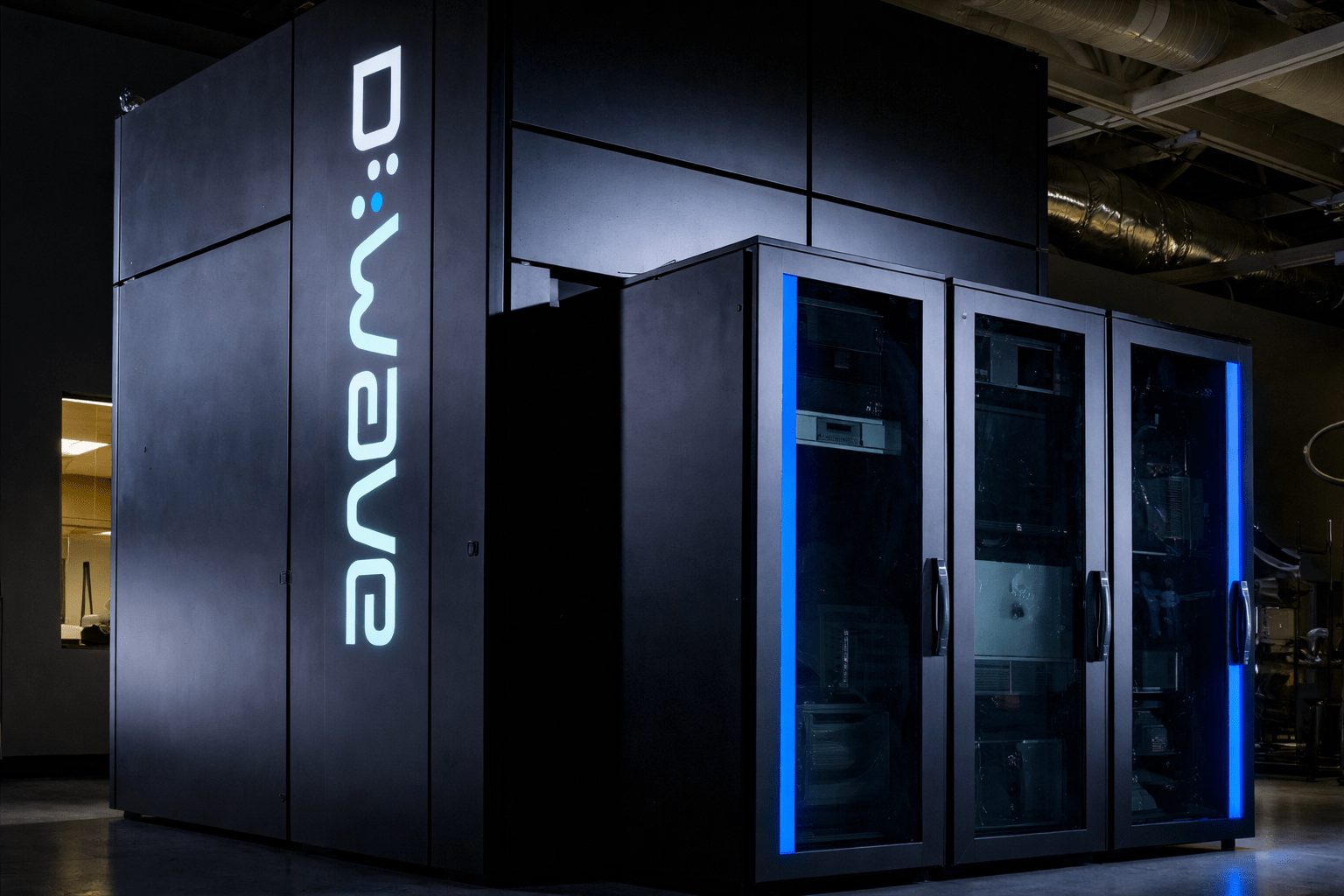
The immediate spark for Monday’s jump was D-Wave’s announcement that it will participate in CES 2026 as a sponsor of the CES Foundry, a two-day event at the Fontainebleau Las Vegas on Jan. 7–8, 2026. The company said it plans to showcase its annealing quantum computing technology, hybrid solvers, and customer use cases.
D-Wave also said a company executive will deliver a masterclass and demo on Jan. 7 from 1:00–1:30 p.m. PT focused on how organizations can “realize value from quantum computing today,” with examples spanning manufacturing, supply chain, materials science, and telecom. D-Wave Quantum
Multiple market outlets tied the stock’s surge directly to this CES 2026 visibility moment—framing it as a “mainstreaming” signal for quantum computing narratives going into 2026. The Motley Fool+1
What this news is—and what it isn’t
A CES appearance can matter for three reasons:
- Investor attention: CES is a global media amplifier, and “quantum + AI” is a theme that reliably attracts capital.
- Commercial storytelling: D-Wave is leaning into real-world optimization use cases—an area where quantum annealing is often positioned as nearer-term than fault-tolerant, universal quantum computing.
- Partner pipeline: Events like CES Foundry cluster startups, enterprises, and public-sector leaders in one place.
But it’s also worth keeping expectations calibrated: CES participation is not, by itself, a revenue announcement. It’s a narrative catalyst—which is exactly why it moved the stock the way it did.
Today’s broader news cycle: “Santa Rally” dynamics and quantum-stock sympathy moves
On Dec. 23, QBTS is also being pulled into a broader end-of-year trading storyline: several trading desks and market writers have described a retail-fueled “Santa Rally” effect in quantum-related names as institutional activity thins out for the holidays. Benzinga
Separately, sector coverage out this week emphasizes that 2025 saw major banks and research houses initiate coverage across the pure-play quantum group—helping turn what used to be a niche corner of the market into a more formally “covered” theme heading into 2026. Investors.com
Analyst forecasts and price targets: what Wall Street is projecting for QBTS
One of the most important shifts late in 2025 is that QBTS is no longer “off the map” for analysts. A major stock-forecast aggregator currently lists 14 analysts covering the name with a consensus “Strong Buy” rating—but with a crucial nuance: after the run-up, the average target is now close to the current price. StockAnalysis
Here are the most-circulated targets and initiations from December (as compiled by that forecast tracker):
- Mizuho initiated with a $46 target (Dec. 11).
- Jefferies initiated with a $45 target (Dec. 16).
- Wedbush initiated with a $35 target (Dec. 17).
- Evercore ISI initiated with a $44 target (Dec. 3).
- Benchmark maintained a bullish stance while raising its target from $20 to $35 (Nov. 10).
The consensus view (and why it looks “weird” after a surge)
That same tracker lists a target range from $12 to $46, with an average target of about $31.50 and a median around $35.
So you get a split-screen message:
- Analysts broadly like the story (ratings skew strongly positive).
- But the average target can look restrained because the stock has already moved so far so fast.
This is a classic late-stage momentum math problem: the company can receive bullish initiations and still trade above some consensus models after a vertical run.
Revenue and fundamentals: the numbers behind the narrative
D-Wave’s most recent reported quarterly results (for Q3 fiscal 2025 ended Sept. 30, 2025) are frequently cited in the current wave of QBTS commentary.
Key figures from the company’s Q3 release include:
- Revenue of $3.7 million in Q3 2025, up 100% year-over-year (from $1.9 million in Q3 2024).
- GAAP gross margin of 71.4% in the quarter (per the company’s release).
- A record cash balance of $836.2 million as of Sept. 30, 2025, with additional cash proceeds raised from warrant exercises during and after the quarter (as described in the same release).
- The company said it had 100+ revenue-generating customers over the most recent four quarters, including “nearly two dozen” Forbes Global 2000 companies. D-Wave Quantum
That cash number—combined with the idea that D-Wave’s annealing approach can target optimization problems today—is a big reason many analysts frame QBTS as having more “runway” than some smaller peers.
Government angle: a second narrative thread investors are watching
Another piece of late-2025 positioning: D-Wave disclosed that it formed a new business unit dedicated to driving adoption of its quantum products and services with the U.S. government, led by Jack Sears Jr.
For stock-watchers, that matters because public-sector work can mean:
- longer sales cycles, but
- larger contracts and potentially stickier deployments—especially if quantum tools become embedded in logistics, planning, or national-security-adjacent workflows.
It’s not a guaranteed revenue accelerant, but it adds a credible “institutional customer” pillar to the story.
2026 outlook: the bullish case—and the valuation problem
A prominent Dec. 23 analysis piece framed 2026 as a potential “breakout” year for D-Wave, pointing to fresh analyst support and arguing that a move from pilots to broader commercialization could drive another leg of revenue growth. That same analysis highlighted expectations of strong multi-year growth rates cited by some firms covering the stock. Investing.com
But even bullish commentators keep circling the same constraint: valuation versus current revenue.
One widely read market commentary on the Dec. 22 surge stressed that while QBTS has soared in 2025, the company is still at an early revenue scale relative to its multi‑billion-dollar market capitalization—and that investors should expect the stock to trade like a momentum vehicle until fundamentals catch up.
That tension—“real business progress” vs. “already-priced perfection”—is the core debate heading into 2026.
What to watch next: near-term QBTS catalysts and risk markers
Catalysts investors are tracking
- CES Foundry (Jan. 7–8, 2026): demos, enterprise conversations, and media coverage that can extend the narrative arc.
- Qubits 2026 user conference (Jan. 27–28, 2026): another moment for product updates, customer stories, and partner announcements.
Risk markers that matter in a momentum stock
- Volatility and crowding: QBTS has been moving on sentiment swings; that cuts both ways.
- Execution risk: commercialization timelines in quantum are notoriously slippery.
- Competition: large tech players and well-funded peers remain in the field, and “best architecture” is still an open question in many workloads. Investors.com+1
Bottom line on Dec. 23, 2025
As of today, the QBTS story is being driven by three forces at once:
- A fresh, highly marketable catalyst (CES 2026).
- A rapid accumulation of bullish analyst initiations and high-end price targets (up to the mid-$40s).
- A market structure that’s rewarding “quantum” narratives—especially into year-end—while also producing sharp drawdowns when sentiment flips. Benzinga+1
For readers tracking D-Wave Quantum stock into 2026, the key question is no longer whether quantum computing is “interesting.” It’s whether D-Wave can translate growing visibility and a strong cash position into sustained, scalable revenue—fast enough to justify the valuation investors have already assigned.