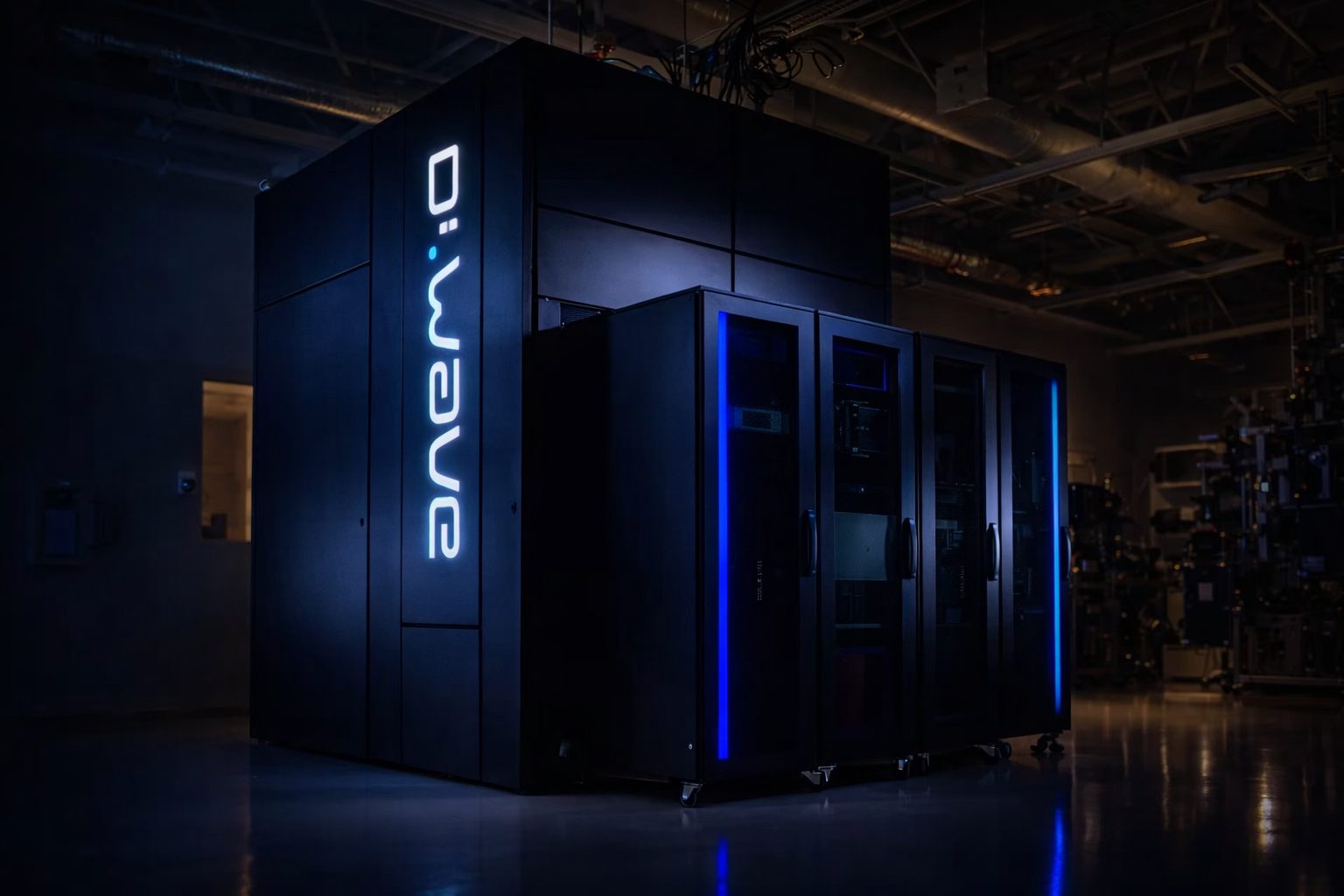

D-Wave Quantum Inc. (NYSE: QBTS) ended Tuesday, December 23, 2025, on a sharply volatile note: a steep pullback during the regular session—coming right after Monday’s surge—followed by a small rebound in after-hours trading as investors digested new insider-trading filings and the latest round of commentary around the quantum-computing “pure play” trade.
Below is the after-the-bell snapshot, the news that moved the stock today, what analysts are forecasting, and the key items to watch before the market opens Wednesday, Dec. 24, 2025—a holiday-shortened session.
QBTS after the bell: price action and key levels (Dec. 23)
Regular session: QBTS closed at $29.12, down $3.07 (-9.54%) on the day. StockAnalysis+1
Day’s range: roughly $28.65 (low) to $31.88 (high). StockAnalysis
Volume: about 44.45 million shares, a high-print day that reflects how crowded and fast-moving the name has become.
After-hours: QBTS traded around $29.60–$29.61 in the evening session—up about 1.6% from the cash close, as of roughly 6:36–6:44 p.m. ET on widely followed quote feeds.
Context matters: Tuesday’s slide came immediately after a big Monday breakout. On Dec. 22, QBTS closed at $32.19 (+20.02%) on ~62.48 million shares. StockAnalysis
In other words, the stock gave back a meaningful portion of the prior session’s momentum in less than 24 hours—classic behavior for a high-beta, retail-active momentum name.
What moved D-Wave Quantum stock today? The “insider selling” headline
The dominant catalyst in today’s coverage was insider selling disclosed via SEC Form 4 filings, which multiple market outlets highlighted as a likely driver of the sharp intraday drop.
The filings that investors reacted to
Two filings stood out:
- CEO Alan E. Baratz reported a transaction dated Dec. 22, 2025: he acquired 793,712 shares via option exercise (exercise price $0.91) and sold 793,712 shares the same day at a weighted average sale price of $30.1282. The filing also indicates he continued to hold millions of shares afterward (including shares tied to unvested awards).
- CFO John M. Markovich reported a sale of 100,000 shares dated Dec. 22, 2025 at an average price of $30.03.
MarketBeat’s widely circulated intraday note explicitly tied the day’s move to these sales and the timing—coming right after the stock’s big run.
Why insider sales can hit hard in a momentum stock
Insider selling does not automatically mean “bad news,” especially when it’s connected to option exercises (tax and liquidity planning can be a big factor). But in stocks that have been trading on narrative and momentum, Form 4 headlines often act like a match near gasoline:
- They can spook late buyers
- They can accelerate profit-taking
- They can create a quick “risk-off” shift in sentiment—even if the transactions were planned or routine
That dynamic was visible today: QBTS fell hard during the core session, then stabilized after the initial selling wave, with a modest after-hours bounce.
Today’s other major theme: “Monday’s rally faded” and balance-sheet debate
Beyond the filings, commentary today also framed Tuesday as a reversal of Monday’s enthusiasm, with some analysts arguing the market is refocusing on profitability, cash burn, and execution risk for pre-profit quantum companies.
FXLeaders summarized the day as a near-10% drop as investor concerns resurfaced, even as D-Wave continues pushing visibility efforts (including CES 2026 participation).
Meanwhile, a separate technical-analysis take from Benzinga argued that QBTS had recently broken through a resistance area near ~$28.70—the kind of level traders watch closely to see whether it holds as support after a pullback.
The business narrative: CES 2026 visibility is still a near-term talking point
Part of the bullish storyline earlier this week was D-Wave’s plan to appear at CES 2026 and highlight commercial use cases—an effort aimed at reinforcing the “real-world value today” angle in a market that can be skeptical about quantum timelines.
D-Wave announced it would bring commercial quantum computing to CES 2026 and showcase technology and customer success stories. D-Wave Quantum
FXLeaders also noted planned CES-related visibility, including showcasing annealing systems and hybrid approaches, as part of the narrative investors have been trading around.
Bottom line: CES exposure can help the story, but today’s tape showed that stock price still reacts most to capital-markets signals (like insider trading headlines) when sentiment is fragile.
Forecasts and analyst outlook: still bullish overall, but wide dispersion
Despite Tuesday’s drawdown, many analyst dashboards still show a generally positive stance—though targets vary widely and the stock’s volatility makes “forecasting” unusually sensitive to sentiment.
Street consensus and near-term targets
MarketBeat reported a consensus tilt toward “Moderate Buy” and an average price target around $33.67 (based on the set of analyst ratings it tracked), even as the stock sold off on insider headlines. MarketBeat
Recent bullish initiations and sector calls
A notable recent catalyst for the group (including D-Wave) was Jefferies initiating coverage on quantum “pure plays,” with a Buy rating and a $45 price target for D-Wave in that note. Investing.com
Wedbush has also been publicly constructive on the broader quantum cohort, including D-Wave, framing quantum computing as a long-term “transformational” theme—while acknowledging near-term pressure is possible. Investopedia
The reality check: volatility is part of the package
Reuters has repeatedly pointed out that pure-play quantum stocks can be exceptionally difficult to value and prone to sharp swings as investors chase long-dated narratives with limited near-term fundamentals.
So, going into the Dec. 24 open, it’s reasonable to say: the Street’s longer-term tone remains constructive, but the stock is trading like a momentum instrument, not a slow-moving “fundamentals compounder.”
What to know before the market opens tomorrow (Wednesday, Dec. 24, 2025)
Here are the practical, pre-open items that matter most for QBTS going into the next session.
1) It’s a holiday-shortened trading day
The NYSE schedule indicates U.S. markets will close early at 1:00 p.m. ET on Wednesday, Dec. 24, 2025 (with specific early-close rules for certain options sessions).
Why that matters for QBTS:
- Lower liquidity is common on shortened sessions.
- Bigger spreads and air pockets can appear, especially in high-volatility names.
- Early moves can look “strong” or “weak” on thin volume—so traders often weigh follow-through carefully.
2) Watch whether the after-hours bounce holds into premarket
QBTS’ after-hours move back toward $29.60–$29.61 suggests at least some dip-buying or stabilization after the regular-session selloff.
Before the open, traders will typically watch:
- Does it hold above $29 in premarket?
- Does it retest Tuesday’s ~$28.65 low (the session floor)?
- Does it reclaim psychological resistance near $30, where sellers showed up during the day?
3) Expect “headline sensitivity” to remain high
After a Form 4-driven session, QBTS can stay reactive to:
- Additional insider-related headlines (new filings, recaps, commentary)
- Quantum-sector news involving peers
- Macro risk appetite (because speculative tech often moves with sentiment)
Some trackers have highlighted that insider transactions have been active recently, which can keep the topic in the spotlight even when there’s no new company announcement.
4) Separate “insider selling” from “business deterioration”
What happened today was primarily a market-structure/sentiment event, not a clear fundamental re-rating from a new earnings report.
For perspective on fundamentals, earlier coverage has pointed to:
- Revenue growth and bookings increases in recent reporting periods
- Continuing losses, including non-cash warrant-related accounting impacts during parts of 2025
Also relevant to capital-structure context: D-Wave recently announced completion of a public warrant redemption process in late 2025, which it framed as simplifying the capital structure.
5) Technical traders are watching “breakout vs. failure” behavior
Benzinga’s technical commentary today focused on breakout mechanics and the idea that prior resistance can become support—an argument many short-term traders will pressure-test quickly on the next session.
In plain English: if QBTS can’t hold key levels early on a shortened session, volatility can return fast; if it stabilizes, the tape can look very different by midday.
The setup going into the Dec. 24 open
QBTS enters Wednesday with three forces pulling at the stock simultaneously:
- Momentum hangover (Monday’s surge, Tuesday’s reversal)
- Insider-sale headlines (real, specific filings that traders acted on)
- Still-bullish longer-term forecasts from parts of Wall Street covering the quantum cohort
Add the Christmas Eve early close, and the most important premarket question becomes simple:
Will QBTS treat Tuesday’s selloff as a one-day shock and stabilize, or will thin holiday liquidity amplify another leg of volatility?
This article is for informational purposes only and is not investment advice.
Related articles: NYSE:QBTS