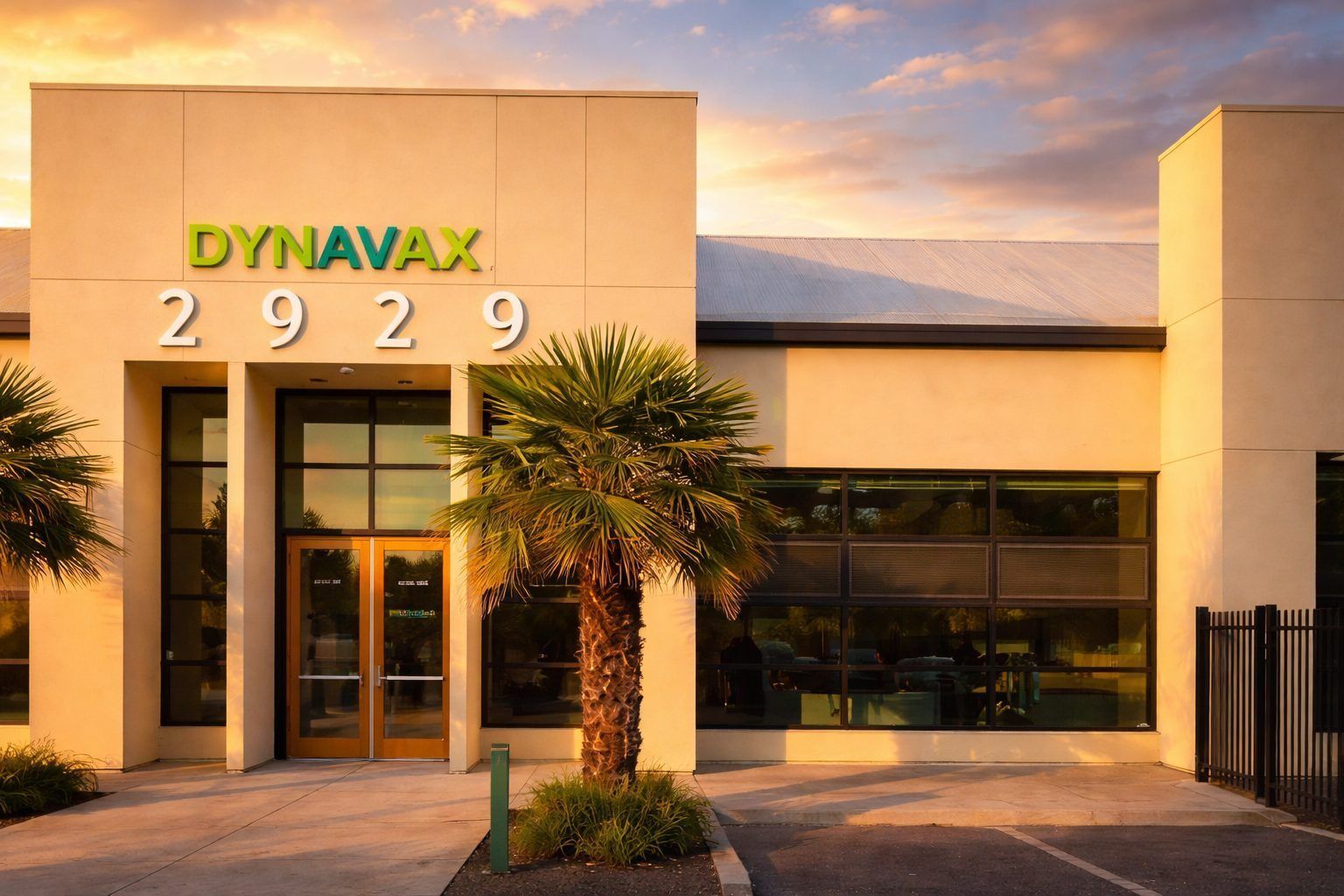
Dynavax Technologies Corporation (NASDAQ: DVAX) is the standout mover heading into the Christmas break after Sanofi agreed to acquire the vaccine maker in an all-cash deal valued at about $2.2 billion. The transaction price — $15.50 per share in cash — instantly re-framed DVAX from a “biotech fundamentals” story into a deal-arbitrage stock, with trading now anchored around the buyout price. Reuters+2PR Newswire+2
A timing note that matters for anyone planning “tomorrow” trades: U.S. equities had a holiday early close today (Dec. 24) at 1:00 p.m. ET, and the market is closed Thursday, Dec. 25 for Christmas. The next regular U.S. equity session is Friday, Dec. 26. NASDAQ Trader+1
What happened to DVAX after the bell today
In late trading following today’s shortened session, DVAX was around $15.38 with heavy volume and a wide intraday range as the market rapidly priced in the cash offer. As of 19:35 UTC (post-close), DVAX showed an intraday high near $15.71, low around $14.50, and volume above 30 million shares.
Reuters described DVAX shares as up roughly 39% in U.S. trading on the day, trading around $15.45 at the time of its report — essentially right on top of the $15.50 bid, as often happens when a definitive cash deal is announced.
The single driver: Sanofi is buying Dynavax for $15.50 per share
The move is tied directly to today’s acquisition announcement:
- Buyer: Sanofi
- Target: Dynavax Technologies
- Consideration:$15.50 per share in cash
- Implied equity value: about $2.2 billion
- Timing: expected to close in Q1 2026 (subject to customary conditions)
Sanofi’s strategic rationale is centered on vaccines — adding Dynavax’s marketed HEPLISAV‑B adult hepatitis B vaccine and gaining Dynavax’s shingles vaccine candidate (Z‑1018), which is in Phase 1/2 development.
Why DVAX is now trading slightly below $15.50
When a deal is cash and definitive, the target stock typically trades near but not exactly at the offer price. That gap (the “spread”) reflects:
- Time value (investors are waiting until closing to receive cash)
- Deal risk (regulatory approvals, tender participation, and other closing conditions)
- Holiday liquidity (today’s shortened session can amplify small dislocations)
The key takeaway for the next session: DVAX’s day-to-day movement is now more about deal probability and timeline than biotech sentiment, unless new information changes the odds of closing (or a competing bid emerges).
Deal structure investors should understand before the next open
This is structured as a cash tender offer followed by a merger “back-end” step:
- Sanofi expects to commence a tender offer for all outstanding DVAX shares at $15.50.
- The Dynavax board unanimously approved the transaction.
- Closing is subject to customary conditions, including:
- Tender of at least a majority of outstanding shares
- Expiration/termination of the Hart‑Scott‑Rodino waiting period (antitrust)
- Certain foreign regulatory filings/clearances, and other conditions
- Importantly, today’s announcement materials emphasize the tender offer has not yet commenced, and that formal tender documents will be filed with the SEC (Schedule TO) along with Dynavax’s recommendation statement (Schedule 14D‑9).
For readers thinking about action “tomorrow”: the most market-moving near-term updates are likely to be SEC filings and tender-offer launch details, which can hit the tape even when the market is closed. PR Newswire
Analyst and commentary reaction from today: quick downgrades, “deal mode” ratings
Once a definitive cash offer is on the table, it’s common for analysts to shift ratings toward neutral language because upside becomes capped near the deal price.
- William Blair downgraded DVAX to Market Perform from Outperform after the Sanofi deal, according to The Fly’s coverage on TipRanks.
- MarketBeat likewise reported a William Blair “market perform” stance and highlighted that many pre-deal targets/ratings become less actionable in a takeout scenario. MarketBeat
One important nuance: you may still see older “12‑month price targets” published across finance sites (often well above the deal price). Those targets were largely built for a standalone Dynavax valuation and are typically superseded by a cash deal unless the transaction fails or a higher bid appears. MarketBeat+1
What Sanofi is buying: HEPLISAV‑B and a shingles candidate
Understanding the assets helps explain why a large pharma would pay a premium:
HEPLISAV‑B (adult hepatitis B vaccine)
Sanofi and other reporting emphasized HEPLISAV‑B’s differentiation: an adult hepatitis B vaccine administered as two doses over one month, versus traditional three-dose schedules over six months.
Reuters reported HEPLISAV‑B generated $90 million in sales in Q3 2025, and noted that analysts have modeled meaningful peak U.S. sales potential.
Sanofi also pointed to a large adult opportunity in the U.S., citing nearly 100 million adults born before 1991 who remain unvaccinated.
Z‑1018 (shingles vaccine candidate)
The deal also includes Dynavax’s Z‑1018 shingles candidate in Phase 1/2 development.
Reuters cited commentary that the candidate could become a meaningful longer-term contributor if early signals hold up in larger studies, with the shingles market currently dominated by GSK’s Shingrix.
Market context today: a thin, holiday-shortened session amplified the move
DVAX’s catalyst was company-specific, but today’s tape also featured holiday-thinned liquidity and a broad market drift higher into year-end. Reuters reported major U.S. indexes finished higher in the shortened session as part of a “Santa rally” narrative — a backdrop that can sometimes boost risk appetite and momentum chasing around big headlines. Reuters+1
What to watch before the next U.S. market session
Because Dec. 25 is a full U.S. market holiday, the practical checklist is “what to know before Friday, Dec. 26.”
1) Any SEC filing that starts the tender-offer clock
The next concrete milestone is the formal tender-offer launch and the associated SEC documents (Schedule TO and 14D‑9). Those filings often clarify key mechanics, timelines, and conditions in plain English.
2) Where DVAX trades relative to $15.50
If DVAX trades meaningfully below $15.50, the market may be pricing:
- Longer time-to-close
- Higher perceived regulatory/closing risk
- General risk-off conditions
If DVAX trades at or above $15.50, the market may be signaling either:
- Very high confidence of closing plus carry/technical effects, or
- Some probability of a higher competing bid (not the base case, but this is what “above-offer” trading often implies)
3) Regulatory headlines and deal-condition updates
This transaction includes standard antitrust/tender conditions, so any news about regulatory timing can move the spread.
4) Earnings calendar — likely less important near-term, but still on the radar
Several market calendars list Dynavax’s next earnings report around Feb. 19, 2026 (timing can shift, and deal progress could change what matters), but it remains a scheduled marker investors watch if the acquisition has not closed by then.
Bottom line for DVAX going into the holiday break
After the bell on Dec. 24, 2025, Dynavax is no longer trading primarily on biotech “upside.” It’s trading as a takeout target with a defined cash value of $15.50 per share, and the market’s job from here is to price time, probability, and risk until closing — expected in Q1 2026. Sanofi+1
With U.S. markets closed on Dec. 25, the most actionable “before the next open” work is simple: watch for tender-offer commencement filings, monitor any regulatory timeline updates, and track whether DVAX continues to trade tightly around the offer price when trading resumes on Friday, Dec. 26. NASDAQ Trader+1