
Microsoft Corp. NASDAQ:MSFT doesn’t have a traditional “after the bell” trading update today—because the U.S. stock market is closed on Thursday, December 25, 2025, for Christmas Day. New York Stock Exchange
That said, investors still have plenty to digest before the next full session begins tomorrow (Friday, December 26, 2025)—especially after a holiday-shortened Christmas Eve session that pushed major U.S. indexes to record highs and kicked off the market’s seasonal “Santa Claus rally” window. Reuters
Below is where Microsoft stock left off, the most important Microsoft and market headlines circulating today (Dec. 25), what analysts are forecasting for 2026, and the practical checklist for what to watch heading into the Dec. 26 open.
Microsoft stock price check: Where MSFT stands heading into Dec. 26
Because U.S. markets are closed today, the latest actionable reference point for Microsoft stock is Wednesday, Dec. 24, 2025 (Christmas Eve)—a shortened trading session.
As of the latest available quote/close:
- Last price / close:$488.02 Nasdaq
- Day change (Dec. 24): roughly +0.2% vs. the prior close Nasdaq
- Intraday range (Dec. 24):$484.96 – $489.15
- Volume (Dec. 24): about 5.86 million shares, light even for a holiday week Nasdaq
- Market cap: about $3.85 trillion
- Trailing P/E: about 36.7
- 52-week range:$344.79 – $555.45 Nasdaq
Two context clues matter here going into Friday:
- MSFT is still below its 52-week high—so sentiment can flip quickly on any “AI demand” headline (positive or negative). Nasdaq
- Holiday liquidity can exaggerate moves. A “normal” Microsoft day can become an outsized gap up or down when volumes are thin.
Why “after-hours” is different on Dec. 25 (and what that means for MSFT)
If you’re looking for a normal post-close catalyst—earnings, a big SEC filing drop, or a major product surprise—today’s calendar simply isn’t built for it.
- NYSE and Nasdaq are closed on Dec. 25.
- The prior session (Dec. 24) closed early for the holiday.
So, for Microsoft shareholders, “after the bell today” really means: Where did MSFT finish on Christmas Eve, and what new information hit the tape while markets were shut?
That’s the lens to use heading into Friday, Dec. 26.
The broader market backdrop investors are waking up to on Dec. 26
Microsoft is a mega-cap heavyweight, and MSFT often trades as a “proxy” for two big forces:
- Big Tech/AI risk appetite
- Interest-rate expectations
On Christmas Eve, U.S. markets ended at or near record territory in a shortened session:
- Dow and S&P 500 closed at record highs Reuters
- The market’s focus stayed on the AI trade rebounding and on expectations for Fed rate cuts in 2026 (with traders still cautious about a January cut).
Separately, one of today’s most-circulated “tomorrow setup” stats comes from Bespoke via MarketWatch: Dec. 26 has historically been the most consistently positive day of the year for the S&P 500 (though no one should trade purely on seasonality). MarketWatch
For Microsoft, that matters because a strong tape can lift mega-caps even without Microsoft-specific news—especially during holiday-thinned trading.
Today’s Microsoft news cycle: What’s fresh on Dec. 25 that could matter for MSFT
Even on Christmas Day, investors got one notably concrete Microsoft-related development—one that ties directly into the biggest debate around Microsoft stock: AI infrastructure spending vs. payoff.
Microsoft-linked data center expansion in Texas (new details today)
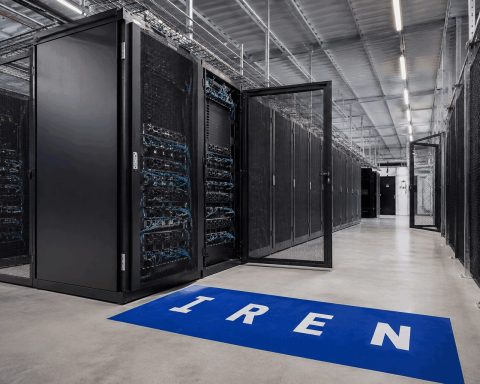
A local filing and reporting out of Texas points to another major data-center build tied to Microsoft’s growing footprint west of San Antonio:
- A new registered project describes a 195,670-square-foot colocation data center with an estimated cost of $400 million, scheduled from August 2026 through July 2028.
- Reporting also notes Microsoft has amassed roughly 1,451 acres in Medina County and has multiple other data-center projects underway in the area.
Why MSFT investors should care: this reinforces what’s been driving the Microsoft narrative all year—the company is building aggressively for cloud and AI demand, and those builds are large, long-dated capital commitments.
The market’s AI spending debate is still front-and-center
A recurring late-2025 theme has been whether Big Tech’s AI buildout will translate into profits quickly enough to justify valuations.
Microsoft sits at the center of that discussion because it’s spending heavily while also trying to monetize AI through Azure and Copilot.
- Wedbush’s Dan Ives has argued Microsoft remains an AI “front-runner,” reiterating an Outperform rating and a $625 price target, and suggesting Copilot could add meaningful revenue by fiscal 2026. Barron’s
- Meanwhile, the market broadly continues to scrutinize how quickly enterprises adopt AI products—and whether near-term demand matches the scale of investment.
Important recent Microsoft catalysts still in the background (not “today,” but shaping the tape)
These aren’t dated Dec. 25, but they’re highly relevant to what traders will react to if they resurface in headlines Friday:
- Microsoft 365 price increases for commercial/government plans starting July 2026, with larger hikes in some small business and frontline plans.
- Major AI investment plans announced earlier in December, including multi-year spending commitments tied to cloud/AI capacity growth (including India and Canada).
- Cloud licensing and competition pressure, including a UK lawsuit tied to allegations around Windows Server licensing on rival clouds (a regulatory/competition theme investors monitor closely).
If any of these threads reappear with a new twist (a regulator update, a competitor response, a big enterprise contract), they can move MSFT quickly—especially in a thin post-holiday session.
Analyst forecasts for Microsoft stock: Where Wall Street sees MSFT heading into 2026
The consensus is still bullish—targets cluster in the $600s
Across widely followed analyst compilations and recent commentary:
- Many tracked analyst averages hover around the low-$630s.
- Wedbush sits at $625 (Ives), in the same neighborhood.
Using $488 as the baseline, an average target in the ~$630 range implies roughly ~29% upside—though price targets are not guarantees, and they often change quickly if growth or margins surprise.
The bull case (what optimists believe)
The bullish thesis typically rests on three pillars:
- Azure monetization of AI demand (capacity constraints easing over time, plus premium AI workloads) Barron’s
- Copilot as an attach-rate story across Microsoft’s enormous installed base (Office, Windows, Teams, Dynamics, GitHub) Barron’s
- Pricing power (Microsoft 365 price increases and bundling strategies that can lift ARPU over time) Reuters
The bear case (what skeptics keep pointing to)
The cautious view usually focuses on:
- AI capex risk: investors want proof that the spend is generating durable profit, not just revenue headlines.
- Competitive pressure in productivity and cloud (including pricing and licensing scrutiny).
- Valuation sensitivity: MSFT’s multiple can compress if rates rise or if AI growth expectations cool.
What to know before the market opens tomorrow (Dec. 26): A practical MSFT checklist
Here’s what MSFT investors typically monitor between a holiday close and the next open—especially when liquidity is thin.
1) Watch the rate-cut narrative and bond yields
Microsoft is a long-duration cash-flow story in the eyes of many institutions. When rate expectations shift, mega-cap tech can reprice fast.
Christmas Eve trading kept the market positioned for 2026 rate cuts, but with caution about the near-term path.
2) Expect “Santa rally” headlines—don’t confuse seasonality with fundamentals
Yes, Dec. 26 has an unusually strong historical track record, and it’s part of the Santa rally window. MarketWatch
But Friday’s MSFT move will still come down to: rates, AI sentiment, and any company-specific surprise.
3) Monitor AI demand signals (and any “AI adoption slowing” chatter)
This has been one of the most headline-sensitive topics for Microsoft.
Earlier in December, Microsoft publicly pushed back on a report suggesting lowered AI sales growth targets, underscoring how carefully investors parse every AI adoption datapoint.
If Friday’s tape revives “AI demand cooling” narratives—or the opposite—MSFT can move in sympathy with the broader AI complex.
4) Track data-center and power infrastructure developments
Today’s Texas data-center details are a reminder: Microsoft’s buildout is continuing—and the market is constantly weighing:
- how much capacity is coming online,
- when,
- and whether returns justify the spend.
On a quiet news day, even a regional build update can help shape investor perception of momentum (or capex intensity).
5) Know the levels investors are watching (without overhyping “technical analysis”)
Even long-term investors often watch these reference points:
- The 52-week high ($555.45) and how far MSFT is from reclaiming it Nasdaq
- The stock’s position relative to key moving averages (a sentiment gauge used by many funds) Yahoo Finance
In holiday trading, those levels can matter more than usual, because fewer participants can amplify breakout or breakdown moves.
Bottom line: The most realistic setup for MSFT into the Dec. 26 open
With no regular U.S. session on Dec. 25, Microsoft stock enters Friday with a relatively clean slate: it closed Christmas Eve near $488, in a market that just printed record highs and is leaning into seasonal optimism.
The swing factor is still the same one that’s defined MSFT’s 2025: the tug-of-war between AI-driven growth optimism and questions about the pace of monetization and the size of infrastructure spend.
If Friday opens strong, MSFT can ride the tape. If a new AI-demand or regulation/licensing headline hits in thin liquidity, the move can be sharper than it “should” be on fundamentals alone.
Related articles: NASDAQ:MSFT