
Visa Inc. NYSE:V didn’t get a true “after-the-bell” moment today because U.S. stock markets were closed for Christmas Day (Thursday, Dec. 25, 2025). Still, investors are heading into Friday’s reopen (Dec. 26) with a fresh set of catalysts to weigh: Visa’s own holiday spending read, a new 8-K tied to litigation escrow funding, and a steady drumbeat of debate over card-network fees and competition.
Below is a full, up-to-date rundown of Visa stock’s latest available price, the most important Visa headlines hitting screens this week, and the key checks to make before the opening bell on Dec. 26.
Visa stock price today: why there was no “after-hours” move on Dec. 25
Because Christmas Day is a U.S. market holiday, Visa shares did not trade in a regular session today. The last U.S. equity session was the shortened Christmas Eve trading day (Wednesday, Dec. 24, 2025), when markets closed early.
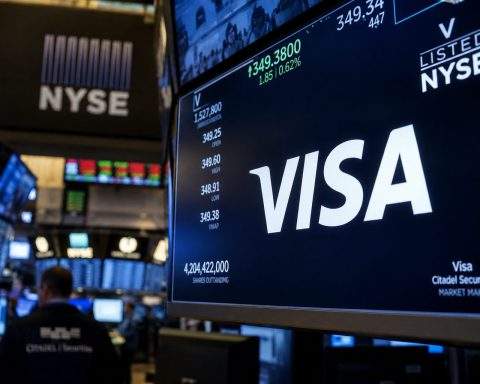
Latest available official quote (from the Dec. 24 session):
- Visa (V) last price:$355.14
- Day change:+$1.76 (+0.50%)
- 52-week range (shown on Visa’s quote page):$299.00 to $375.51
- Volume (holiday-thinned): about 2.02 million shares Visa Investor Relations
After-hours note: delayed quote services showed Visa around $355 in the late Dec. 24 after-hours window, essentially flat versus the early close.
Why that matters for Friday (Dec. 26): the first full session after a holiday can see thin liquidity, wider spreads, and sharper moves around headlines—especially for mega-caps like Visa, where passive flows and institutional rebalancing can dominate short-term price action.
The biggest Visa catalyst in the last 48 hours: holiday spending data
Even with markets shut today, investors got something close to a real-time demand signal earlier this week.
Visa says U.S. holiday spending rose 4.2% year over year
In a Dec. 23 release, Visa published preliminary results from its Visa Consulting & Analytics Retail Spend Monitor, reporting that overall U.S. holiday retail spending increased 4.2% year over year (not inflation-adjusted), based on a seven-week window starting Nov. 1 and running through Dec. 21.
Key takeaways Visa highlighted:
- In-store sales dominated:73% of holiday payment volume was in physical stores (27% online).
- E-commerce grew faster:online retail spending rose 7.8%.
- Category leadership:electronics +5.8%, clothing & accessories +5.3%.
Reuters: Visa and Mastercard data point to roughly 4% U.S. holiday retail sales growth
Reuters reported that early reads from Visa and Mastercard pointed to about 4% growth in U.S. holiday retail sales in 2025, with shoppers leaning into electronics and apparel and using AI tools to compare prices and stretch budgets.
Investor implication for Visa stock: holiday spend data doesn’t flow 1:1 into Visa revenue (Visa is a network, not a lender), but it’s still a critical sentiment input—especially heading into a year-end tape where investors often reward “clean growth + durable margins” stories.
A new legal-risk datapoint: Visa’s Dec. 23 8-K and litigation escrow funding
Visa also put fresh information into the market via an SEC filing this week.
Visa authorized a $500 million deposit into its U.S. litigation escrow account
In an 8-K dated Dec. 23, 2025, Visa disclosed it authorized the deposit of $500 million into a U.S. litigation escrow account established under its U.S. retrospective responsibility plan. The filing also explains that when Visa funds this escrow account, the value (and conversion rates) of certain class B-1 and B-2 shares adjust.
Why investors care: Visa has long had legal/regulatory overhang around payments fees and competition. An escrow deposit doesn’t automatically mean new liability is imminent—but it does keep the market’s attention on litigation exposure and the pace of resolution.
Fee and competition pressure remains a recurring theme
Recent reporting has kept the broader “payments fee” debate active:
- ATM fee litigation: Reuters reported Visa and Mastercard agreed to pay $167.5 million to settle a class action alleging inflated ATM access fees at independent ATMs (Visa’s share ~$88.8 million, Mastercard ~$78.7 million), while denying wrongdoing.
- Swipe-fee settlement debate: The Financial Times reported a proposed settlement framework aimed at lowering interchange (“swipe”) fees and giving merchants more flexibility, while noting pushback from major trade groups and ongoing political pressure around fee levels. Financial Times
- Retailer objections: Reuters separately reported that Walmart and other retailers urged a judge to reject a proposed Visa/Mastercard settlement, arguing benefits were too small and key network rules remained.
Bottom line for Friday’s open: legal headlines can hit without warning, and in a thin post-holiday session, even incremental developments can move large-cap stocks more than usual.
Growth narrative check: stablecoins and AI commerce moved to the foreground
While fee pressure is the mature-network risk, Visa is also working hard to convince investors it can “own the rails” even as the rails evolve.
Visa launched USDC stablecoin settlement in the United States
On Dec. 16, Visa announced it would allow select U.S. issuer and acquirer partners to settle obligations with Visa in Circle’s USDC, a dollar-denominated stablecoin, marking a U.S. expansion of its stablecoin settlement efforts. Visa said it had surpassed a $3.5 billion annualized run-rate in monthly stablecoin settlement volume as of Nov. 30.
Visa also named early participants and the plumbing:
- Initial U.S. participants include Cross River Bank and Lead Bank
- Settlement initially runs over the Solana blockchain
- Visa emphasized 7-day settlement windows and “weekends and holidays” resilience, without changing the consumer card experience Visa
Visa says it completed hundreds of secure, agent-initiated AI transactions with partners
On Dec. 18, Visa announced a milestone in “agentic commerce,” saying hundreds of secure, agent-initiated transactions had been completed in collaboration with partners. Visa cited research indicating 47% of U.S. shoppers use AI tools for at least one shopping task and predicted millions of consumers will use AI agents to complete purchases by the 2026 holiday season. Visa
Why this matters for Visa stock: these initiatives support the thesis that Visa can remain central even if commerce shifts from “human clicks buy” to “AI agents transact,” and even if settlement increasingly blends traditional rails with tokenized/onchain infrastructure.
What changed today (Dec. 25): forecasts and analysis pieces investors are reading
Major wire coverage of Visa specifically was light today (it’s Christmas Day), but several investment and markets publishers pushed out fresh Visa stock analysis and forecast framing.
1) Trefis: “High Margins, 34% Discount”
A Trefis note dated Dec. 25 argued Visa offers “high margins” at a valuation it frames as discounted versus a year ago on a price-to-sales basis, while also publishing a Trefis value estimate around $337 versus the market around the mid-$350s (implying modest downside in its framework). Trefis
2) Simply Wall St: stablecoin + AI + escrow funding reshaping the narrative
A Simply Wall St piece dated Dec. 25 connected three recent developments—USDC settlement, AI commerce initiatives, and the $500M escrow deposit—and published a fair value estimate around $395.44 (about 11% upside in its model), while emphasizing the range of outcomes tied to regulation and disruption.
3) Short interest snapshot: still relatively low, but ticking up
Benzinga’s Dec. 25 short-interest update said Visa had 24.84 million shares sold short, about 1.47% of float, and estimated 3.6 days to cover, while noting short interest rose 12.21% versus the prior report.
4) Institutional positioning stories (filings-based, backward-looking)
MarketBeat published multiple Dec. 25 posts summarizing changes in institutional holdings disclosed in filings (for example, one item notes Yousif Capital Management reduced its stake). These are useful for long-horizon context, but they’re typically lagging indicators rather than real-time catalysts.
5) Street consensus remains broadly constructive (with the usual caveats)
Consensus aggregators today continued to show Visa with an overall positive analyst posture and average price targets around the low $400s—though methodologies vary meaningfully by provider and update cadence.
What to know before the market opens tomorrow (Friday, Dec. 26, 2025)
Here’s the practical pre-market checklist for Visa stock (V) going into the reopen.
1) Confirm the “real” starting line: last close, after-hours, and key levels
- Last official close: ~$355.14 (Dec. 24 early close) Yahoo Finance
- 52-week range: $299.00–$375.51 (watch the prior highs near the top of that range) Visa Investor Relations
- Thin liquidity warning: post-holiday sessions can exaggerate moves.
2) Watch for follow-through on the holiday spending narrative
- The market already saw Visa’s 4.2% holiday spending growth headline and the category mix (electronics, apparel).
- If retailers (or competing payment networks) put out late updates, Visa can move on “read-through” alone.
3) Track legal/regulatory headlines — they can gap the stock
Key items already in the mix:
- The Dec. 23 8-K on the $500M escrow deposit SEC
- Ongoing attention on ATM fee litigation settlements and broader antitrust/competition pressure Reuters
In a low-volume tape, legal headlines can create outsized pre-market gaps.
4) Don’t ignore the market-structure wrinkle: government offices closed, but markets open
Reuters reported that major U.S. exchanges said they would remain open as scheduled on Dec. 24 (early close) and Dec. 26 (full session) despite the federal office closure directive.
Separately, the Federal Reserve’s calendar noted federal government offices will be closed on Dec. 26, 2025, and that certain daily/weekly statistical releases scheduled for that day would move to the next business day. That can slightly change the information flow traders expect during the session.
5) Expect “Santa rally” chatter to influence tone — but treat it as sentiment, not a thesis
MarketWatch highlighted that Dec. 26 has historically been a consistently positive trading day for the S&P 500 in long-run seasonality data. That backdrop can matter for risk appetite and flows into mega-cap leaders, including Visa.
The setup for Visa stock into Dec. 26: a simple way to frame it
Going into Friday’s open, Visa stock is sitting at the intersection of three forces:
- Consumer health: Holiday spending growth looks solid but not overheated, and the mix (electronics, apparel) matters for sentiment.
- Regulatory/legal gravity: The escrow deposit filing and continued scrutiny of network fees keep headline risk alive.
- “Next rails” optionality: stablecoin settlement and AI commerce initiatives reinforce Visa’s pitch that it can monetize the future of transactions—not just plastic cards. Visa
If you’re watching V into the open, the most actionable question isn’t “Did it trade today?” (it didn’t) — it’s which narrative dominates the first real liquidity window after the holiday.
Related articles: NYSE:V