
Bentonville, Ark. / New York — Dec. 25, 2025 — Walmart Inc. (WMT) heads into Friday’s Dec. 26 U.S. market open with a rare mix of catalysts: a fresh listing move to Nasdaq, a confirmed CEO transition date, and an earnings narrative that remains largely intact — steady U.S. traffic, fast e-commerce growth, and surging ad revenue — while investors debate whether the stock’s valuation is getting ahead of fundamentals.
U.S. equities were closed on Christmas Day (Dec. 25) and reopen for a full session on Dec. 26.
Walmart stock: where WMT stands heading into Friday’s open
Walmart shares last traded on Christmas Eve’s shortened session (Dec. 24), when WMT closed at $111.61.
Two practical points for Friday:
- Post-holiday trading can be thin, which sometimes amplifies moves on lighter volume.
- With the market closed on Dec. 25, any meaningful sentiment shift into Dec. 26 will likely come from late-breaking retail-spending headlines, analyst notes, and broader market positioning rather than company filings overnight.
The headline catalysts: Nasdaq listing, CEO transition, and the “raised outlook” quarter
1) Walmart is now a Nasdaq-listed stock — and the timeline is official
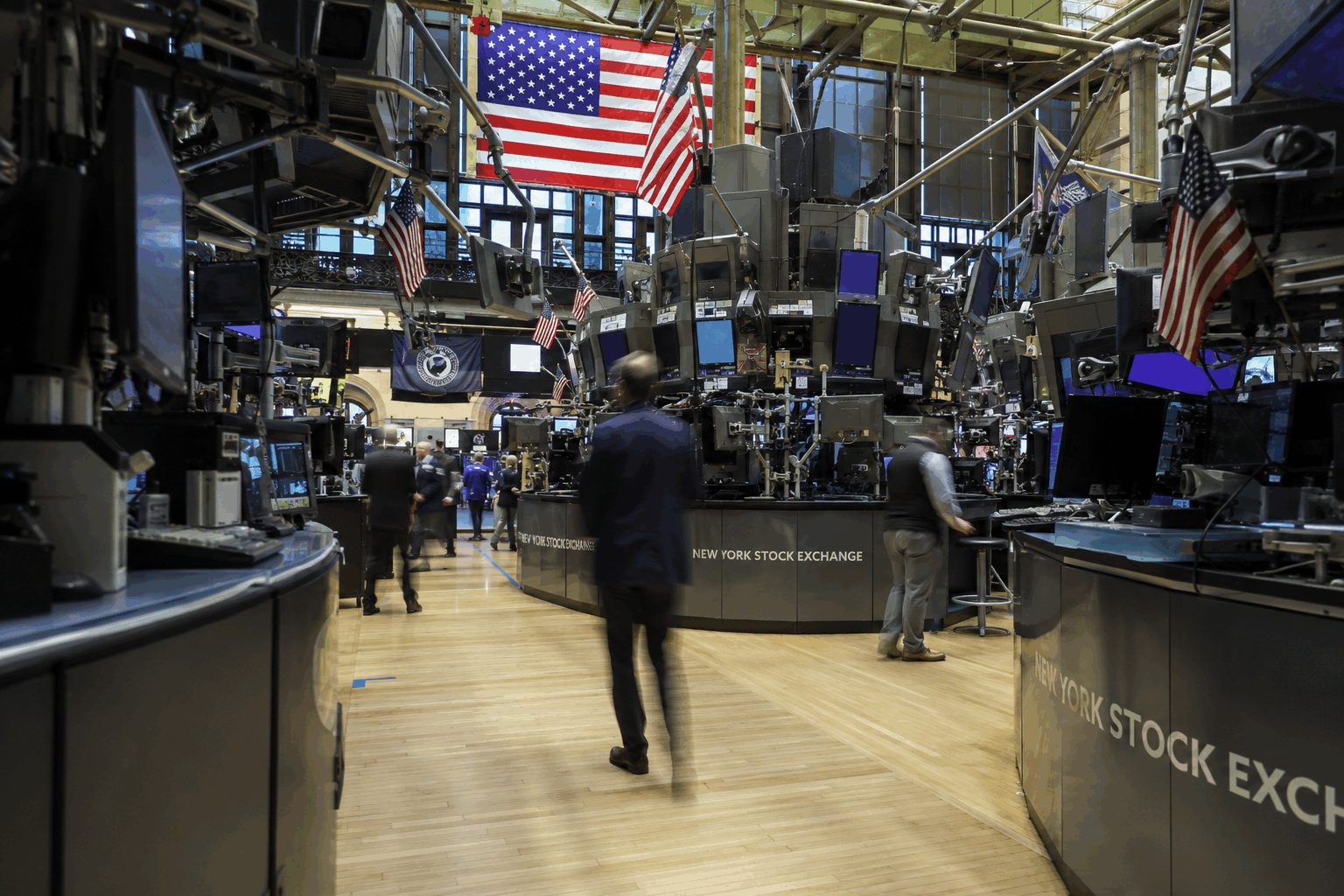
Walmart completed its transfer from the NYSE to Nasdaq this month. Nasdaq’s announcement confirms Walmart began trading on Nasdaq on Dec. 9, 2025, marking its first day on the exchange after decades on the NYSE.
The transfer details also appear in Walmart’s SEC filing: the company said NYSE trading would end at the close on Dec. 8, with trading beginning on Nasdaq at the market open on Dec. 9, while keeping the same primary ticker WMT.
Why it matters for Dec. 26: the listing change itself doesn’t alter Walmart’s business, but it can influence:
- visibility to certain investor audiences,
- trading mechanics/liquidity patterns over time,
- and (speculatively) index conversations once a company is on a given venue—though any index move is never automatic and depends on index-provider rules.
2) CEO succession is set: John Furner takes over Feb. 1, 2026
Walmart’s leadership transition is no longer “eventually”—it’s dated. In an SEC 8‑K, Walmart disclosed that CEO Doug McMillon will retire as CEO effective Jan. 31, 2026, and the board appointed John R. Furner as President and CEO effective Feb. 1, 2026. SEC
Walmart’s corporate materials also describe Furner as the current Walmart U.S. chief executive (since 2019), emphasizing continuity heading into fiscal 2026’s final quarter and into fiscal 2027 planning.
What investors watch next: succession details can become stock catalysts if investors expect strategy changes (capital allocation, pricing posture, tech spending pace, international portfolio moves). So far, company messaging stresses continuity.
3) The most important fundamental anchor: Walmart’s Q3 FY26 numbers and raised guidance
Walmart’s latest reported quarter (fiscal Q3 2026, ended Oct. 31, 2025) is still the core фундамент for how analysts frame WMT into year-end and into early 2026.
From the earnings release furnished via the SEC:
- Revenue:$179.5B, up 5.8% (6.0% constant currency) SEC
- Global e-commerce: up 27% SEC
- Walmart U.S. comp sales (ex-fuel): up 4.5% SEC
- Global advertising business: up 53% (including VIZIO); Walmart Connect U.S.: up 33% SEC
- FY26 guidance raised: net sales growth now 4.8% to 5.1% (cc); adjusted operating income 4.8% to 5.5% (cc); adjusted EPS $2.58–$2.63 (with a small currency headwind) SEC
A key nuance: Walmart reported operating income was pressured by a non-cash share-based compensation charge at PhonePe tied to IPO preparation, while “adjusted” figures looked stronger. That helps explain why some investors stay focused on adjusted profitability and cash generation rather than headline operating income. SEC
Holiday demand backdrop: what broader spending data implies for Walmart into year-end
Walmart is a bellwether for U.S. consumer health—especially value-seeking households—so macro retail signals matter heading into the first post-Christmas session.
A Reuters report published Dec. 23 cited preliminary data from Visa and Mastercard indicating U.S. holiday retail sales growth running around the 4% range, with Visa reporting +4.2% (Nov. 1–Dec. 21, excluding autos/gas/restaurants) and Mastercard reporting +3.9% (including retail and food service) over the same period.
NRF also reiterated its forecast that 2025 holiday sales (Nov. 1–Dec. 31) could rise 3.7%–4.2% versus 2024 to just over $1 trillion.
Why this matters for WMT investors: Walmart tends to benefit when shoppers are value-focused, and 2025’s holiday season narrative has leaned heavily toward promotions, price comparisons, and convenience — all areas where Walmart competes aggressively.
The “AI shopping” theme is real — and Walmart is marketing it hard
A second holiday trend investors are tracking: AI-assisted shopping is moving from novelty to habit.
Reuters reported that shoppers used AI tools to compare prices and stretch budgets this season, and cited Adobe commentary that AI-driven traffic to retail sites was expected to jump sharply versus last year—when AI shopping companions were far less common.
Walmart, for its part, has been heavily promoting Sparky, its generative-AI shopping assistant, saying customers used it for product comparisons, party planning, and gift ideas during Black Friday/Cyber Monday season, alongside deeper in-app usage in stores.
Investor takeaway: the near-term financial impact of AI assistants is hard to isolate, but Walmart’s pitch is straightforward: better discovery + easier fulfillment can lift conversion, basket size, and retention—especially as more shopping shifts to app-led behaviors.
What Wall Street forecasts say heading into Dec. 26
Analyst outlooks are broadly positive, but data providers differ on exact “consensus” because of methodology and which firms they include.
One widely-followed consensus compilation lists:
- Overall consensus: Strong Buy
- 12‑month average price target: about $121.29 (roughly high-single-digit upside from recent prices)
- Recent rating/target actions include Wells Fargo (target $130) and TD Cowen (target $136), among others.
A different consensus tracker shows:
- Average target around $120.54
- High target $135
- Low target $91
- “Moderate Buy” type consensus label (reflecting the service’s rating scale). MarketBeat
How to read this before the open:
If WMT is trading around the low $110s, the market is effectively saying: “We like the durability and the digital growth story — but we’re not paying unlimited multiples for it.” The next leg higher typically needs either (a) another guidance raise, (b) clear margin expansion, or (c) a re-acceleration signal in U.S. comps/e-commerce economics.
Bull case: why investors keep paying up for Walmart in 2025
The bullish argument into Dec. 26 (and into early 2026) usually centers on five points:
- Walmart U.S. traffic and comps remain resilient
Walmart U.S. comp sales ex-fuel rose 4.5% in Q3 FY26, with the company citing strength across categories. - E-commerce is no longer “nice to have”—it’s a growth engine
Walmart reported global e-commerce up 27%, and noted U.S. e-commerce accelerating with 28% growth, with expedited store-fulfilled delivery channels growing nearly 70% (per company disclosures). SEC - Higher-margin businesses are scaling fast (ads, membership)
Walmart cited its global advertising business up 53% (including VIZIO) and Walmart Connect U.S. up 33%. Membership income also grew at a double-digit rate in the quarter. - Cash generation supports investment and shareholder returns
For the nine months ended Oct. 31, Walmart reported operating cash flow of $27.452B and free cash flow of $8.825B, both up year over year, while also stepping up capital expenditures to support its investment strategy. - Guidance was raised — and that matters in a big way for “defensive growth”
Walmart raised its FY26 outlook for net sales growth and adjusted EPS. In a market where investors care about predictability, raised guidance can support a premium multiple—especially when paired with share gains and digital momentum. SEC
Bear case: what could trip up WMT after the holiday break
Walmart’s risks into Dec. 26 fall into a few buckets:
Valuation risk (the most debated point right now)
Some bear-leaning analyses argue Walmart is priced for near-perfect execution and that downside could open if growth cools. One recent valuation-driven commentary argued for significant downside risk under a slower-growth scenario.
Third-party valuation snapshots also place Walmart at a high P/E multiple relative to many traditional retailers (numbers vary by source and calculation approach).
Expense pressure (wages, claims, and operating leverage)
In its 10‑Q, Walmart noted operating expense pressure tied to associate wage investments, lower fuel sales, and higher self-insured general liability claims expense (among other drivers).
If sales growth slows even modestly while wage/claims trends remain sticky, investors can quickly shift focus from “durable growth” to “margin ceiling.”
International complexity (Flipkart timing, PhonePe IPO-related noise)
Walmart International posted strong constant-currency net sales growth, but operating income optics were hit by the PhonePe charge; Walmart also flagged that timing of Flipkart’s Big Billion Days benefited Q3 but would negatively affect Q4 growth comparisons.
Legal/regulatory overhangs never fully go away
Walmart’s filings outline a long list of legal and regulatory matters that investors periodically reprice (opioid-related matters, investigations tied to money transfer services compliance, driver platform matters, Mexico antitrust, India-related issues, and more).
These aren’t always immediate stock movers day-to-day, but they are part of the background risk premium investors demand.
The trading setup for Dec. 26: what to watch (without overthinking one day)
Because Friday is the first full session after Christmas, focus less on any single tick and more on whether there’s new information that changes the narrative.
Watchpoints that can matter most pre-market and at the open:
- Retail read-through headlines: any updates to holiday spending strength/weakness can swing sentiment around big-box retail broadly.
- Analyst notes: recent targets cluster in the $120–$136 zone depending on the firm; fresh upgrades/downgrades can move the stock on thin volume.
- Leadership-transition commentary: new details (or investor reactions) about the Feb. 1 CEO handoff can influence longer-duration holders.
- Any new corporate filings or press releases: Walmart has already set the big milestones (earnings, Nasdaq listing transfer, CEO transition), so incremental news is what would surprise.
And remember: U.S. markets are scheduled to trade normally on Dec. 26 (after being closed Dec. 25), with regular-session opens at 9:30 a.m. ET on major venues.
Bottom line before the market opens
Going into Dec. 26, Walmart stock is being priced as a high-quality, tech-enabled retail compounder: steady comps, rapid e-commerce scaling, fast-growing advertising, and a raised full-year outlook.
The main debate for investors right now is less about “Can Walmart execute?” and more about how much execution is already in the stock price—especially with valuation concerns showing up more frequently in market commentary. Forbes
If you’re watching WMT into Friday’s open, the most useful checklist is simple:
- Any fresh holiday-spending data that changes the demand picture, Reuters
- Any new analyst target changes that reset near-term expectations, Investing
- Any incremental news on the CEO transition and post-Nasdaq move narrative, SEC
- And whether WMT’s trading looks “normal” or unusually volatile in a likely thin, post-holiday tape. Nasdaq
This article is for informational purposes only and is not investment advice.
Related articles: NASDAQ:WMT