
U.S. markets reopen Friday, December 26, 2025, after the Christmas Day closure, and Visa Inc. NYSE:V is heading into the session with three themes dominating the near-term narrative: holiday spending trends, Visa’s expanding stablecoin/AI commerce push, and ongoing legal and regulatory overhangs (especially around card fees and antitrust).
Below is a detailed, publication-ready breakdown of the most important headlines, forecasts, and analyst angles to know before the opening bell.
Is the stock market open tomorrow, Dec. 26, 2025?
Yes. Major U.S. venues are scheduled to trade as normal on Dec. 26 (a full session), following the already-scheduled early close on Dec. 24 and the Christmas Day closure on Dec. 25.
That matters because post-holiday trading can be unusually thin, and price moves sometimes look bigger than the news flow would suggest—especially in mega-cap, widely held names like Visa.
Visa stock price snapshot heading into Friday’s open
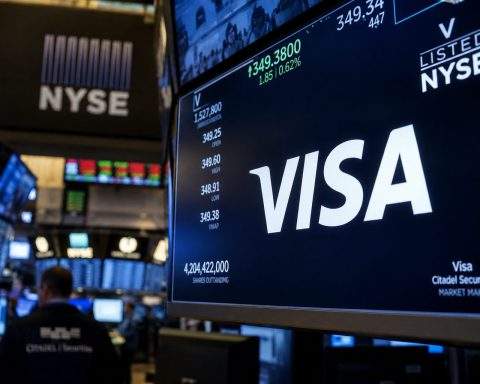
Visa ended the last session (the Christmas Eve shortened session) at roughly $355 per share, with a modest gain on the day. Visa’s investor-relations quote page listed:
- Price: $355.14
- Day’s range: $353.01 to $355.99
- Volume: ~2.02M shares
- 52-week range:$299.00 to $375.51 Visa Investor Relations
After-hours indications were close to flat (roughly $354.99) late on Dec. 24.
Why this matters into Dec. 26: Visa is trading below its 2025 high (near $375.51) but well above its 52-week low ($299). That positioning can make the stock sensitive to “risk-on/risk-off” tape action if liquidity is light and index flows dominate.
The biggest Visa headlines right now
1) Visa’s holiday spending data: a real-time read on consumer demand
On Dec. 23, Visa published a holiday-season snapshot showing U.S. holiday spending rose 4.2% year over year, with e-commerce up 7.8% and in-store accounting for 73% of spending (in Visa’s monitor).
Reuters also flagged Visa’s holiday read as pointing to around 4% growth for the period tracked, reinforcing the broader narrative of resilient (if uneven) consumer spending into year-end.
How investors translate this into “Visa stock logic”:
- Visa’s network benefits when spending volumes rise, even if consumers trade down in what they buy.
- The mix matters: cross-border and travel-related flows tend to be higher-margin than purely domestic debit swipes.
- Near-term spending snapshots don’t flow perfectly into earnings (Visa recognizes some revenue with timing lags), but they can influence sentiment into the next earnings window.
2) Stablecoin settlement in the U.S.: Visa is pushing beyond cards
Visa has been steadily building what it calls a modernization of its settlement layer—and the December newsflow accelerated that storyline.
On Dec. 16, Visa announced it is launching USDC settlement in the United States, allowing eligible issuer and acquirer partners to settle obligations using Circle’s USDC. Visa also disclosed that initial U.S. banking participants include Cross River Bank and Lead Bank, settling via Solana, with broader U.S. availability planned through 2026.
Just before that, on Dec. 15, Visa announced a new Global Stablecoins Advisory Practice (within Visa Consulting & Analytics) aimed at helping clients develop strategies around stablecoins and related infrastructure.
Why this matters for the stock (and why the market watches it):
- Investors have been asking whether stablecoins are a threat to card rails or a new on-ramp for them. Visa’s message is: stablecoins can become another settlement and money-movement layer that Visa helps orchestrate.
- Stablecoin activity also became more investable after the U.S. established a federal regulatory framework via the GENIUS Act, signed into law in July 2025.
- Barron’s noted that Visa’s move fits the broader trend of stablecoins moving toward mainstream settlement use cases, with Visa’s stock reaction more muted than some crypto-adjacent names.
3) “Agentic commerce” and AI-driven payments are moving from concept to pilot execution
Visa also announced a milestone in AI-powered commerce, saying it has successfully completed hundreds of secure, agent-initiated transactions with ecosystem partners—positioning 2026 as a potential inflection point for “agent-driven” payments experiences. Visa
In parallel, payments/fintech infrastructure providers are aligning with Visa’s approach. For example, Fiserv announced a strategic collaboration with Visa to enable Visa Intelligent Commerce and deploy a “Trusted Agent Protocol” across Fiserv’s ecosystem. Fiserv, Inc.
Investor takeaway: even if this doesn’t hit next quarter’s revenue, Wall Street typically awards premium multiples to platforms perceived as “future rails” rather than “legacy toll booths.” Visa is actively trying to defend the latter label.
Legal and regulatory overhang: the headline risk investors keep revisiting
Visa’s fundamentals are often described as durable—but the stock can still be whipsawed by court rulings, settlement headlines, and fee-regulation developments.
1) Swipe-fee settlement backlash: Walmart and trade groups object
A proposed settlement intended to resolve long-running merchant litigation over credit-card swipe fees is facing renewed criticism. Reuters reported that Walmart and other major retailers, plus trade groups, urged a federal judge to reject a proposed Visa/Mastercard antitrust settlement, arguing it offers minimal relief and keeps key network rules intact (including “honor-all-cards” dynamics). Reuters
Separately, Senator Dick Durbin publicly rejected the proposed settlement as insufficient and again pushed arguments aligned with the Credit Card Competition Act framework.
What to watch into Dec. 26: whether there are additional filings, judge commentary, or new merchant coalitions weighing in—because this story tends to reprice “regulatory discount” assumptions quickly.
2) ATM fee litigation settlement: $167.5 million headline
Reuters reported on Dec. 19 that Visa and Mastercard agreed to pay $167.5 million to settle a class action alleging the networks conspired to keep certain ATM access fees artificially high. Visa’s share was reported at about $88.8 million (subject to court approval), with Mastercard contributing the remainder.
3) DOJ antitrust lawsuit over debit markets: still a long-duration risk
The U.S. Department of Justice filed an antitrust case accusing Visa of monopolization in debit markets in September 2024. The DOJ’s case page shows the matter is active and includes a Memorandum Opinion and Order dated June 23, 2025, among other filings.
Payments industry reporting also indicated Visa’s early motion-to-dismiss effort was denied mid-2025, and procedural timing has been influenced by broader government funding disruptions.
Bottom line: these cases rarely resolve quickly, but they can influence the valuation multiple investors are willing to pay for Visa’s cash flows—especially when fee pressure becomes the market’s “theme of the month.”
What Visa’s latest earnings and capital return say about fundamentals
Visa’s most recent official results (fiscal Q4 and full-year 2025, released Oct. 28, 2025) showed:
- Q4 net revenue:$10.7B, up 12%
- Non-GAAP EPS:$2.98, up 10%
- Key business drivers (Q4, constant-dollar): payments volume +9%, cross-border ex intra-Europe +11%, processed transactions +10% SEC
A major earnings “noise” item remained litigation-related: Visa cited a $899 million special item for litigation provision associated with interchange multidistrict litigation (MDL) and other legal matters. SEC
Visa also leaned into shareholder returns:
- Share repurchases + dividends:$6.1B in Q4; $22.8B for the full year
- Dividend increase: quarterly dividend raised 14% to $0.670/share
- Buybacks: ~14M shares repurchased in Q4 for $4.9B; ~54M shares in FY2025 for $18.2B
- Remaining authorization:$24.9B for share repurchases (as of Sept. 30, 2025) SEC
The Wall Street Journal summarized the quarter as being driven by resilient consumer spending and highlighted Visa’s outlook commentary for fiscal 2026 in the context of ongoing strength.
Visa stock forecasts: what analysts are watching heading into 2026
Forecasts vary by shop, but the current analyst conversation clusters around four points:
1) Next earnings window: late January 2026 (estimates, not yet confirmed by Visa)
Several market calendars currently estimate Visa’s next earnings release around Jan. 29, 2026 (based on historical patterns), with some services also publishing modeled EPS expectations.
2) Price targets: bullish lean, but with legal/regulatory caveats
Consensus target aggregators continue to show Visa with an overall positive analyst stance, with targets commonly sitting above the current mid-$350s price level (though spreads remain wide depending on assumptions about fee pressure and regulatory outcomes).
One widely cited recent example: Bank of America upgraded Visa to “Buy” and published a $382 price target, pointing to upside potential and stablecoin-related optionality (per Investors Business Daily’s report of the note). Investors
3) Valuation: premium multiple, supported by margins and buybacks
Visa typically trades at a premium to the broader market because of its high-margin, network-effect model. Current data providers list Visa’s forward P/E in the high-20s, with a modest dividend yield.
4) Dividend and income angle: steady, but not the core thesis
Visa’s latest quarterly dividend was $0.67/share, with the last ex-dividend date in November 2025 and payment in December 2025, consistent with Visa’s long-running pattern of dividend growth.
What to watch specifically before the opening bell on Dec. 26
If you’re tracking Visa into Friday’s open, here’s a practical checklist that maps directly to what has been moving the stock in December:
- Settlement and lawsuit headlines (card fees / antitrust).
Any new court filings, objections, or scheduling updates can move “regulatory discount” sentiment quickly. Reuters - Stablecoin and AI-commerce follow-through.
Watch for additional partner announcements, bank participation updates, or clarifications around timelines into 2026. - Consumer spending narrative into year-end.
Visa’s holiday spending monitor is a live datapoint the market can latch onto in a low-news week. - Liquidity/volume conditions.
Dec. 26 can trade differently than a normal Friday—price action can be flow-driven rather than fundamentally driven. The exchanges are open for a full session.
The bull case vs. the bear case in one minute
Bull case: Visa remains a high-margin “toll road” on global commerce, holiday spending reads are constructive, and Visa’s moves into stablecoin settlement and AI-driven commerce expand long-term relevance while buybacks support EPS growth. Visa
Bear case: legal and regulatory pressure (swipe-fee litigation, DOJ antitrust, settlement objections) creates headline volatility and could compress fees or constrain certain network rules over time—raising the discount rate investors apply to Visa’s cash flows.
This article is for informational purposes only and is not investment advice. Market conditions can change quickly, especially around earnings, litigation updates, and macro news.
Related articles: NYSE:V