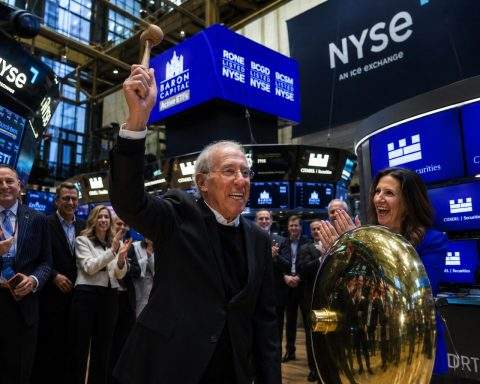
NEW YORK (as of 5:02 p.m. ET, Friday, Dec. 26, 2025) — U.S. markets are closed for the day, with the New York Stock Exchange’s core trading session running from 9:30 a.m. to 4:00 p.m. ET.
The Dow Jones Industrial Average (DJIA) finished Friday’s post-Christmas session down 20.19 points (‑0.04%) at 48,710.97, barely changed but still hovering close to all-time highs after a strong year-end run. The broader market also drifted: the S&P 500 slipped 2.11 points (‑0.03%) to 6,929.94, while the Nasdaq Composite fell 20.21 points (‑0.09%) to 23,593.10.
Even with Friday’s pause, the week stayed constructive for U.S. equities. Over the holiday-shortened week, the S&P 500, Dow, and Nasdaq posted gains of roughly 1.4%, 1.2%, and 1.2%, respectively — a reminder that the path higher into year-end has been steady even when the daily tape looks sleepy.
Why the Dow barely moved: thin trading, fewer catalysts, “catching our breath”
Friday’s market action had a familiar late-December signature: light volume and low conviction.
Reuters described the session as “light-volume” and nearly unchanged, noting that the market had snapped a five-session winning streak but still logged weekly gains. Carson Group chief market strategist Ryan Detrick framed it as a breather after a strong run, saying the market was essentially “catching our breath” following the holiday and recent rally. Reuters
The Associated Press added color on why liquidity felt so thin: many institutional players have largely wrapped up positioning for the year, leaving trading activity muted versus normal conditions.
For Dow investors, that matters because the DJIA can look deceptively calm — until a low-liquidity day amplifies an outsized move in a handful of high-impact components. With fewer “real money” flows, price action can be driven by smaller order imbalances, short-term traders, and year-end portfolio adjustments.
The “Santa Claus rally” is underway — and the calendar still matters
Seasonality is back in the conversation on Wall Street because the market has entered the so‑called “Santa Claus rally” window — commonly defined as the last five trading days of the year plus the first two of the new year. Reuters noted that the period began Wednesday and runs through Jan. 5, and that investors often watch it as a sentiment signal heading into the next year. Reuters
This seasonal setup is arriving with a crucial caveat: year-end conditions are often headline-sensitive and liquidity-constrained. In other words, “Santa” can deliver… but the tape can also exaggerate reactions to surprises.
Macro backdrop: rates steady, precious metals surge, oil slides
While the Dow is a blue-chip equity benchmark, it’s still reacting to the same cross‑asset forces shaping broader risk appetite:
- Treasury yields: The 10-year yield was around 4.13% late Friday, little changed from midweek levels.
- Precious metals: Gold and silver continued to draw attention after hitting fresh highs in late December, with miners among notable winners in parts of the market.
- Oil: U.S. crude prices were lower on the day, reflecting continued volatility in energy markets into year-end.
- Crypto and the dollar: Bitcoin was trading around the high‑$80,000s and the U.S. dollar index was slightly higher in late-day readings cited by Investopedia.
For the Dow, these inputs matter because the index blends cyclicals (industrials, financials, energy exposure via components) with defensive and growth-leaning mega-caps. When yields rise, the market often revisits valuation assumptions. When commodities spike, inflation and margin narratives can reappear. And when the dollar moves, multinationals feel it in translation and competitiveness.
Dow at 48,710: the 50,000 milestone is no longer a thought experiment
At 48,710.97, the Dow is within striking distance of 50,000 — a psychologically important threshold for retail sentiment and for institutional year-end commentary.
From Friday’s close, 50,000 is 1,289.03 points away, which is roughly 2.6%. That’s not a forecast — just math — but it’s close enough that investors should expect the “50K Dow” narrative to keep popping up in headlines and market notes as 2025 turns into 2026.
Two practical takeaways for investors following the Dow:
- Headlines can matter more near round numbers. Psychological levels can influence short-term behavior, especially in thin markets.
- The Dow is price-weighted. A large move in a higher-priced component can swing the index more than a similar percentage move in a lower-priced member — one reason the DJIA can sometimes diverge from the S&P 500’s market‑cap-weighted read.
What drove the tape today: AI, retailers, and a market waiting for the next catalyst
Even in a quiet session, the news flow didn’t stop:
- Reuters highlighted Nvidia strength tied to AI-related developments, and Target shares moving after reports related to activism — both emblematic of what’s been driving late‑2025 equity narratives: AI investment momentum and idiosyncratic single‑stock catalysts.
- Investopedia also pointed to Nvidia-related headlines and Target’s move, reinforcing that even on low-volume days, investors still chase story stocks and catalysts.
For Dow-focused readers, the broader point is that the DJIA has been supported by the same forces lifting U.S. equities overall: optimism around AI-enabled productivity and earnings, plus expectations that inflation and rates will be manageable enough to avoid choking off growth.
The bigger story: 2026 optimism is building — but so are the risks
With only a few sessions left in 2025, the market conversation is rapidly shifting from “year-end levels” to “what can go wrong (or right) next year?” The emerging consensus across major outlets is cautiously constructive: strategists see room for gains, but they’re increasingly explicit about fragility.
“Everything firing on all cylinders” is a high bar
In a widely cited Reuters outlook, Sam Stovall (CFRA) argued that another year of double-digit gains would likely require “everything firing on all cylinders,” while also warning headwinds could prevent 2026 from being “great.” Reuters
Reuters also underscored a key structural debate: whether profit growth can broaden beyond the biggest tech leaders, and whether policy and geopolitics (including U.S.-China relations and trade dynamics) reassert themselves as swing factors.
Earnings growth expectations are doing the heavy lifting in forecasts
A critical support for bullish cases is the earnings picture. Reuters cited Tajinder Dhillon (LSEG) saying S&P 500 earnings are projected to rise more than 15% in 2026, following a strong 2025.
Even though this data point is about the S&P 500, the implication matters for the Dow because DJIA components are disproportionately large, profitable, cash-generating companies. If corporate profits expand as expected, the Dow typically benefits — especially if gains broaden into industrials, financials, and healthcare, which are well represented in the index.
AI spending: tailwind or tipping point?
The market’s biggest “magnifier” remains AI: it can justify strong earnings expectations, but it also concentrates risk.
Reuters quoted Jeff Buchbinder (LPL Financial) warning that if companies pull back on previously guided capex — or if investors lose confidence in returns on AI investment — the market could see a flatter or even down year.
Investopedia’s 2026 outlook echoed this tension, describing the ongoing “AI rally” debate and pointing to both bullish and bearish interpretations of massive infrastructure spending plans. Investopedia
CBS News captured similar caution from multiple strategists, including Mark Luschini (Janney Montgomery Scott) on the risk of the AI narrative losing momentum, and Adam Crisafulli (Vital Knowledge) on how leadership can splinter even when the overall market remains firm.
Rates and the Fed: dovish hopes, independence questions, and a data-dependent path
Markets are still pricing the possibility of additional rate cuts into 2026. Reuters noted that investors see the Fed’s stance as a major driver and quoted Yung‑Yu Ma (PNC) emphasizing the importance of the Fed maintaining a dovish posture.
Reuters also highlighted investor attention on the next Fed chair nomination timeline and broader questions about central bank independence — topics that can quickly influence risk premiums if they move from abstract to actionable.
If you’re watching the Dow: what to know before the next session (Monday, Dec. 29)
Because it’s 5:02 p.m. ET in New York, the U.S. cash equity session is over. Here’s what Dow investors should keep in mind before the next open.
1) Know the calendar: year-end brings schedule quirks
- The NYSE’s core session is 9:30 a.m. to 4:00 p.m. ET, so the next regular open is Monday, Dec. 29.
- The exchange holiday calendar confirms New Year’s Day (Thursday, Jan. 1, 2026) is a market holiday.
- Investopedia flagged that next week is holiday-shortened, with both stock and bond markets closed for New Year’s Day.
Why it matters: holiday calendars often compress liquidity, cluster rebalancing flows, and heighten the market impact of unexpected headlines.
2) Expect low liquidity — and potentially “noisy” moves
Both Reuters and the Associated Press emphasized just how light trading was in the post‑Christmas session.
Investor takeaway: price moves in the final sessions of December can be more about positioning and liquidity than fresh fundamentals. That doesn’t make them “fake,” but it does mean you should treat breakouts/breakdowns with context.
3) Watch the Dow’s round-number gravity near 50,000
With the Dow only about 2.6% below 50,000, headlines and short-term trading psychology may increasingly revolve around whether the index can tag the milestone before year-end or early 2026.
4) Keep an eye on cross-asset signals that can spill into blue chips
Investopedia and the AP pointed to:
- a steady 10-year yield around ~4.13%,
- strength in gold and silver,
- and oil weakness late week.
Why it matters for DJIA: shifts in yields and the dollar can quickly affect industrials, financials, and multinational earnings narratives — areas that often dominate the Dow’s day-to-day point swings.
5) Heading into 2026, “earnings breadth” is the swing factor
Reuters’ reporting makes clear that strategists see a path for continued gains if earnings growth broadens beyond the mega-cap winners — but also that valuations leave less room for disappointment.
For Dow investors, this “breadth” debate is especially important: the index is built around established profit engines. If leadership broadens into value-cyclicals, the DJIA can outperform. If leadership narrows back into a small set of mega-cap growth names, the Dow can lag even if the broader market rises.
Bottom line: The Dow ended Friday essentially flat at 48,710.97, a calm close that masks a still-strong year-end trend and a market already leaning into 2026 narratives: AI-driven earnings optimism, rate-cut expectations, and the ever-present risk that volatility returns the moment liquidity normalizes.