NEW YORK — As of 5:42 p.m. ET on Friday, Dec. 26, 2025, U.S. stocks have finished a quiet post-Christmas session, but AST SpaceMobile, Inc. NASDAQ:ASTS did anything but trade quietly.
Shares of AST SpaceMobile were last seen around $71.95 in late trading, down about 7.8% versus the prior close, with heavy volume and a wide intraday range—another reminder that “direct-to-device” satellite connectivity remains one of the market’s most headline-driven themes. MarketWatch
Below is what moved ASTS, what the latest company updates and industry signals say, how Wall Street is modeling the upside/downside, and what investors should keep on their radar before the next regular session.
ASTS stock price recap: where shares stand after the closing bell
- Late trading (after the close): about $71.95
- Regular-session snapshot: MarketWatch showed ASTS around $71.55 (-8.33%) late in the afternoon, with a prior close around $78.05
- Friday intraday range: roughly $71.06 to $79.39
- Volume: about 19.4 million shares
In contrast, the broader market was essentially flat in light holiday-week participation. The Associated Press reported the S&P 500, Dow, and Nasdaq all finished slightly lower in “quiet post-Christmas trading.” AP News
Why AST SpaceMobile stock fell even after a successful milestone
The immediate backdrop for ASTS’s volatility is the successful orbital launch of BlueBird 6—a major technological milestone that still created a classic “buy the rumor, sell the news” setup after ASTS’s massive run in 2025.
1) BlueBird 6 is real—and it’s enormous
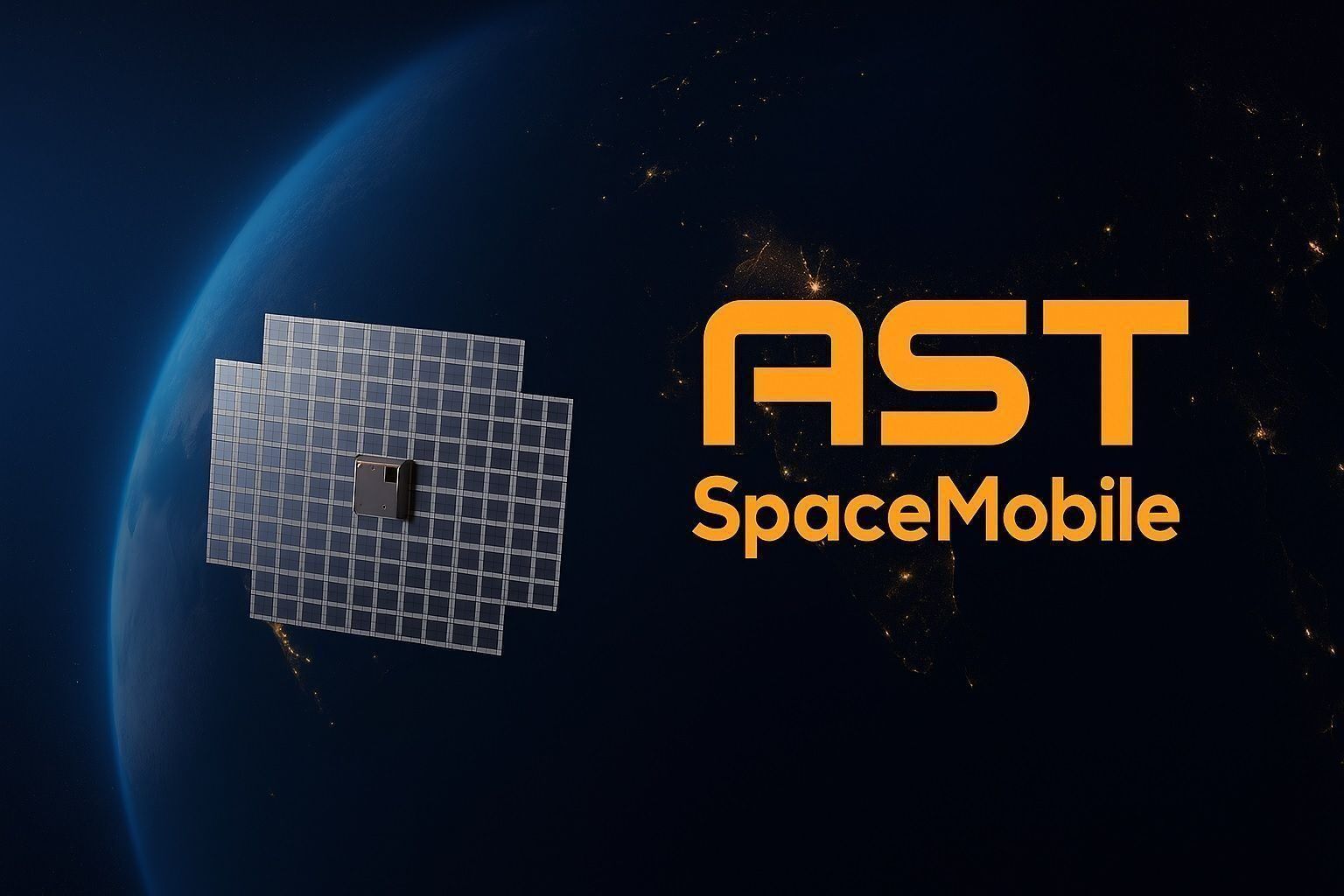
AST SpaceMobile says BlueBird 6 is now the largest commercial communications array ever deployed in low Earth orbit, with a communications array “nearly” 2,400 square feet and designed for peak speeds up to 120 Mbps. Business Wire+1
Space.com added detail on the mission profile: BlueBird 6 launched on India’s LVM3 rocket, deployed about 15.5 minutes after liftoff at an altitude of roughly 324 miles (521 km), and weighed about 13,450 pounds (6,100 kg)—a record payload for that vehicle.
2) The stock had already priced in a lot of good news
Going into the launch window, ASTS had surged repeatedly alongside a broader “space stock” rally. MarketWatch noted AST shares were up more than 300% in 2025 and jumped again ahead of the BlueBird 6 mission. MarketWatch
Investor’s Business Daily described the volatility around the launch event: the stock spiked to $92.95 intraday before reversing sharply.
When a stock has already compounded that much, the market tends to demand a fast follow-through: commissioning updates, service timelines, and proof that the constellation can scale economically.
What BlueBird 6 changes: the near-term catalyst investors will watch next
A successful launch is only step one. For ASTS, the next swing factor is the transition from “satellite is in orbit” to “satellite is deployed, tested, linked into partner networks, and producing billable service.”
AST frames BlueBird 6 as the first of its “next-generation” satellites and says it delivers more than 10x the capacity of AST’s satellites already in orbit. Business Wire+1
What investors typically look for in the days/weeks after launch:
- Deployment confirmation (array and systems)
- On-orbit testing results (voice/data sessions, performance benchmarks)
- Network integration milestones with carriers and gateways
- A clearer schedule for the next launches
If AST updates these milestones quickly, it can reset sentiment. If updates are delayed, high-beta traders often fade the move.
Commercial outlook: AST’s roadmap into 2026
AST’s most recent quarterly business update laid out an ambitious near-term deployment cadence:
- Launches every one to two months on average as it ramps
- A goal of 45 to 60 satellites by the end of 2026
- Initial activations that include nationwide intermittent service across the continental U.S., with additional early-2026 activations planned for Canada, Japan, Saudi Arabia, and the U.K.
Those targets matter because the investment debate around ASTS is not just “can the tech work?”—it’s “can AST manufacture and launch fast enough, and can service revenue scale before capital needs trigger more dilution?”
Partnerships: Verizon, AT&T, and the carrier strategy behind ASTS
ASTS’s bull case has increasingly shifted from “science project” to “carrier-backed platform.”
Verizon: definitive commercial agreement, service starting in 2026
AST announced a definitive commercial agreement with Verizon that targets direct-to-device service for Verizon customers starting in 2026.
The company also highlighted prior tests that included direct voice and video calls and two-way messaging between standard, unmodified smartphones and a BlueBird satellite.
Verizon executive Srini Kalapala framed it as building “a new paradigm of connectivity,” emphasizing integration of terrestrial and satellite networks. Business Wire
AT&T: agreement through 2030
AT&T has said it entered a definitive commercial agreement with AST SpaceMobile that extends through 2030.
Why this matters: the industry wants a non-Starlink broadband option
Light Reading’s year-end review of the direct-to-device market noted that 2025 moved D2D from testing to product, with T-Mobile’s Starlink-backed satellite messaging going commercial—and highlighted AST as promising broader “broadband” capabilities that could leapfrog messaging-only approaches. Light Reading
In the same piece, Light Reading referenced MoffettNathanson’s view that D2D is becoming table stakes—“the cost of doing business in 2025 and beyond.” Light Reading
Financial position: liquidity strength vs. capital intensity
AST’s Q3 2025 update emphasized both demand signals and funding capacity:
- Over $1 billion in aggregate contracted revenue commitments
- $3.2 billion in “combined cash and liquidity” on a pro forma basis (including facility availability), as of Sept. 30, 2025 Business Wire
- ~$1.2 billion in cash, cash equivalents, and restricted cash as of Sept. 30, 2025
- A $1.15 billion gross raise via 10-year convertible senior notes with a 2.00% coupon and an effective conversion price of $96.30/share
- Q3 revenue of $14.7 million, driven by gateway deliveries and U.S. government milestones
That liquidity is a meaningful buffer. But AST’s strategy is still manufacturing- and launch-heavy, which is why “cash runway vs. dilution risk” remains central to most cautious takes on the stock.
Analyst forecasts and price targets for ASTS: what Wall Street is modeling
Analyst targets are unusually dispersed—typical for a company still scaling a new category.
Investing.com’s consensus snapshot lists:
- Overall consensus: “Buy”
- Average 12-month target: about $71.51
- Target range:$43 (low) to $95 (high)
- Recent firm-level examples cited on the page include Deutsche Bank (Buy, $81), BofA Securities (Hold, $85), B. Riley (Buy, $95), Barclays (Sell, $60), and Scotiabank (Hold, $45.60), with actions dated Oct–Nov 2025.
Two takeaways investors often miss:
- The average target can lag price after a rapid rally. If a stock runs far ahead of revisions, “downside to average target” can look small even though volatility remains high.
- Dispersion is information. A $43–$95 spread says analysts broadly agree the market opportunity is meaningful—but disagree on execution probability, timeline, and capital cost.
The regulatory and spectrum chessboard: Ligado + FCC headline risk
One of the most important “non-launch” variables for ASTS is spectrum and regulatory positioning in North America.
Ligado’s December filing: hosting an MSS system on AST’s constellation
On Dec. 8, 2025, Ligado said it filed an application with the FCC to modify its existing L-band satellite license to add an MSS system (“SkyTerra Next”) that would be hosted on AST SpaceMobile’s LEO constellation. Ligado said approval would enable space-based mobile broadband services across the U.S. and complement its existing GEO MSS system. Ligado Networks
Competitive framing: “don’t let one vendor dominate”
Fierce Network reported Ligado’s FCC push is partly framed as a way to bolster competition beyond SpaceX/Starlink’s growing D2D footprint—and cited Recon Analytics founder Roger Entner saying SpaceX is “miles ahead,” with hundreds of D2D satellites and a commercial service already launched. Fierce Network
This matters for ASTS investors because regulatory wins (or delays) can alter:
- Bandwidth economics in the U.S. market
- The pace at which carrier partners can roll out broader services
- The competitive pressure from Starlink’s expanding D2D model
“Insider” and strategic selling: noise, signal, or both?
As ASTS has become a retail and momentum favorite, investors have also focused on Form 4s and large holder moves.
- Investing.com reported AST’s CTO Huiwen Yao sold 40,000 shares in December at an average price around $73.52, totaling about $2.94 million, under a 10b5-1 plan.
- A MarketBeat-authored piece republished by Investing.com highlighted sales by American Tower (a strategic partner/shareholder), describing the reduction as significant and discretionary. (Investors should treat third-party interpretations cautiously and, when possible, verify against primary filings.)
Important context: planned 10b5-1 sales are not the same as discretionary selling, and large strategic investors can sell for portfolio, liquidity, or mandate reasons unrelated to near-term fundamentals.
The stock exchange is closed now: what to know before the next session
It’s after 4:00 p.m. ET, meaning the regular Nasdaq/NYSE session has ended. Nasdaq’s published schedule lists the standard U.S. equity market hours as 9:30 a.m. to 4:00 p.m. ET, Monday through Friday (with extended-hours sessions depending on broker).
Because today is Friday, the next regular session is Monday, Dec. 29, 2025 (no U.S. equity holiday on Dec. 26; markets were open normally today).
Practical watchlist for Monday’s open (and Sunday night headlines)
1) Any BlueBird 6 deployment / commissioning update
This is the near-term catalyst most likely to move ASTS premarket.
2) Regulatory headlines (FCC / spectrum-related developments)
Ligado-AST progress (or pushback) can shift the market’s view of AST’s U.S. bandwidth path.
3) Volume and liquidity conditions
Post-holiday trading can stay thin into year-end. Thin tape + high-beta story stocks = exaggerated moves (up or down).
4) Macro calendar into year-end
Reuters’ week-ahead outlook flagged investors watching the Federal Reserve path and upcoming catalysts (including Fed communications) as 2025 closes out near record index levels.
5) Expect volatility around options positioning
Even without a new headline, ASTS can swing sharply because it is widely traded and sentiment-driven—something Friday’s wide trading range underlined.
Bottom line
AST SpaceMobile delivered a genuine milestone with BlueBird 6 in orbit, but the stock is reacting like a company in a transition phase: the market is moving from rewarding “proof of concept” headlines to demanding repeatable execution—deployment confirmation, carrier integration, launch cadence, and the first meaningful commercial activations.
For investors, the key question into Monday isn’t whether space-based cellular broadband is a big idea. It’s whether AST can scale fast enough—and fund that scale efficiently enough—to justify a valuation that has already repriced dramatically higher in 2025.