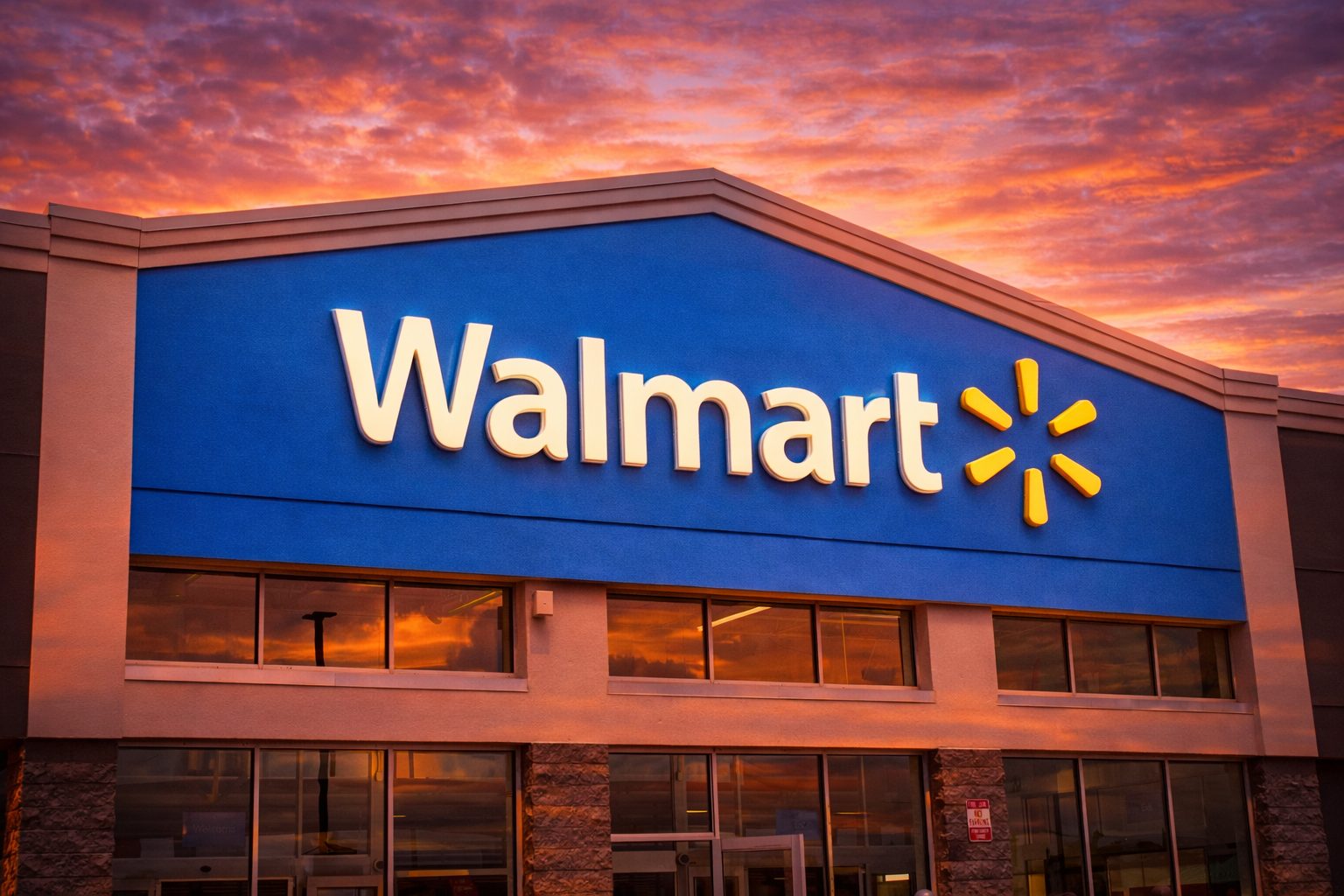

Walmart Inc. shares (ticker: WMT) were changing hands around $111.74 in late trading on Friday evening, Dec. 26, 2025 (New York time), up about 0.12% from the prior close after a light-volume post-Christmas session. Trading volume for the day was roughly 9.0 million shares, reflecting the thinner liquidity typical of the year-end stretch.
The broader market backdrop was muted: U.S. stocks finished slightly lower in a subdued session, snapping a short winning streak but staying close to record territory during the “Santa Claus rally” window that investors often watch at year-end. Reuters+1
For Walmart stock, the near-term story is less about one quiet day of trading—and more about a packed set of catalysts: a major CEO succession, a historic exchange move to Nasdaq, a raised fiscal-year outlook, and investor focus on Walmart’s e-commerce, advertising, and automation flywheel heading into 2026.
Why Walmart stock is in focus going into year-end
Walmart has increasingly traded like a hybrid of defensive retail and technology-enabled consumer infrastructure. The company’s scale in groceries and everyday essentials can help during uneven consumer spending, while its delivery network, marketplace, and advertising business can add higher-margin growth levers over time. Reuters highlighted how Walmart has been leaning into faster delivery and expanding higher-margin lines such as advertising as it modernizes its operating model.
That mix matters in a market environment where investors are simultaneously weighing:
- year-end positioning and liquidity effects, Reuters+1
- expectations for future rate cuts and growth-stock leadership in the indices, Reuters+1
- and whether consumer demand remains resilient into 2026.
The biggest Walmart headlines investors are tracking right now
1) CEO transition: John Furner to take over in February 2026
One of the most important fundamental storylines for Walmart stock is leadership continuity.
Walmart disclosed that Doug McMillon will retire as CEO on Jan. 31, 2026, and John Furner—the head of Walmart U.S.—will become CEO effective Feb. 1, 2026.
Wall Street’s early reaction has been nuanced: not because investors doubt the bench, but because McMillon is widely viewed as a transformational leader. In Reuters coverage, Chuck Grom of Gordon Haskett said the change could create anxiety given McMillon’s record, while other analysts framed it as standard succession planning.
Reuters also compiled reactions from multiple firms, including:
- Steven Shemesh (RBC Capital Markets), who described the announcement as normal succession planning and emphasized Walmart’s leadership depth, Reuters
- Scot Ciccarelli (Truist Securities), who pointed to the scale of the transformation under McMillon and argued Furner’s job is to keep executing the existing plan.
Walmart’s board chair Greg Penner said Furner is the right leader for the next chapter, citing his experience across segments and results leading Walmart U.S. during a period of rapid change.
What it means for WMT investors: CEO transitions can temporarily increase headline sensitivity, but the current messaging from both the company and multiple analysts is that this is a planned handoff with a deep internal bench.
2) Nasdaq switch: a historic exchange move, with “tech-forward” messaging
Walmart’s move from the NYSE to Nasdaq is not just symbolic—it’s being marketed as part of the company’s evolution.
Reuters reported Walmart shifted its listing to Nasdaq on Dec. 9, calling it the largest-ever exchange transfer on record and describing it as a win for Nasdaq in the long-running rivalry between the exchanges.
Walmart CFO John David Rainey tied the move to Walmart’s “people-led, tech-powered” strategy and an operating model increasingly shaped by automation and AI, according to Reuters reporting. Reuters+1
One investor-facing implication raised in Reuters coverage: Brian Jacobsen of Annex Wealth Management noted that it’s “incredible to think” Walmart could potentially become part of the Nasdaq-100 ecosystem, which could subtly change the investor base and index-related flows over time. Reuters
3) Earnings and guidance: Walmart raised its FY2026 outlook again
Walmart’s most recent quarterly results and forward guidance remain a core support for the stock narrative.
In its fiscal third quarter update, Reuters reported:
- revenue rose 5.8% to $179.5 billion,
- adjusted EPS was $0.62,
- Walmart U.S. comparable sales rose 4.5%, beating an LSEG estimate cited by Reuters,
- and Walmart raised its FY2026 outlook again, lifting its net sales growth forecast to 4.8%–5.1% and adjusted EPS to $2.58–$2.63.
Management also discussed demand and the early holiday setup. CFO John David Rainey said the holiday season had started well, pointing to strong Halloween and early Thanksgiving sales, while also noting some moderation in parts of the consumer base.
Operationally, Reuters described Walmart’s continued emphasis on convenience and delivery speed, noting growth in expedited deliveries and strong e-commerce momentum.
4) Higher-margin engines: advertising, membership, and automation
Beyond core retail, Walmart’s investment case increasingly includes higher-margin lines tied to its ecosystem.
In Walmart’s own recap of the quarter, the company highlighted:
- global eCommerce up 27%,
- global advertising business up 53% (including VIZIO), and
- membership and other income up 9%.
Reuters’ reporting on Walmart’s strategy also emphasized how the company has been pushing automation and AI deeper into its systems, including AI-assisted code and more automated fulfillment and distribution.
Walmart stock forecast and analyst outlook: what Wall Street is modeling
“Forecast” can mean different things—company guidance, analyst targets, and valuation frameworks. For Walmart today, all three matter.
Company guidance
Walmart’s updated FY2026 guidance (as reported by Reuters) sets the near-term fundamental expectations:
- net sales growth: 4.8%–5.1%
- adjusted EPS: $2.58–$2.63 Reuters
Analyst consensus and price targets
MarketScreener’s consensus snapshot lists a BUY consensus for Walmart, with 42 analysts and an average target price of $121.38 (about 8.6% above the latest close shown there).
Valuation debate
A common tension in Walmart coverage is whether investors should pay a premium for defensive qualities plus digital/advertising optionality. A Zacks-authored analysis carried by Nasdaq noted Walmart trading at a forward P/E around 39.13, above an industry figure cited at 35.61, framing valuation as a key point investors weigh against execution.
Dividend and shareholder returns: what income investors should note
Walmart also remains a dividend story.
The company announced earlier that it approved a fiscal-year 2026 annual dividend of $0.94 per share, paid in four quarterly installments of $0.235. Walmart’s schedule shows a Dec. 12, 2025 record date for the quarter with a Jan. 5, 2026 payable date.
Key risks in the news: legal, regulatory, and reputational headlines
Walmart is large enough that legal and regulatory items can periodically move from “background noise” to investor focus—especially around year-end when liquidity is thinner.
Credit-card fees: Walmart objects to Visa/Mastercard settlement
Reuters reported that Walmart and other major retailers objected to a proposed antitrust settlement with Visa and Mastercard, arguing it provides little relief and would require merchants to release certain antitrust claims for years. The settlement would cut swipe fees by 0.1 percentage point for five years, according to Reuters.
Alleged Pepsi price-fixing: consumer class action
Reuters also reported a proposed class action accusing PepsiCo and Walmart of a decade-long price-fixing scheme related to Pepsi soft drinks, an allegation both companies would be expected to contest.
FDA warning letter tied to recalled infant formula
On the regulatory front, Reuters reported the FDA sent warning letters to Walmart and other retailers tied to continued sales of ByHeart infant formula after a recall linked to an infant botulism outbreak. Reuters
The FDA’s warning letter page details the recall timeline, the CDC-reported case count cited there, and the agency’s allegation that recalled product remained available for purchase at Walmart locations after notifications.
Shareholder pressure on immigration-policy impacts
Reuters reported that SOC Investment Group asked Walmart (and other firms) to detail how U.S. immigration policies could affect finances and supply chains—highlighting potential labor and logistics sensitivity as a governance topic investors may see more of in 2026.
The market is closed now: what Walmart investors should know before the next session
Regular U.S. stock market hours are 9:30 a.m. to 4:00 p.m. ET, and U.S. markets are closed on weekends. Fidelity+1
With year-end trading conditions in play, investors often see wider spreads and sharper reactions to headlines—especially outside the most liquid midday window.
Here are practical, news-driven items to watch before the next regular session:
- Any weekend developments on Walmart’s legal/regulatory fronts
Visa/Mastercard settlement filings, the Pepsi/Walmart class action, and FDA-related follow-through are all the kind of headlines that can reprice risk quickly when liquidity is thin. - CEO-transition narrative and analyst commentary
Because the CEO handoff is set for February 2026, investors should expect periodic waves of notes and media coverage—especially if Walmart provides additional detail on leadership roles, succession under Furner, or strategic priorities. - Year-end market tone and “Santa rally” context
The broader market has been hovering near record levels with light post-holiday volume, according to Reuters and AP—conditions that can amplify both momentum and pullbacks. Reuters+1 - Holiday calendar mechanics
U.S. markets have specific holiday closures and early closes; Nasdaq’s holiday schedule lists key dates (including the Christmas Day closure and the Christmas Eve early close).
Bottom line for Walmart stock (WMT) heading into 2026
Walmart enters the final stretch of the year with shares near recent highs and a narrative built on defensive traffic plus higher-margin digital growth—but also with meaningful headline catalysts: a CEO transition, a historic Nasdaq move, and a steady stream of legal and regulatory items typical of a company at Walmart’s scale.
With the next major scheduled catalyst being Walmart’s FY2026 Q4 earnings release on Feb. 19, 2026, investors are likely to keep focusing on (1) U.S. consumer elasticity, (2) the pace of e-commerce and advertising progress, and (3) how seamlessly leadership transitions from McMillon to Furner.
Related articles: NYSE:WMT


![Australia Stock Market Today 28/08/2026 [UPDATE: 12:40 AEST] [WAM Dividend Cut Deepens Selloff as ASX Rebound Fades]](https://ts2.tech/wp-content/uploads/2026/08/AU-market-dashboard-2026-08-28-1237-480x384.jpg "Australia Stock Market Today 28/08/2026 [UPDATE: 12:40 AEST] [WAM Dividend Cut Deepens Selloff as ASX Rebound Fades]")