
NEW YORK, Dec. 28, 2025, 2:54 a.m. ET — Market closed
Sprott Physical Gold and Silver Trust (NYSE Arca: CEF) enters the final trading days of 2025 with momentum on its side after a powerful precious-metals surge pushed its shares sharply higher into the weekend. The trust—designed to give investors exchange-traded exposure to physical gold and silver—closed Friday’s session at $48.97, up about 3.8% on the day.
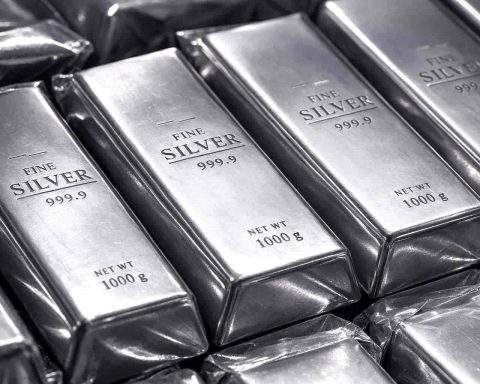
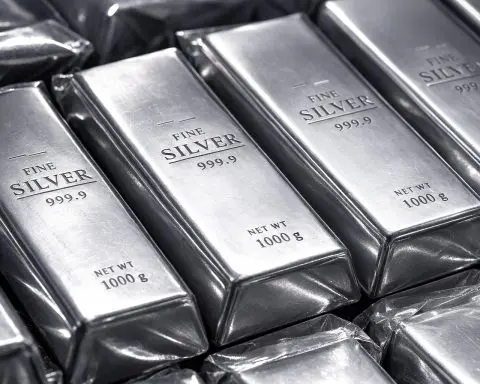
That move wasn’t random noise. It tracked a headline-grabbing jump in silver and another record-setting push in gold, with year-end liquidity and rate-cut expectations amplifying the swing in metals. Silver hit an all-time high near $77.40/oz, while gold touched a fresh record near $4,549.71/oz, Reuters reported Friday.
With U.S. stock exchanges closed for the weekend, the key question for investors watching CEF now is less “what happened Friday?” and more “what could happen before Monday’s open?” The short answer: CEF can gap when bullion prices move outside equity-market hours—and right now, the trust is also trading at a notable discount to its underlying bullion value.
CEF at a glance: price vs. NAV, and why it matters this weekend
Unlike many funds investors casually lump under the “ETF” umbrella, CEF is a closed-end trust that holds substantially all assets in physical gold and physical silver bullion. The trust is listed on NYSE Arca under “CEF” and also trades in Canada on the TSX. SEC
As of Sprott’s latest published end-of-day figures (based on Friday, Dec. 26 pricing), the trust reported:
- Net Asset Value (NAV) per unit:$50.93
- Market price:$48.97
- Premium/discount to NAV:-3.84%
- Total net asset value: about $9.72 billion
- Holdings:1,235,974 oz of gold and 51,767,761 oz of silver Sprott
That -3.84% discount is not just trivia. It means investors buying shares at Friday’s close were paying less than the value of the underlying metal per unit—at least based on the trust’s published NAV. Discounts can widen or narrow for all sorts of market-structure reasons (flows, risk appetite, liquidity), and in closed-end vehicles, that discount/premium behavior can become a major driver of returns in addition to bullion prices.
Why CEF popped Friday: a “gold + silver blend” got turbocharged by silver
Friday’s action in CEF makes intuitive sense when you remember it’s effectively a two-metal portfolio.
Reuters reported that on Friday:
- Spot silver jumped about 7.5% (touching a record around $77.40/oz), and
- Spot gold rose about 1.2%, also hitting a new record (around $4,549.71/oz intraday).
Because CEF holds both metals, silver’s outsized move can dominate the trust’s daily return when silver is the one doing backflips.
Using Sprott’s disclosed ounce holdings and Reuters’ Friday spot prices as a rough yardstick, CEF’s bullion exposure works out to approximately ~60% gold / ~40% silver by value (the exact weights vary with prices and the trust’s NAV methodology). With that kind of mix, a day where gold is up ~1% and silver is up ~7% naturally produces a blended move around ~3–4%—right in the neighborhood of CEF’s actual Friday gain.
What’s driving gold and silver right now (the 48-hour story)
The last 24–48 hours in metals has been a cocktail of macro expectations and thin holiday liquidity.
Reuters tied the precious-metals rally to:
- expectations for U.S. Federal Reserve rate cuts in 2026,
- a weaker U.S. dollar backdrop improving the appeal of dollar-priced metals for overseas buyers, and
- geopolitical tensions supporting safe-haven demand.
One of the more actionable nuggets for traders came from Peter Grant, vice president and senior metals strategist at Zaner Metals, who told Reuters that thin markets are “driving volatility,” with risk of profit-taking into year-end—but argued the trend remains strong. Grant added he sees $80 silver “within reach” by year-end and flagged $5,000 gold as plausible in the first half of next year. Reuters
Meanwhile, broader market coverage captured just how extreme silver’s move has become. The Wall Street Journal noted that silver’s price surged so far that a troy ounce of silver became worth more than a barrel of U.S. crude, an unusual relationship historically seen only in rare stress periods.
For CEF holders, all of this matters because the trust is basically a translation layer: when gold and silver reprice, CEF tends to follow—sometimes cleanly, sometimes with extra noise from its discount/premium.
The discount to NAV: opportunity, warning sign, or just “CEF being CEF”?
CEF’s -3.84% discount as of Friday’s published data is meaningful because it potentially gives investors two ways to win (and two ways to lose):
- If gold/silver rise and the discount narrows, CEF can outperform the underlying metals.
- If gold/silver rise but the discount widens, CEF can lag even in a bullish metals tape.
- If gold/silver fall and the discount widens, declines can feel steeper.
- If gold/silver fall but the discount narrows, CEF can cushion the drop.
Sprott emphasizes that unitholders have a physical redemption feature—a structural point that can sometimes help keep discounts from becoming untethered for long stretches (though it’s not a magic forcefield).
There’s a catch that matters for most retail investors: redemption is designed for large holders. Sprott’s own redemption instructions note that CEF requires at least 100,000 units to redeem for physical bullion, and the trust’s SEC filings detail how redemptions are processed and valued.
Translation: the redemption feature is real, but for many investors it’s more of a market structure backstop than a button you personally plan to press.
“Trust mechanics” investors often miss (and why they matter before Monday)
CEF is built to hold unencumbered, fully allocated bullion in London Good Delivery bar form—a detail that matters to investors who care about the fine print of physical backing and bar standards.
It’s also worth remembering what CEF is not: it’s not a miner, not an operating company, and not a vehicle whose returns depend on management’s earnings execution. Its core drivers are:
- Gold and silver prices, and
- How the trust trades relative to NAV (discount/premium behavior).
That’s why weekend positioning can matter. Metals can move quickly on macro headlines when equity markets are shut, and CEF may need to “catch up” at Monday’s open.
Forecasts and analyst outlooks: where strategists say metals could go next
Near-term upside targets have gotten louder as prices keep rewriting the top of the chart.
- Peter Grant (Zaner Metals) told Reuters he sees $80 silver as reachable near term and laid out bullish gold targets, while also warning that thin trading can exaggerate swings and invite profit-taking.
- In a separate 2026 outlook note reported by Reuters, Goldman Sachs projected gold could reach $4,900/oz by December 2026, citing central bank demand and potential Fed easing as support.
Investors should treat forecasts the way you treat weather models for a hurricane season: useful for understanding scenarios, not a promise etched into the fabric of reality.
What investors should watch before the next session
Because the market is closed now, Monday’s first few minutes can be driven by overnight metals pricing and macro calendar risk.
Key U.S. economic releases scheduled for Monday, Dec. 29 (Eastern Time) include:
- Advance International Trade in Goods (8:30 a.m.)
- NAR Pending Home Sales Index (10:00 a.m.)
- Dallas Fed Manufacturing Survey (10:30 a.m.
Why this matters for CEF: economic surprises can move rates and the dollar, and Reuters explicitly linked the metals rally to rate-cut expectations and dollar dynamics.
A practical pre-market checklist for CEF watchers heading into Monday:
- Check gold and silver pricing (especially if Sunday night volatility hits thin liquidity).
- Watch the U.S. dollar narrative—even small shifts can ripple into bullion.
- Track CEF’s discount/premium relative to its published NAV; discounts can shift when liquidity returns.
- Use limit orders if you’re trading at the open—gap risk is real when the underlying commodity reprices while equities are closed.
One more thing long-term holders should not ignore: tax structure complexity
CEF is a Canada-based trust listed in the U.S., and Sprott’s own tax materials stress that its physical bullion trusts can involve PFIC considerations for U.S. taxpayers. Sprott also notes that certain elections (such as a QEF election) may affect tax treatment, and it emphasizes that investors should consult their own tax professionals because the topic is complex.
This isn’t a trading catalyst for Monday morning—but it is part of the “owning it correctly” checklist, especially for investors holding into year-end.
Bottom line
Sprott Physical Gold and Silver Trust (CEF) closed Friday at $48.97 as silver and gold hit new records—an environment where CEF’s blended bullion exposure can deliver big days, fast.
Going into Monday, investors have two central variables to monitor: where bullion prices trade into the open, and whether CEF’s -3.84% discount to NAV widens or narrows as liquidity returns.
Related articles: Precious Metals