
NEW YORK, Dec. 28, 2025, 9:31 a.m. ET — Market closed
The Johannesburg Stock Exchange (JSE) heads into the final trading stretch of 2025 with a familiar year-end cocktail: holiday-thinned liquidity, a powerful precious-metals rally, and a softer U.S. dollar backdrop that tends to favor emerging-market assets and commodity-heavy equity markets like South Africa’s.
With both U.S. markets and the JSE shut on Sunday, investors are using the quiet window to position for Monday’s reopen—especially after gold, platinum, and silver pushed deeper into record territory late last week, a move with outsized implications for JSE heavyweight miners and the rand-linked earnings of many local corporates.
Where the JSE left off before the holiday pause
The most recent JSE session ended on Wednesday, Dec. 24, ahead of South Africa’s Christmas and Day of Goodwill public holidays. The JSE’s headline All Share index last printed around 117,085 (up 0.41%), while the Top 40 sat near 109,503 (up 0.47%) at the time of the early close.
Zooming out, the market’s 2025 storyline has been a big one: the All Share has traded up toward the top of its 52-week range (77,165 to 117,528.91) and was up roughly 38% over the past year, according to market data tracked by the Financial Times.
That kind of run into year-end matters because it changes the risk calculus for the final sessions: when indices are near highs, late-December trading can become more “flow-driven” (rebalancing, profit-taking, window dressing) than “fundamental-driven,” meaning sharp moves can happen even without a major local headline.
The last 24–48 hours: what’s new that JSE investors care about
Even while South African equities were closed, several fresh developments over the past two days have direct read-through to Monday’s JSE open:
1) Precious metals extended their record run
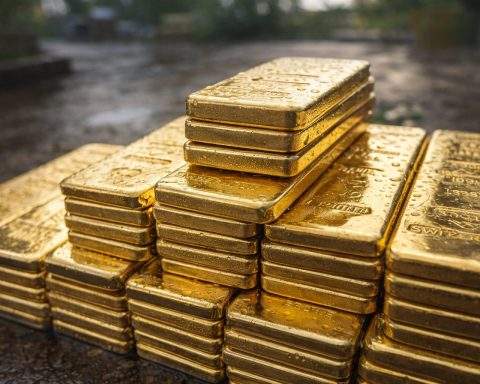
A Bloomberg report carried by Moneyweb late Friday highlighted record levels across key precious metals—spot gold rising to a peak above $4,530/oz and platinum trading above $2,400/oz for the first time, while silver also surged.
For JSE investors, this is not abstract macro drama. The JSE is home to globally significant precious-metals producers and miners, and when bullion and PGMs (platinum group metals) sprint, South African resource counters can re-rate fast—sometimes faster than the broader market.
2) Reuters flagged a “risk-on” tone in Asia, but with thin holiday trading
Reuters’ global markets wrap on Friday also underscored that liquidity has been thin with many markets closed, while risk appetite improved and precious metals remained “on a tear.” Reuters cited gold around $4,503/oz and noted the U.S. dollar softened amid uncertainty about the Fed’s path—conditions that often support commodity exporters. Reuters
Thin liquidity is a double-edged sword. It can help trends extend, but it can also magnify reversals—especially in markets where a few large names and sectors dominate index performance.
3) U.S. holiday trading schedule is now part of the playbook
For global investors balancing South Africa exposure against U.S. risk assets, the final week’s calendar matters. Investopedia reported that U.S. stock markets will trade a full day on New Year’s Eve (Wednesday, Dec. 31), while markets are closed on New Year’s Day (Thursday, Jan. 1, 2026).
That schedule can influence flows into and out of emerging markets, especially when global desks are understaffed and big asset allocators are squaring books into year-end.
Why the commodity shockwave matters so much for the JSE
South Africa sits in the blast radius of precious-metals pricing. When gold and platinum prices rise, it typically improves the country’s terms of trade (export prices relative to import prices), can support tax receipts, and often boosts earnings expectations for major miners listed in Johannesburg.
On the micro level, what tends to happen is:
- Miners’ earnings expectations jump, which can lift both single-stock performance and the index because several large resource names carry heavy index weights.
- The rand can strengthen, which is good for inflation dynamics and rate expectations, but it can also complicate the outlook for companies that earn mostly in dollars (because a stronger rand can reduce rand-reported revenue). The net effect varies by sector.
In the Bloomberg/Moneyweb report, commodity analyst Manav Modi of Motilal Oswal Financial Services pointed to how physical supply constraints can intensify price moves—especially in silver.
Market mechanics: the JSE reopens Monday, and year-end hours matter
The JSE is closed Sunday, Dec. 28, but is scheduled to reopen Monday, Dec. 29, with standard cash-equity trading hours listed as 9:00 a.m. to 4:50 p.m. Johannesburg time (SAST), according to TradingHours.com.
Investors should also keep the exchange’s year-end operating schedule front and center:
- The JSE has confirmed early closes at 12:00 (SAST) on Dec. 24 and Dec. 31, which affects how much time institutions have to execute size without moving the market.
- The JSE also noted that Dec. 25 and Dec. 26 are public holidays in South Africa and that all JSE markets are closed on those days.
This is more than trivia. Shorter sessions can compress liquidity into fewer hours, widen spreads, and increase the odds that “market-on-close” style imbalances translate into bigger prints.
What to watch before the next JSE session
Heading into Monday’s open, JSE investors are likely to focus on four practical signals:
Precious metals: can gold and platinum hold record territory?
If bullion consolidates rather than reverses, it can keep South African resource shares bid. If prices fade sharply, miners may open weaker—especially after a strong multi-session run when some traders will be tempted to lock in gains.
The U.S. dollar: still weakening, or bouncing?
Reuters noted dollar softness alongside the metals rally. A continued softer-dollar regime often supports commodity prices and emerging-market flows; a sudden dollar bounce can flip that dynamic quickly.
Domestic “SA Inc.” shares: will investors rotate out of miners in 2026?
A notable strategic debate heading into 2026 is whether locally focused South African shares—banks, retailers, industrials—finally catch up after lagging a resource-led run.
In a recent Bloomberg piece carried by Moneyweb, John Biccard, a veteran manager at Ninety One, argued that non-commodity South African companies trade at a deep discount and could see meaningful upside if growth improves and discount rates fall.
That kind of thesis matters because it could influence how investors behave on strong commodity days: do they add more miners, or do they use the strength to rotate into laggards?
Corporate actions and calendar items
Even in quiet weeks, corporate actions can move prices. One handy check is the South Africa market calendar for dividends and last-day-to-trade (LDT) flags. For example, Sharenet’s calendar lists multiple dividend-related items dated Dec. 29, 2025 for JSE-listed names.
If the exchange is closed: what investors should know before Monday’s open
Because markets are closed right now, the key is preparation rather than prediction:
- Expect wider spreads early Monday. The first 15–30 minutes can be choppy after a multi-day pause, especially with global desks still in holiday mode.
- Use limit orders, not “at market,” if liquidity looks thin. This is particularly important in mid-caps and small-caps where the order book can be shallow.
- Check global cues before Johannesburg opens. Precious metals pricing, the dollar’s tone, and any major geopolitical headlines can all transmit quickly to South African miners and the broader index.
- Keep the Dec. 31 early close on your radar. If you plan to rebalance before year-end, a shorter session changes execution strategy—especially for larger tickets.
- Mind the U.S. calendar, too. With U.S. markets open for a full session on Dec. 31 and closed on Jan. 1, cross-market hedging and ETF flows may cluster into fewer windows than usual.
Bottom line
The Johannesburg Stock Exchange enters the final days of 2025 with momentum still visible in index levels near the top of their one-year ranges—and with a precious-metals surge that could set the tone for the first post-holiday prints on Monday.
In the near term, the market’s direction may hinge less on local headlines and more on the global triangle of metals, the dollar, and risk appetite—with year-end liquidity (or the lack of it) acting as the amplifier.
Related articles: Precious Metals