
NEW YORK, December 30, 2025, 5:05 PM ET — After-hours
- UnitedHealth shares rose in after-hours trading, outpacing a slightly weaker broader market.
- Managed-care peers were mixed, with modest gains in Elevance and Humana and a dip in CVS Health.
- The next major catalyst is UnitedHealth’s late-January results and 2026 outlook update.
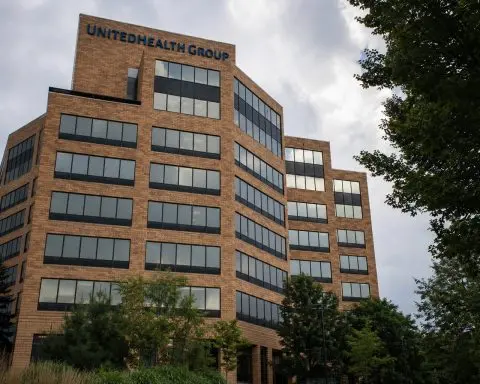
UnitedHealth Group shares were up about 1% at $332.16 in after-hours trading on Tuesday, following the 4 p.m. close. The stock ranged from $329.18 to $336.03 during the day’s session, with about 4.4 million shares traded.
The gain came as U.S. stocks ended slightly lower in holiday-thin trading. The S&P 500 slipped 0.14%, the Dow fell 0.20% and the Nasdaq lost 0.23%.
Investors are repositioning as 2025 winds down, and swings can look sharper when volumes are light. “It’s just a healthy rebalancing of allocations more so than an emotionally driven sell-off,” said Mark Hackett, chief market strategist at Nationwide. Reuters
Why it matters now for UnitedHealth is what comes next, not just where it traded in a single session. The company has set late January as the next key checkpoint for updated outlook and management commentary.
UnitedHealth said it will release full-year 2025 financial results and provide 2026 guidance on Tuesday, Jan. 27, before the market opens, and host a conference call at 8 a.m. ET.
Among big managed-care names, the tape was steadier than UnitedHealth’s move. Elevance Health was up 0.1% and Humana gained 0.3%, while CVS Health, whose pharmacy-benefits manager negotiates drug prices for health plans, fell 0.2%.
Healthcare broadly lagged the single-stock move. The Health Care Select Sector SPDR Fund, an exchange-traded fund ETF that tracks major U.S. healthcare companies, was down 0.1%.
For investors, the late-January update will be a test of whether cost pressures are easing and how UnitedHealth is pricing for 2026. Managed-care stocks have been sensitive to signals around Medicare Advantage, the privately run alternative to the federal Medicare program for seniors.
A key watchpoint is the medical cost ratio, which shows how much premium revenue an insurer spends on medical claims. When that ratio rises, it can pinch profit margins even if membership grows.
Traders will also parse updates from Optum, UnitedHealth’s health-services business, for signs that services growth can offset pressure in the insurance unit. Any comments on utilization trends and pricing discipline are likely to set the tone for the group.
Ahead of the next session, investors expect thin liquidity to persist into year-end, when index and portfolio rebalancing can amplify moves. UnitedHealth’s outperformance versus the broader healthcare ETF on Tuesday underscored how quickly money can rotate inside the sector when market leadership shifts.
Related articles: NYSE:UNH