
NEW YORK, December 31, 2025, 18:32 ET — After-hours
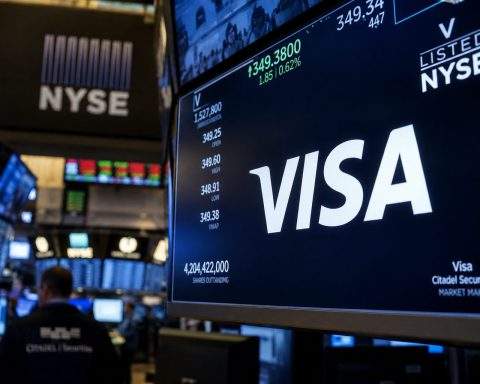
- Visa shares closed down 0.8% at $350.71 in the final U.S. trading session of 2025.
- The move largely tracked a broader market dip in holiday-thin trading.
- Investors are turning to early-January U.S. data and the late-January Fed meeting for the next rate and growth signals.
Visa Inc. shares fell on Wednesday, ending the year’s final session down 0.8% at $350.71. The stock was little changed in after-hours trading.
The slide matters because Visa is a bellwether for digital payments, and its shares often move with expectations for consumer spending and travel. With 2025 closing out, investors used thin liquidity to square positions and rotate risk ahead of January data.
U.S. stocks also ended lower in the final session of 2025, with the S&P 500 down 0.74%, the Nasdaq down 0.76% and the Dow down 0.63%, Reuters reported. “It’s perfectly fine in any bull market to have moments of cost,” said Giuseppe Sette, co-founder and president of Reflexivity, pointing to profit-taking in low-liquidity markets. Reuters
On the corporate side, Visa has recently highlighted its litigation escrow mechanics for legacy U.S. legal exposures. In an SEC filing, Visa said it authorized a $500 million deposit into its U.S. litigation escrow account under its retrospective responsibility plan, a structure that shifts the cost to holders of certain non-public share classes via conversion adjustments.
Those adjustments show up in the “conversion rate” — the formula that determines how many Class A shares a holder receives if Class B shares are converted. Visa’s investor relations disclosures show the Class B-1 and Class B-2 conversion rates were lowered as of December 23, 2025. Visa Investor Relations
Visa’s move on Wednesday was broadly in line with other payments and card-linked names. Mastercard fell about 1.1%, American Express dropped about 0.9% and PayPal slid about 1.2%.
For investors, the near-term focus remains on whether consumer outlays and travel volumes hold up into early 2026 — key drivers for transaction growth at Visa and its peers. Payment networks earn fees tied to activity levels, which can cool quickly if households pull back.
Traders are also keeping an eye on the policy backdrop. Rate expectations matter for market risk appetite, and payment stocks often trade with the broader “quality growth” complex when yields shift.
The U.S. market is closed on Thursday for New Year’s Day, with trading set to resume on Friday. That can amplify price moves around the open as liquidity returns and positioning resets.
The next macro catalysts arrive quickly. The Labor Department’s December employment report is scheduled for January 9, and the December CPI report is scheduled for January 13, according to the Bureau of Labor Statistics.
The Federal Reserve’s next policy meeting is scheduled for January 27–28, according to the Fed’s published calendar. Any repricing of the rate path can ripple across financial and payments stocks.
Company-wise, investors are already looking toward Visa’s next quarterly update for signals on payment volume, cross-border activity and expense discipline. Nasdaq’s earnings calendar currently lists an estimated report date of January 29, 2026, noting the date is derived from historical patterns rather than a confirmed company announcement.
On the tape, traders noted Visa slipped back toward the $350 area after topping $355 intraday. With markets reopening after the holiday, the question for early January is whether buyers step back in — or whether year-end profit-taking extends into the first full week of 2026.
Related articles: NYSE:V