
NEW YORK, January 1, 2026, 19:55 ET
- China is applying a 55% over-quota tariff on imported beef under a three-year safeguard system.
- Australian industry groups say the cap could redirect large volumes of beef into other markets.
- The restrictions also cover major exporters including Brazil and the United States.
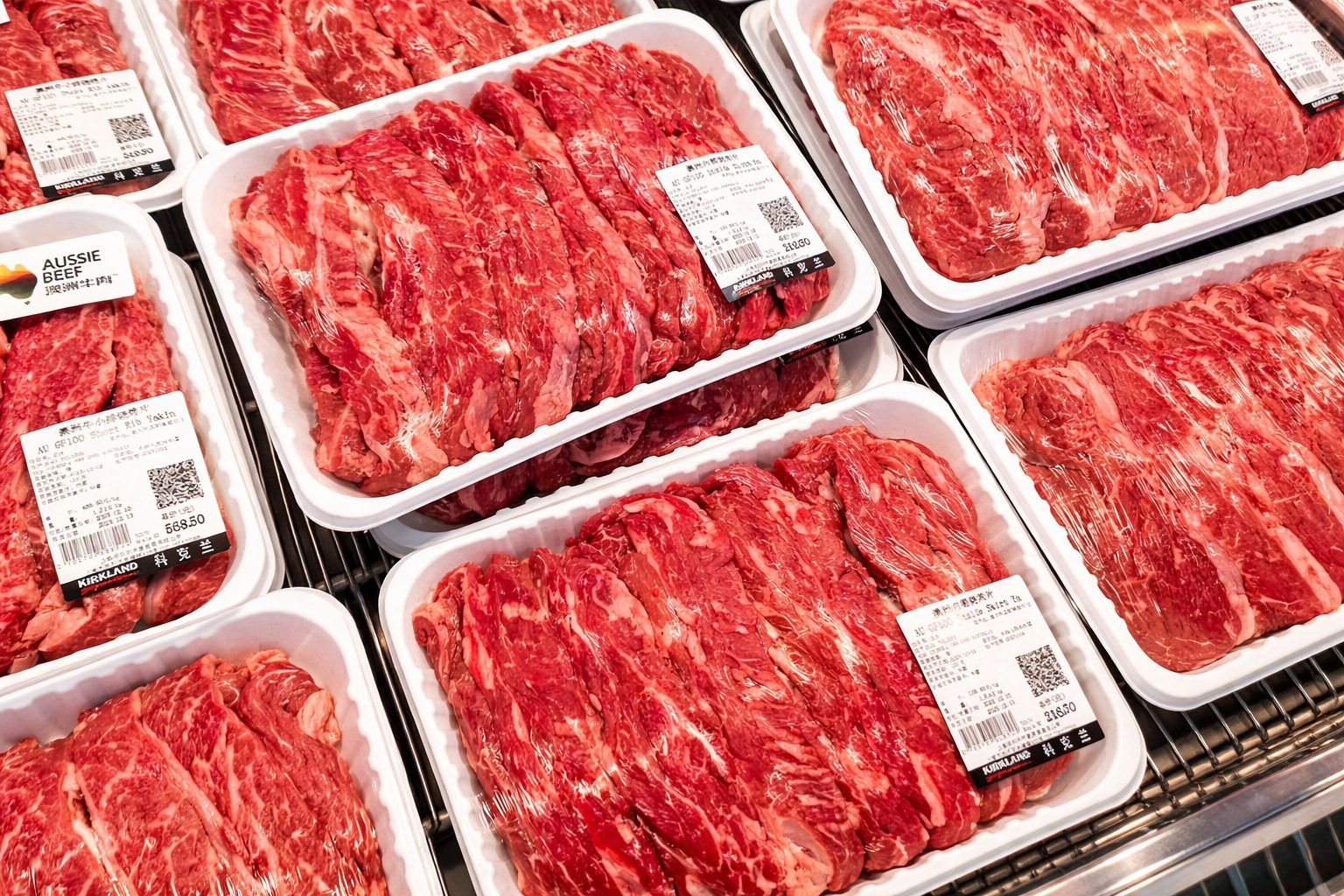
China will charge an additional 55% tariff on beef imports that exceed new country quotas, tightening access for Australia and other major suppliers under a three-year safeguard system that began at the start of 2026. For 2026, China set quotas of 1.1 million metric tons for Brazil, 205,000 for Australia and 164,000 for the United States, and said the limits would rise gradually each year.
Australia exported more than 295,000 metric tons of beef to China in the first 11 months of 2025, and the Australian Meat Industry Council said the new settings could cut those exports by about a third and cost the sector about $1 billion. China’s commerce ministry set a combined 2026 quota of 2.7 million metric tons for countries covered by the measures and said the system would run for three years from Jan. 1. Brazil said it would work with China bilaterally and through the World Trade Organization to mitigate the impact.
The move lands as Australia and China have been mending trade ties after COVID-era disputes, raising the prospect of more Australian beef being pushed into alternative markets. “So we have a billion dollars worth of beef that will need to go to other markets,” Cattle Australia chair Garry Edwards said. Prime Minister Anthony Albanese said Australia was not being singled out and his government was in talks with China. 9News
Beijing is implementing the curbs through country-specific tariff-rate quotas, which allow a set volume in at existing duty rates before higher tariffs apply. China’s Ministry of Commerce said the safeguard will run from Jan. 1, 2026 to Dec. 31, 2028 following an investigation launched on Dec. 27, 2024, and said some developing economies can be exempt if their market share stays below specified thresholds.
China’s commerce ministry said the 55% surcharge applies on top of currently applicable tariff rates once a quota is exhausted, and that unused quota would not carry over into the next year. It also said beef safeguard provisions under the China-Australia Free Trade Agreement would be suspended during the three-year period.
China said a rise in imported beef had seriously harmed its domestic industry, which it said was emerging from oversupply. Beef imports fell 0.3% in the first 11 months of 2025 to 2.59 million metric tons, the commerce ministry said.
Australia’s government said it was disappointed and would press Beijing, while Trade Minister Don Farrell urged China to respect the free-trade partnership, an Agence France-Presse report carried by the South China Morning Post said. The report said China would also suspend part of its free-trade agreement with Australia covering beef, putting trade worth more than A$1 billion ($667 million) a year at risk.
China’s reliance on imports underscores why quota allocations matter for major exporters. In 2024, China imported 1.34 million metric tons of beef from Brazil and 594,567 tons from Argentina, while U.S. shipments totalled 138,112 tons, Reuters data cited by The Beef Site showed. Australian exports to China were 294,957 tons in the first 11 months of 2025, above its 2026 quota allocation.
Analysts expect the measures to curb China’s beef import growth even as quotas rise over time. Hongzhi Xu at Beijing Orient Agribusiness Consultants said imports would decline in 2026 as the restrictions take effect, and Chinese agriculture researcher Zengyong Zhu said the tariffs were intended to help stabilise local cattle production.
China’s 2026 country quotas are set below import levels recorded in the first 11 months of 2025 for top suppliers such as Brazil and Australia, adding pressure on exporters to shift product to other destinations. Australian industry groups said the new arrangements would disrupt trade built under the bilateral free-trade deal.