
New York, Jan 13, 2026, 17:02 EST — After-hours
- The Dow ended down 0.8% on Tuesday, a day after closing at a record.
- A proposed cap on credit-card interest rates kept pressure on banks and card networks as earnings season opened.
- Investors turn to more big-bank results and Wednesday’s inflation and retail data.
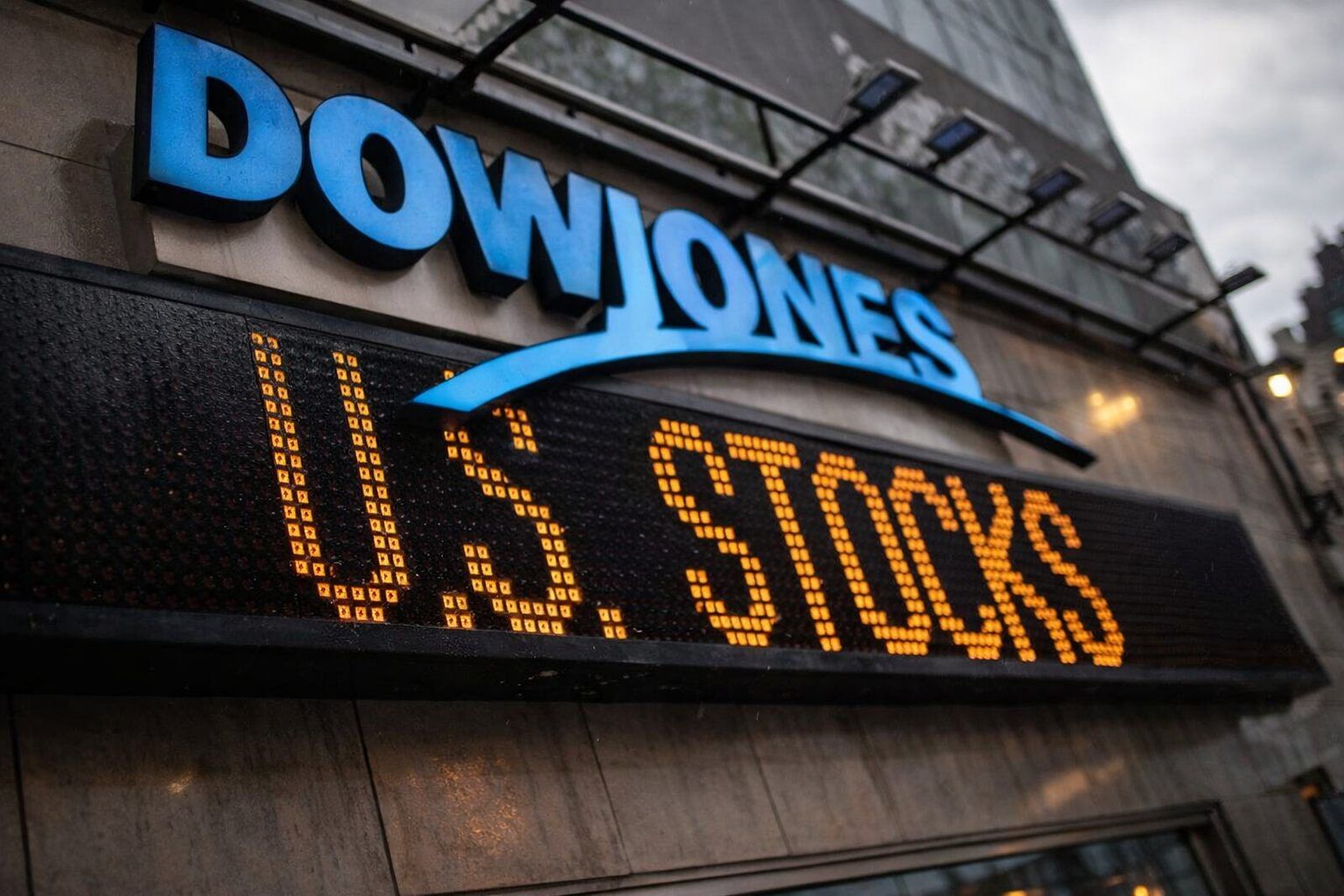
The Dow Jones Industrial Average fell 398.21 points, or 0.8%, to 49,191.99 on Tuesday, easing from Monday’s record close as Wall Street weighed fresh policy risk for consumer credit and the first wave of big earnings. The S&P 500 slipped 0.2% and the Nasdaq fell 0.1%.
It matters because the Dow had just printed a record and the market is leaning hard on earnings to keep the rally honest. Big banks are first up, and they are also the ones most exposed when Washington starts talking about credit-card rates.
The move also comes with inflation still above the Federal Reserve’s target and traders trying to pin down the next rate cut. That’s a lot to digest with stocks still sitting near highs.
JPMorgan executives warned President Donald Trump’s proposed one-year cap of 10% on credit-card interest rates, set to begin on Jan. 20, would hit consumers by forcing banks to curb credit. “It would be very bad for consumers,” JPMorgan Chief Financial Officer Jeremy Barnum said, while Brian Shearer at Vanderbilt Policy Accelerator said banks have “a huge amount of profit” that could absorb lower rates. Reuters
JPMorgan reported adjusted earnings of $5.23 a share for the fourth quarter and forecast about $95 billion of 2026 net interest income excluding markets, after booking a $2.2 billion provision tied to taking over Apple’s credit-card partnership from Goldman Sachs. “The bar for perfection is set pretty high,” said David Wagner, head of equities at Aptus Capital Advisors. Reuters
Economic data earlier showed consumer prices rose 0.3% in December and were up 2.7% from a year earlier, while core CPI — which strips out food and energy — rose 2.6% year on year. Stephen Stanley, chief U.S. economist at Santander U.S. Capital Markets, warned January has a habit of delivering larger core inflation prints as firms push through annual price hikes.
Rate-cut pricing still leans toward easing later this year, but the timing looks less clean than it did a month ago. “A disinflationary trend is gradually taking shape,” said Seema Shah, chief global strategist at Principal Asset Management, even as traders pushed the most likely first cut to June after Fed Chair Jerome Powell’s term ends in May. Reuters
On Monday, the Dow rose 86.13 points to 49,590.20 and logged a record close as investors mostly brushed aside worries about a Justice Department investigation involving Powell. “The market is taking it in stride for now,” said Peter Cardillo, chief market economist at Spartan Capital Securities. Reuters
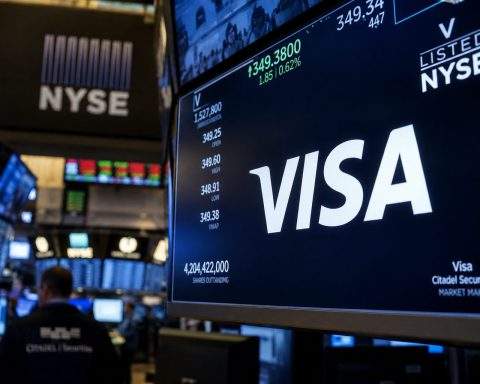
Tuesday’s Dow drop also looked sharper than the broader market because the index is price-weighted — higher-priced shares move the gauge more. Salesforce and Visa were among the biggest drags, with their declines carrying outsized point impact.
But the credit-card cap is still a moving target, and that’s the risk. If the proposal stalls or gets diluted, battered banks and card names can bounce. If it gathers speed — or drags swipe fees into the same fight — the downside is a hit to guidance just as earnings season sets expectations for 2026.
Traders now pivot to Wednesday’s slate and to what policymakers say about growth and inflation in real time. The Federal Reserve’s Beige Book is due at 2 p.m. ET on Wednesday, with the next policy meeting scheduled for Jan. 27-28.
Earnings will do the other half of the work. Bank of America is due Wednesday, with Wells Fargo, Citigroup and Goldman Sachs expected Thursday, according to Benjamin F. Edwards CIO Bill Hornbarger.
On the data side, the Labor Department is scheduled to publish the Producer Price Index for November at 8:30 a.m. ET on Wednesday — a read on inflation at the factory gate that can feed into consumer prices later.
The Census Bureau is also set to release November retail trade data at 8:30 a.m. ET on Wednesday, a delayed snapshot of consumer spending that traders will read against the backdrop of the shutdown-disrupted data calendar.
Related articles: NYSE:V