
New York, Jan 16, 2026, 18:57 EST — After-hours
- Major indexes slipped on Friday, ending the week in the red; meanwhile, small caps notched yet another record close
- Chipmakers stayed strong late in the week, buoyed by upbeat outlooks, but financials slipped amid policy concerns
- After Monday’s holiday, markets reopen Tuesday, spotlighting major earnings reports and a Supreme Court case involving the Fed.
U.S. stocks finished Friday nearly unchanged, but all three major indexes logged weekly losses as the fourth-quarter earnings season kicked off. The Dow dropped 83.11 points, or 0.17%, to 49,359.33. The S&P 500 edged down 4.46 points, or 0.06%, to 6,940.01, while the Nasdaq slipped 14.63 points, also 0.06%, to 23,515.39. For the week, the S&P 500 fell 0.38%, the Nasdaq lost 0.66%, and the Dow declined 0.29%. Small caps held up, with the Russell 2000 closing at a fresh record high. “Most investors will take that as a win,” said Anthony Saglimbene of Ameriprise Financial. Granite Wealth’s Bruce Zaro described mid-January as “pretty choppy.” MarketScreener
That’s key since the benchmark lingers close to all-time highs, though the steady policy updates aren’t offering much support anymore. Art Hogan, chief market strategist at B Riley Wealth, said, “It is literally an imperative that earnings actually carry the news cycle,” after measures like a one-year 10% cap on credit card interest rates sent financial stocks reeling. Investing.com
Volatility has been surprisingly subdued for this point in earnings season, with Friday’s monthly options expiration drawing close attention. Options, which let investors buy or sell stocks or indexes at set prices by specific dates, can trigger rapid shifts in hedging flows during big expirations. The S&P 500’s 10-day volatility index dropped to 8.1% on Thursday, well under its year-long average. SpotGamma’s Brent Kochuba noted, “this options expiration will allow the S&P 500 to start moving around a bit more.” Reuters
Thursday’s session highlighted a swift change in market leaders. Morgan Stanley and Goldman Sachs climbed on stronger profits, while U.S.-listed Taiwan Semiconductor shares surged 4.4%, fueling gains in chipmakers like Nvidia, Broadcom, and Applied Materials. “Growth, tech or bust,” Jake Dollarhide, CEO of Longbow Asset Management, summed it up. Reuters
Beyond the mega-cap tech giants, investors shifted focus to smaller firms and more defensive sectors. Financials lost ground as the week progressed, while areas like consumer staples and utilities gained traction amid rising yields and a cautious approach to risk.
Fund flows indicated that investors kept deploying cash despite a volatile week. U.S. equity funds attracted $28.18 billion in the week ending Jan. 14, according to LSEG Lipper data. Meanwhile, LSEG forecasts highlighted double-digit profit growth in Q4 for large- and mid-cap firms, driven mainly by technology.
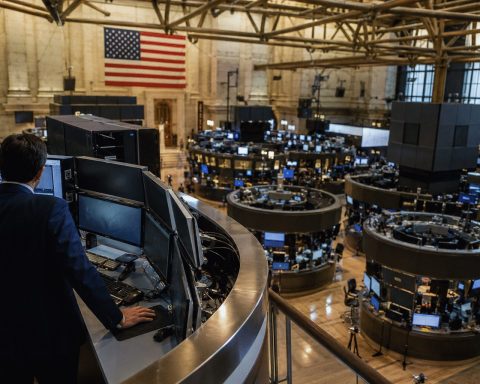
Trading pauses for Martin Luther King Jr. Day on Monday, Jan. 19, with the NYSE reopening for regular hours the following Tuesday.
The calendar kicks off with Netflix set to release its fourth-quarter 2025 earnings after the market closes on Tuesday, Jan. 20. Johnson & Johnson follows with its Q4 2025 earnings call scheduled for Wednesday, Jan. 21. Intel rounds out the week, reporting results after the close on Thursday, Jan. 22.
Right in the thick of it sits a policy headline: The U.S. Supreme Court docket lists a case involving Fed Governor Lisa Cook for argument on Wednesday, Jan. 21. Traders see this date as a likely trigger for fresh rate and risk swings.
The setup feels fragile. Should earnings guidance fall short of lofty expectations—or if Washington news keeps hitting banks and the Fed—the market’s calm might shatter. Post-expiration flows could then intensify that initial move.
Tuesday’s reopen on Jan. 20 and Netflix’s earnings released after the bell serve as the initial near-term tests; the Supreme Court arguments on Jan. 21 follow shortly after.
Related articles: Stock Market