
New York, Jan 17, 2026, 12:57 EST — Market closed.
- After slipping late last week, XRP climbed roughly 1% to $2.07 during weekend trading.
- A delayed U.S. Senate session on a crypto market-structure bill kept regulatory issues front and center.
- Ripple and LMAX announced a multi-year agreement featuring $150 million in financing from Ripple and expanded adoption of RLUSD for institutional trading.
XRP held steady near $2.07 on Saturday, barely moving as weekend trading slowed following U.S. lawmakers’ decision to put a key crypto bill on hold.
The token trades nonstop, but the real sentiment test likely awaits when Washington gets back to business. Despite a strong start to 2026 across much of crypto, traders are now fixated on “rules” headlines that could either fuel inflows or cut them off.
The focal point is the Digital Asset Market Clarity Act, aiming to clearly define which regulator oversees what. In a market driven by exchanges and trading platforms, jurisdiction is key—it influences listings, product marketing, and risk valuation.
XRP dropped roughly 1.3% on Friday, settling near $2.08. Bitcoin stayed close to $95,700, while ether slipped to about $3,316. The moves came as the Senate Banking Committee delayed a session on the bill, according to market reports.
Coinbase CEO Brian Armstrong said the exchange can’t support the draft legislation “in its current form,” highlighting concerns over stablecoin rewards — the incentive payments on dollar-pegged tokens meant to maintain a $1 value. “We’d rather have no bill than a bad bill,” Armstrong wrote. Meanwhile, Senate Banking Committee Chairman Tim Scott said parties remain “at the table working in good faith.” Summer Mersinger, CEO of the Blockchain Association, described the delay as “a healthy part of policymaking.” Reuters
The Banking Committee’s online calendar continues to show the Jan. 15 executive session on the Clarity Act as postponed, with no rescheduled date announced.
Ripple, best known for its link to XRP, took a fresh institutional angle this week. LMAX Group announced it will use Ripple USD (RLUSD) as core collateral across its institutional trading setup. The firm also revealed Ripple is backing its cross-asset growth with $150 million in financing. LMAX CEO David Mercer called the deal a “milestone,” while Ripple stablecoins chief Jack McDonald said institutions are “increasingly recognising” blockchain’s potential to modernise market structure. LMAX Group
It’s not a straightforward link to XRP demand, and traders are well aware of that. Still, stablecoins are the backbone of crypto’s infrastructure today, and shifts in how major players post collateral or settle trades can quickly impact liquidity — often outpacing developments in the token’s own roadmap.
The obvious risk is the bill dragging on or returning in a shape that pleases neither banks nor exchanges. If it stretches out, the market ends up stuck in the same unclear spot — which usually hits volumes first, then prices.
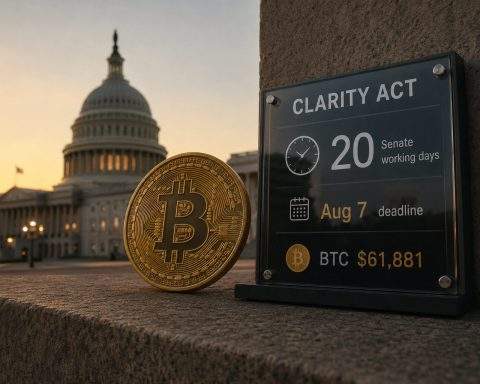
The calendar is set. Senate Agriculture Committee Chairman John Boozman announced the committee aims to release the legislative text by the end of business on Jan. 21, with a markup scheduled for Jan. 27 at 3 p.m.
Meanwhile, XRP traders await a new reset date from the Senate Banking Committee. They’re also eyeing any change in stance from Coinbase and other industry lobbyists on whether the Clarity Act, as it stands, is acceptable.
Related articles: NASDAQ:COIN