
New York, Jan 18, 2026, 18:05 (EST) — The market closed for the day.
- Micron has signed a letter of intent to buy PSMC’s Tongluo P5 fab in Taiwan, shelling out $1.8 billion in cash.
- Shares surged 7.8% on Friday, boosting memory-chip stocks to extend their winning streak.
- Investors are zeroing in on the timeline for approvals and how quickly new DRAM supply will come online.
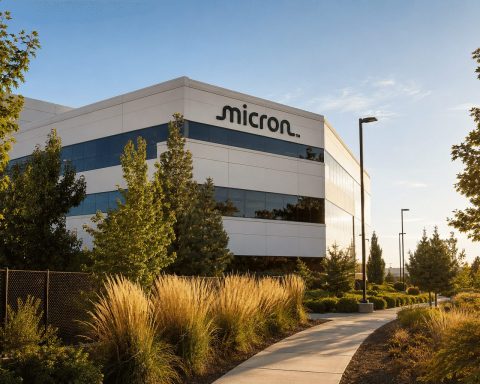
Micron Technology, Inc. made waves ahead of Tuesday’s U.S. market open with news of a $1.8 billion cash deal to acquire a Taiwan chipmaking plant. On Friday, its shares surged 7.8% before markets closed for the Martin Luther King Jr. Day holiday on Monday.
The planned acquisition stands out, potentially ramping up DRAM capacity faster than building a new plant. This follows a steep stock surge, fueled by investor bets on AI-driven demand.
Unexpected moves have little room to breathe now. Fresh data on memory supply and pricing—or the speed at which new capacity turns into shipments—could flip sentiment in this sector in an instant.
Micron is set to pay $1.8 billion in cash for Powerchip Semiconductor Manufacturing Corp’s P5 facility in Tongluo, Miaoli County, aiming to wrap the deal by Q2 2026, subject to final agreements and regulatory approval. The 300-millimeter fab features a 300,000-square-foot cleanroom. Both firms intend a long-term partnership on post-wafer assembly processing — the packaging phase after wafer chip production — along with PSMC’s current DRAM operations. “This strategic acquisition … will enable Micron to increase production and better serve our customers,” said Manish Bhatia, executive VP of global operations. Micron Technology
On Friday, Micron director Teyin M. Liu made a significant insider purchase. Over Jan. 13 and Jan. 14, Liu acquired 23,200 shares in open-market transactions at an average price close to $337, a recent regulatory filing showed. Following these buys, Liu directly owns 25,910 shares, the Form 4 indicates.
Micron broke ground Friday on its $100 billion memory complex in Clay, New York. The site is set to hold up to four fabs, with production targeting a 2030 start, the company said. This is part of a broader U.S. expansion totaling around $200 billion across Idaho, Virginia, and advanced HBM packaging — the high-bandwidth memory vital for AI chips. Micron plans to produce 40% of its DRAM on U.S. soil. “As AI transforms every industry, advanced memory has become essential,” Nvidia CEO Jensen Huang said, endorsing the project. Micron Technology
Micron jumped on Friday, riding a broader surge in chip stocks driven by AI demand. Seagate Technology and SanDisk, both memory specialists, also saw gains. The iShares Semiconductor ETF rose 2.1%. U.S. markets will be closed this Monday for Martin Luther King Jr. Day.
Micron wrapped up Friday at $362.75, up 7.76%. The stock fluctuated between $346.65 and $365.59, with about 47.9 million shares traded. This surge lifted Micron’s market cap to roughly $408 billion, holding near its 52-week high.
Memory still plays the boom-and-bust game. If AI spending slows or the market gets flooded with DRAM and NAND, prices can tank fast. What once seemed like a growth play can morph into a margin squeeze almost overnight.
Tuesday brings a critical test for Micron’s rally as markets reopen and investors debate the Taiwan deal’s impact—will it shore up capacity or signal a surge in supply? U.S. markets were closed Monday, so the Nasdaq’s return on Jan. 20 stands out as the key event to track.
Related articles: NASDAQ:MU