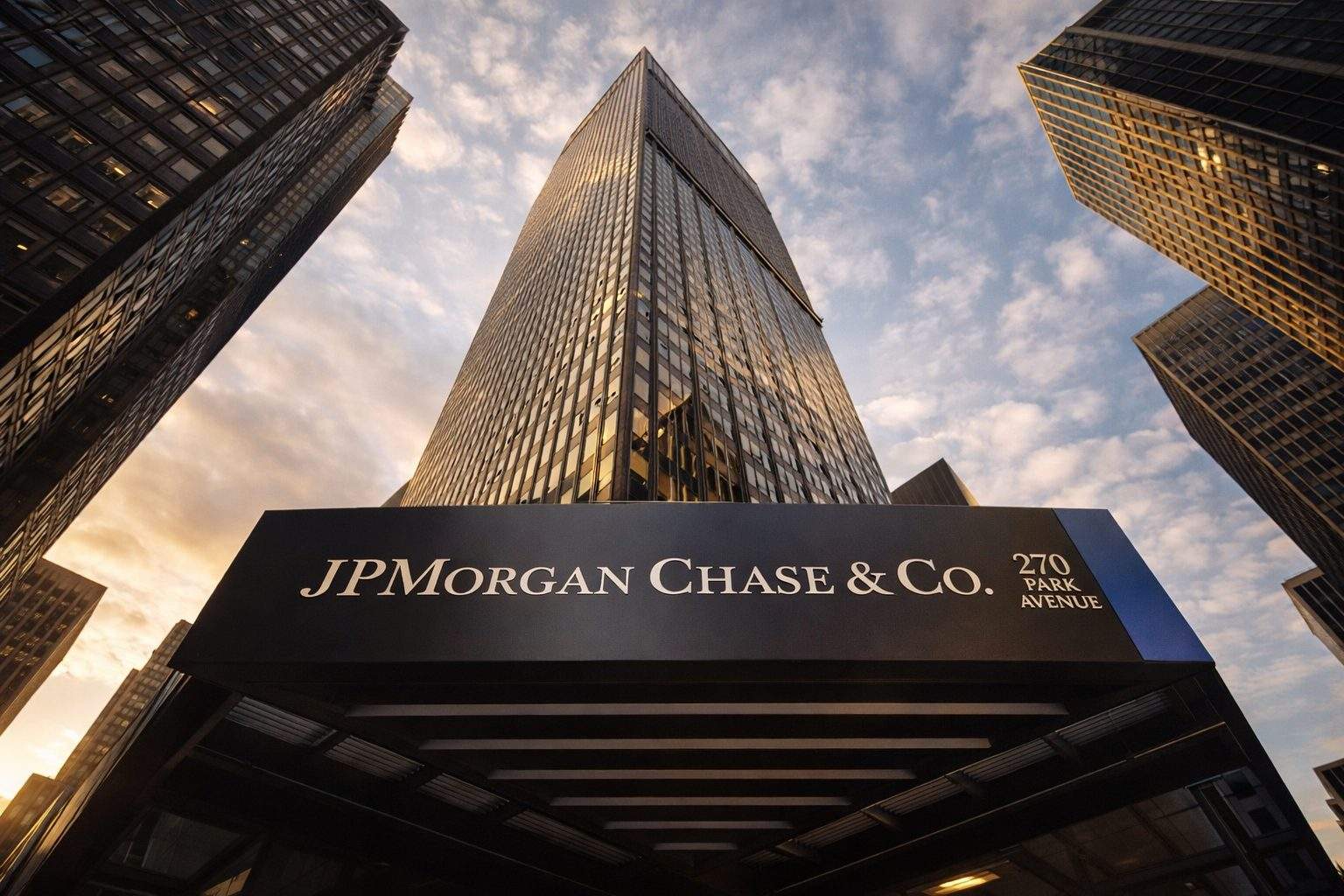

New York, January 21, 2026, 11:10 ET — Regular session underway.
JPMorgan Chase & Co shares ticked up 0.3% to $303.54 on Wednesday, recovering slightly after a tough day. Investors remain cautious, digesting new political risks facing the U.S. credit-card sector.
Attention shifted sharply back to a proposed 10% ceiling on credit-card interest rates after JPMorgan CEO Jamie Dimon slammed the measure at the World Economic Forum in Davos, warning it “would remove credit from 80% of Americans” and labeling it an “economic disaster.” President Donald Trump pushed the plan again in a separate Davos speech, urging Congress to pass a one-year cap. The S&P 500 Banks Index, reflecting major lenders, gained 1.2% on Wednesday. Reuters
This is a big deal because credit cards are a major profit driver for big banks. A strict cap could push lenders to clamp down on these unsecured loans — meaning borrowing without collateral. JPMorgan shares dropped 3.1% Tuesday, Citigroup slid 4.4%, and Wells Fargo lost 1.9%. Investors are bracing for the administration’s Jan. 20 deadline to see if it sparks any moves. “For now, it’s an overhang,” Brian Jacobsen, chief economic strategist at Annex Wealth Management, said. Reuters
The ongoing policy clash is hitting a jittery market. On Tuesday, Wall Street suffered its largest single-day loss in three months after Trump threatened new tariffs on parts of Europe connected to his push for the U.S. to purchase Greenland. The S&P 500 slid 2.06%, the Nasdaq tumbled 2.39%, and the VIX volatility index surged to its highest close since late November.
Rates remain a key factor for bank stocks. In a Reuters poll, every economist expects the Federal Reserve to keep its benchmark rate steady at 3.50%-3.75% during the Jan. 27-28 meeting. Yet, debate is intensifying over when rate cuts might begin—and who will be leading the Fed when that happens. “The economic outlook on the surface suggests the Fed should remain on hold,” said Jeremy Schwartz, senior U.S. economist at Nomura. Reuters
For JPMorgan and its rivals, this route leads straight to net interest income — the difference between what banks earn on loans and pay out on deposits. That gap can boost profits or tighten margins, depending on how funding costs and loan demand play out.
Investors are closely monitoring whether the White House and Congress might settle on a compromise instead of imposing a sharp cap. The longer this uncertainty lingers, the greater the risk that consumer finance decisions—like credit limits and pricing—could stall.
The downside is clear: if Washington moves forward with a 10% cap, banks might slash credit lines, scale back rewards, or tack on fees. Those moves would likely weigh on consumer spending. On top of that, a fresh tariff battle would fuel volatility even more.
All eyes turn to the Fed’s move next week. The central bank will drop its policy statement at 2:00 p.m. ET on January 28, with a press conference set for 2:30 p.m.