
New York, Feb 3, 2026, 15:02 EST — Trading session underway
- Rocket Lab shares climbed roughly 5.8%, hitting $78.43 in afternoon trading
- Shares in space companies climbed following Elon Musk’s announcement of a SpaceX-xAI partnership
- Attention turns to Rocket Lab’s earnings report on Feb. 26 and the latest on the Neutron launch timeline
Rocket Lab’s stock climbed roughly 5.8%, hitting $78.43 in Tuesday afternoon trading. That pushes the space-launch firm’s market cap close to $39.6 billion.
Rocket Lab surged alongside other U.S.-listed space stocks following Elon Musk’s announcement that SpaceX will merge with AI firm xAI, valued at $1.25 trillion. Musk predicted that within two to three years, the most cost-effective way to produce “AI compute” — the processing power behind training models — might be in space, as Big Tech invests hundreds of billions chasing artificial general intelligence (AGI), or human-level AI. Russ Mould, investment director at AJ Bell, suggested the deal might “whet the appetite” for what could become the largest IPO. Meanwhile, Seraphim Space CEO Mark Boggett described it as “the strongest validation yet that space will be the backbone of the next wave of AI.” Reuters
The rebound came after Rocket Lab tumbled over 7% on Monday, as traders connected the drop to Congress’s refusal to fund a proposed 2031 mission to bring back samples from NASA’s Perseverance rover on Mars — a project Rocket Lab had pitched at around $4 billion. Despite the bounce, the stock remains about 25% below its all-time high of $99.58, following a strong rally that attracted momentum traders.
Rocket Lab investors know the drill: slow-moving government choices meet fast-moving speculative cash drawn to the “space” theme. The stock often moves as a stand-in for private space giants, even when Rocket Lab itself isn’t in the spotlight.
The company plans to release its fourth-quarter and full-year 2025 results after the U.S. market closes on Feb. 26. A conference call will follow at 5 p.m. Eastern.
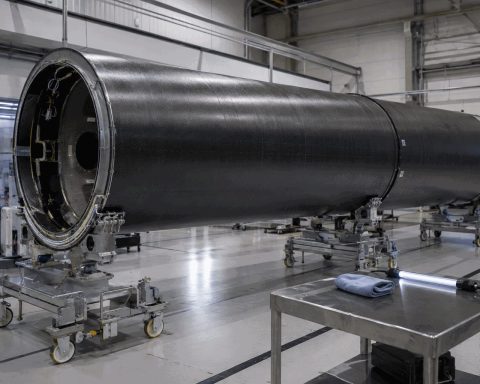
Neutron continues to be a major wildcard. On Jan. 21, Rocket Lab disclosed in a filing that qualification testing of Neutron’s first-stage tank ended with a rupture during a hydrostatic pressure test — where the tank is filled with water to gauge its strength. The company is digging through the data now to figure out how this might affect the launch schedule. An update on Neutron’s timeline is expected during Rocket Lab’s Q4 earnings call in February.
The SpaceX-xAI deal revealed new details that moved the market. SpaceX was pegged at $1 trillion, with xAI valued at $250 billion, Reuters reported. Investors in xAI will get 0.1433 SpaceX shares for each xAI share, according to a source close to the deal. Ali Javaheri, PitchBook’s senior emerging spaces analyst, noted that “Starlink was already a cash flow engine” and sees the merger adding an AI-driven revenue stream. Reuters also highlighted possible governance and regulatory challenges due to SpaceX’s federal contracts. Reuters
Yet the factors behind Tuesday’s rally could quickly reverse. If the SpaceX-xAI partnership faces increased regulatory scrutiny or investors sour on the financial outlook for space-based data centers, sentiment might shift sharply. On top of that, Rocket Lab’s ability to deliver on Neutron still poses a significant risk.
Traders will be watching if Rocket Lab can maintain its gains ahead of the Feb. 26 earnings report and if management lays out clearer milestones for Neutron. Signals from Washington on NASA funding and defense satellite budgets are expected to keep the stock active.
Related articles: NASDAQ:RKLB