
New York, Feb 7, 2026, 09:34 EST — Market closed.
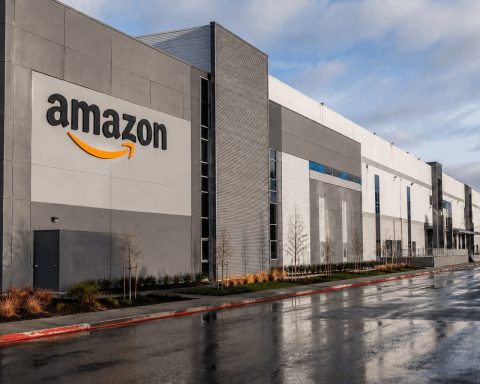
Amazon.com (AMZN.O) closed out Friday at $210.32, falling 5.6% as investors recoiled from the tech giant’s newest round of spending plans.
Amazon’s forecast of roughly $200 billion in capital spending for 2026 — much of it earmarked for data centers, servers, and hardware — triggered the rout, stoking new skepticism over how soon the AI investments from Big Tech will deliver returns. If the decline persisted, Amazon’s market cap was on track to shed about $200 billion, according to Reuters.
Amazon shares slid 11.5% in Thursday’s after-hours trading, after the company forecast a capex increase topping 50% for 2026, according to Reuters. On the earnings call, CEO Andy Jassy pushed back against critics of the spending ramp, insisting that cloud growth rates aren’t apples-to-apples when scale is this large: “it’s very different having 24% year-over-year growth on $142 billion annualized run rate.” Reuters
Amazon projected first-quarter net sales between $173.5 billion and $178.5 billion, with operating income expected to land somewhere in the $16.5 billion to $21.5 billion range, the company said in its earnings release. That includes roughly $1 billion in extra costs this year compared to last, driven by expansion of the Leo satellite internet operation as it gears up for 2026.
Amazon submitted its 8-K with the SEC on Feb. 5, detailing its quarterly earnings and attaching the usual exhibits.
D.A. Davidson’s Gil Luria downgraded Amazon to Neutral from Buy and trimmed his price target to $175, citing signs that AWS is “scrambling to catch up through escalating investment” as the cloud computing gap closes, Investing.com reported. Investing.com
Friday, the Dow pushed past 50,000 for the first time ever, with investors shifting out of tech following a bumpy week driven by AI volatility, according to Reuters. Amazon’s stock told a messier tale.
Amazon bulls point to the capex numbers and shrug—they’re rough, sure, but make sense. AWS can’t keep up with demand, and Amazon wouldn’t ramp up spending if customers weren’t showing up in force. Bears, though, focus on the narrowing margin for error, especially as both Microsoft and Alphabet are pouring money into the cloud game too.
Here’s the risk: Extra capacity hits the market just as demand cools or pricing pressure ramps up, and companies face higher spending upfront, with profits trailing—or maybe not showing up. That’s what investors are now factoring in, all over again.
Macro events are on deck next week that could jolt pricey growth names. The U.S. January jobs data drops Feb. 11, and the CPI for January lands Feb. 13—both dates reshuffled after the shutdown, according to Reuters. Per the BLS calendar, CPI hits at 8:30 a.m. ET on Feb. 13.
Amazon heads into Monday with the question hanging: Was Friday’s slide just a brief shakeout of expectations, or is this the opening round in a deeper reckoning over the cash demands of the AI arms race?
Related articles: NASDAQ:AMZN