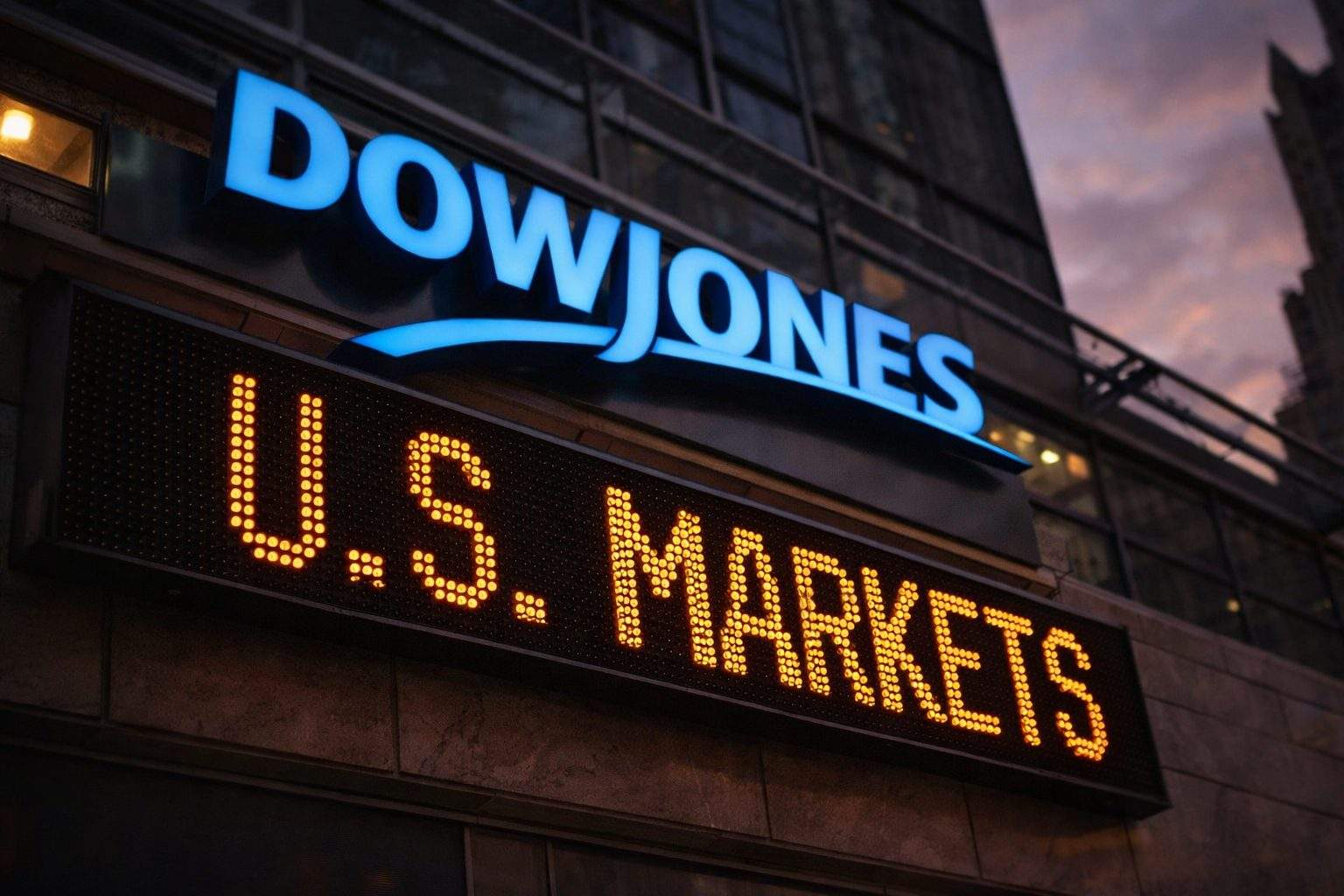
New York, February 7, 2026, 12:04 EST — The session has ended.
- The Dow wrapped up Friday at 50,115.67, climbing 1,206.95 points, or 2.47%—marking its first finish above 50,000.
- Chipmakers staged a late-week rebound, easing fresh jitters over AI-related spending and software disruption risks facing Big Tech.
- Next week, investors are bracing for postponed U.S. jobs and inflation data, along with one last round of earnings from blue-chip companies.
The Dow Jones Industrial Average broke through the 50,000 mark for the first time on Friday, ending the day at 50,115.67 after a surge of 1,206.95 points, or 2.47%. Caterpillar rallied 7.1%, handing the price-weighted index its biggest push as it continued to outperform Wall Street’s broader benchmarks this year. “The Dow is kind of the people’s index,” said Chuck Carlson, CEO of Horizon Investment Services. Reuters
The milestone landing comes on the heels of a punishing run for software and data-services shares. Investors have been recalculating just how much rapidly advancing AI might eat into margins or even upend entire business models. The S&P 500 software and services index tumbled 4.6% Thursday, taking its loss since Jan. 28 to nearly $1 trillion in market cap. At last check, it was trading about 21% under its 200-day moving average — a key line on many charts. “There has not been dip-buying … but we are reaching a watershed moment,” said Nick Giorgi, chief equity strategist at Alpine Macro. Reuters
U.S. markets are quiet for the weekend, but eyes are already on a jam-packed slate that could determine if Friday’s gains have legs. “Rotation is the dominant theme this year,” said Angelo Kourkafas, senior global investment strategist at Edward Jones, though he flagged that tech faces a tough hurdle as investors look to lock in profits. Rate expectations haven’t budged much, he noted—and that steadiness gets put to the test with jobs numbers, inflation data, and earnings from Coca-Cola, Cisco Systems and McDonald’s all coming up next week. Reuters
It was a strong showing across the board on Friday. The S&P 500 tacked on 1.97%, the Nasdaq put up a 2.18% gain, helped as chip names rallied and some of the “old economy” stocks kept pushing higher. Amazon dropped 5.6% after warning of a big jump in AI infrastructure costs, but Nvidia, AMD and Broadcom all surged more than 7%. The Philadelphia SE Semiconductor index finished 5.7% higher. On the week, the Dow booked a 2.5% rise, while the S&P 500 slipped 0.1% and the Nasdaq lost 1.9%. Reuters
Day after day, that tug-of-war is what’s shaping the market: investors are hungry for the revenue jolt from AI, but their patience for the mounting costs is wearing thin. Reuters puts total AI outlays by Big Tech in 2026 at around $600 billion; Amazon’s got a $200 billion capex blueprint on the table, and Alphabet says its own capital spending could double this year. “It’s not that the trade is over, but it got too pricey,” said Andrew Wells, chief investment officer at SanJac Alpha. Reuters
The way the Dow is built plays a big role. Because it’s price-weighted, stocks with bigger share prices—think Caterpillar, Goldman Sachs—move the needle more than cheaper ones, regardless of the company’s market cap. That dynamic means a handful of high-priced names can prop up the Dow, especially when growth stocks are getting hammered elsewhere, like in the tech-skewed Nasdaq.
The Federal Reserve’s messaging remains a moving target. On Friday, Vice Chair Philip Jefferson said he was “cautiously optimistic” looking out to 2026, though he emphasized that “the extent and timing” of future rate moves will depend on the data and risk calculus. Jefferson also flagged the possibility that AI-fueled investment could drive inflation higher for a period if there’s no policy response. Reuters
Still, there’s a weak link in this rally. Should fresh U.S. numbers surprise to the upside—or if investors turn skittish about profit margins getting squeezed as spending outpaces revenue—the week’s sector shift might quickly unwind, sending stocks back into a familiar tech slump.
Tension is already priced in, according to forecasts heading into the week. S&P Global Market Intelligence expects the postponed U.S. jobs report to point to payrolls rising by around 70,000 in January, with unemployment steady near 4.4%. But the CPI release could spark more volatility—if headline or core inflation comes in notably different from December’s 2.7% and 2.6% figures.
Traders are looking ahead to the next key data points: Wednesday, Feb. 11 brings the U.S. Employment Situation report for January, out at 8:30 a.m. ET. Then, on Friday, Feb. 13, the January Consumer Price Index hits at the same time. Details are posted at .