
NEW YORK, February 11, 2026, 11:43 EST — Regular session
- Boeing dropped roughly 1% during regular hours, with investors reacting to talk of a slower production schedule.
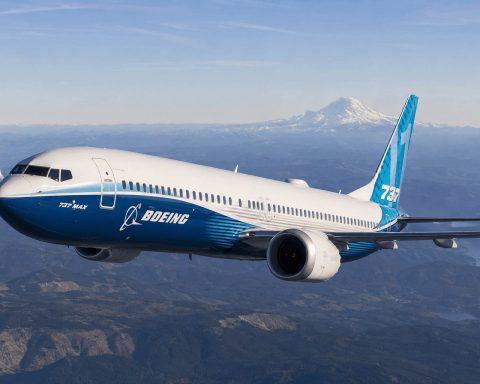
- Boeing is setting up a fourth 737 MAX final-assembly line, this one in Everett, Washington.
- Boeing topped Airbus in both January deliveries and order intake, though questions linger about how fast production can really accelerate.
Boeing shares dipped 1.3% to $239.44 late Wednesday morning, giving up ground as the planemaker laid out a careful roadmap for ramping up 737 MAX production. The stock swung from $236.60 to $244.30 so far.
The timing’s crucial here—Boeing’s whole recovery story hinges on the assembly line: crank out planes, get them out the door, bring in the money. If there’s even a suggestion that things on the production floor are slowing down, it puts a dent in hopes for faster cash flow as demand ticks up.
Boeing posted 46 jet deliveries for January, along with 103 net new orders—both figures beating Airbus for the month. The tally got a push from sizable 737 MAX business out of Aviation Capital Group, plus a variety of orders for 787s and single-aisle planes from names like Delta and Air India. Of the deliveries, 38 were 737 MAX jets. For its part, Airbus delivered just 19 aircraft in January, according to disclosures from both plane makers.
Boeing has informed suppliers it’s moving ahead with a fourth 737 MAX production line in Everett, Washington, aiming for a mid-summer launch, according to a Feb. 10 update. The company is projecting a roughly 15% increase in output over the next year and a half. That trajectory, though, pushes the next target production rate—47 aircraft per month—into 2027, which is later than some suppliers had banked on. Boeing’s current pace stands at 42 jets monthly, with a longer-term ambition to ramp up to 63, but that’s “over a number of years” as the MAX goes up against Airbus’s A320neo lineup. After the announcement, Boeing’s stock slipped close to 1%. Reuters
This week, the company pointed to fresh defense business, announcing it secured a U.S. Air Force contract to update the C‑17A Globemaster III’s flight deck. The deal involves swapping out old avionics in favor of a modular open systems architecture—a “plug-and-play” setup that’s supposed to simplify future upgrades. “With the U.S. Air Force requirement to keep the C‑17A viable through 2075, we already have a clear and achievable roadmap,” said Boeing vice president Travis Williams in a statement. MediaRoom
But the downside? That’s well-trodden territory. Production can’t move any faster than what suppliers, components, and factory standards can handle—and following years of disruptions hitting delivery timelines, Boeing’s margin for error is slim.
Focus stays on monthly delivery figures, with traders watching closely for fresh signals about when Boeing pushes the 737 line to its next production rate. On top of that, investors are eyeing the defense pipeline—hoping it can bring in more stable cash flow next to those commercial jet shipments.
The FAA on Wednesday flagged another concern, rolling out a proposed airworthiness directive for some Boeing 757-200 and 757-200CB jets due to what it described as “widespread fatigue damage”—cracks that can spread throughout the airframe as aircraft age. The agency set a March 30 deadline for public comments. Federal Register
Related articles: NYSE:BA