
New York, Feb 12, 2026, 15:48 EST — Regular session.
- Boeing shares picked up roughly 2% in afternoon trading, following new remarks on supply-chain quality.
- Boeing outpaced Airbus in both deliveries and orders for January, with investors zeroing in on the higher-margin handovers that drive cash flow.
- The next hurdle for the rally? Investors are zeroed in on 737 MAX production plans—and whether Boeing’s new Everett line can keep up.
Boeing (BA) climbed 1.8% to $240.49 during Thursday’s afternoon session, with investors reacting to fresh statements regarding fewer supply-chain issues. Shares swung from $236.07 up to $245.64, and volume reached roughly 5.2 million as of 3:36 p.m. EST.
Investors keep circling the same issue: will Boeing actually convert its busy order book into consistent deliveries, and do it without the production stumbles that have dogged it before? The stakes are real this year—delivery speed, not guidance, is what’s driving cash and shaping the debt picture.
Boeing reported this week it handed over 46 jets in January—38 of them 737 MAX models and five 787 Dreamliners. Net new orders, after cancellations, landed at 103 for the month. Among the headline deals: Aviation Capital Group signed up for 50 of the 737 MAX, and Delta Air Lines added 30 fresh 787s to its pipeline. Rival Airbus, meanwhile, delivered 19 aircraft and counted 49 net orders. Deliveries matter; that’s when the bulk of the cash actually comes in for the manufacturers.
Boeing is spending 40% less time dealing with supply chain fixes than it did in 2024, according to Ihssane Mounir, the company’s senior vice president for global supply chain and fabrication. Speaking to suppliers outside Seattle, Mounir also pointed to a 60% drop in defects from Spirit AeroSystems after Boeing stepped up inspections. Spirit, which made and installed the 737 MAX door plug that blew out on an Alaska Airlines flight this year, has been under a microscope since the FAA slapped production limits on Boeing. The company’s December move to reacquire Spirit, based in Wichita, was, in Mounir’s words, “probably the best thing that’s happened in my career.” Reuters
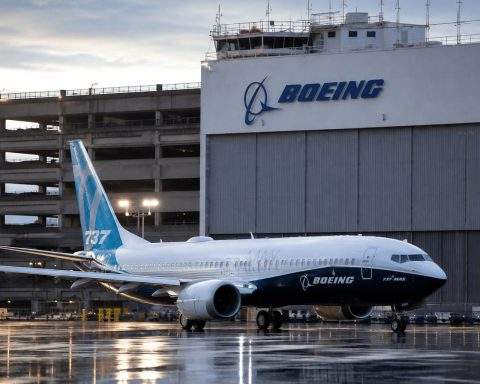
Boeing isn’t racing to ramp up, but it has a plan. The company’s set to launch a fourth 737 MAX line in Everett, Washington, by mid-summer—the first time that jet leaves Renton for assembly. Output’s edging up, according to Vice President Katie Ringgold: moving from 38 jets a month, aiming for 42 soon, and eventually targeting 63, though “over a number of years.” Two suppliers told Reuters they’d been gearing up for 47 a month this year, but Ringgold now pegs that rate for 2027. Reuters
The stock tends to stumble over these slower ramps. Even a whisper of the build-rate curve leveling off, and the rally can deflate fast.
Airbus still sets the pace in the narrow-body space. Over on the Boeing side, the 737 MAX draws the closest investor scrutiny. More orders are a plus, but the real test is whether jets leave the hangar as scheduled and don’t rack up expensive fixes.
But the risks are right in front of everyone. If there’s another quality lapse, choppy supplier integration, or regulators clamp down harder, Boeing could find itself missing output targets again—and stuck with more inventory than planned.
Eyes have shifted to the upcoming batch of delivery figures, and whether those supplier “fixes” actually take hold on the production floor. The Everett expansion? It’s just another marker, hardly a solution.
Regulators have put forward a proposed airworthiness directive targeting specific Boeing 757-200 and 757-200CB jets, citing possible widespread fatigue damage. The order would mandate inspections or checks of maintenance records, with further action if necessary. Feedback on the proposal is due by March 30, 2026.
Related articles: NYSE:BA