
New York, February 25, 2026, 17:54 EST — After-hours
- Salesforce shares slipped in after-hours trading as the company released its annual outlook.
- AI-fueled sales provide a lift, but investors are looking closely at the slower pace of overall revenue growth.
- Eyes now turn to guidance specifics, any buyback announcements, and what’s next for AI products in the short run.
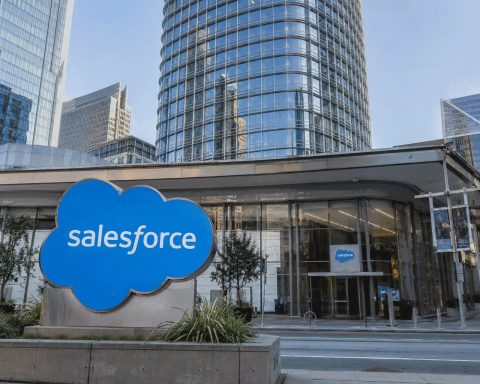
Shares of Salesforce NYSE:CRM slid 5.4% to $181.37 in after-hours trading Wednesday, following the company’s earnings release and its forward guidance for the year.
This shift is significant. Salesforce stands out as a key indicator for enterprise software spending, and those budgets remain under pressure. What investors are watching for: evidence that so-called “agentic” AI—tools that act, not just reply—will actually bring in more paying users and usage, without cutting into prices.
This quarter rolls in during a nervous patch for enterprise software. Revenue is still climbing—spending’s holding up—but there’s little room for a slow forecast to slip by. Most arguments come down to when, exactly, things will pick up; few are questioning if AI matters.
Salesforce put out a fiscal 2027 revenue forecast of $45.80 billion to $46.20 billion, landing the midpoint just under Wall Street’s $46.06 billion consensus, per LSEG data seen by Reuters. The stock, down over 28% for the year ahead of the announcement, didn’t catch a break.
Salesforce posted a 12% jump in fourth-quarter revenue, hitting $11.2 billion. Current remaining performance obligations climbed 16% to $35.1 billion—this covers contracted revenue set to land over the next year. The company noted annual recurring revenue from Agentforce and Data 360 surpassed $2.9 billion, with Agentforce alone contributing $800 million. CEO Marc Benioff described Salesforce as “an operating system for the Agentic Enterprise,” while CFO Robin Washington told investors to look for “reaccelerated organic revenue growth in H2 FY27.” Business Wire
Salesforce announced it’s entered into definitive agreements to buy Qualified, Cimulate, and Momentum, describing these acquisitions as moves to bolster agentic AI offerings in marketing and commerce. The company anticipates closing all three deals in the first quarter of fiscal 2027, pending standard approvals and conditions.
Still, there’s a straightforward bear case here. Should clients continue to delay projects, or if AI tools spark a race to the bottom on pricing instead of boosting margins, that guidance might end up looking rosy—even if AI adoption ticks higher.
Competitive pressure is anything but subtle here. Salesforce finds itself targeting the same client budgets as Microsoft, Oracle, and a pack of other enterprise software vendors—each rolling assistants and agents into their broader suites.
At this point, traders zero in on two items in management’s remarks: signs that AI-fueled bookings are reaching past the current customer base, and whether subscription pricing holds up as more budget shifts toward consumption-based models.
Salesforce announced a fresh $50 billion buyback plan and bumped its quarterly dividend up to $0.44 per share. Investors are now looking to the Agentforce 360 platform webinar, set for Friday, February 27, at 11:00 a.m. ET, for the next immediate update. The first real gauge of market mood will arrive at Thursday’s open.
Related articles: NYSE:CRM