
Fremont, California, March 10, 2026, 07:52 (UTC-07:00)
Lam Research Corp announced Tuesday it’s teaming up with IBM on a five-year effort to advance chipmaking technology for logic chips smaller than 1nm, aiming to leap past current top-tier nodes. The stock jumped $4.49 to $215.64 in morning trading.
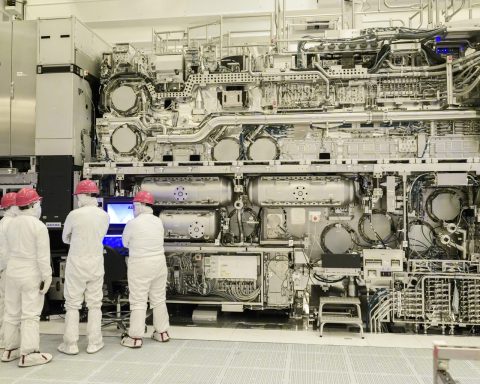
This shift comes as chipmakers move beyond lofty AI investment announcements and into the tricky phase of materials and manufacturing. ASML, just last month, announced that its next-gen High-NA EUV machines are officially ready for high-volume output. But Chief Technology Officer Marco Pieters told Reuters there’s still a lag — customers could need two to three years before those tools are fully integrated into their own production lines.
Lam’s feeling the upswing. Back in January, the company guided March-quarter revenue past what Wall Street was looking for. By February, Morningstar’s William Kerwin weighed in, calling for “a massive wafer fabrication equipment growth cycle over the next three years,” linking it to strong AI infrastructure demand and limited supply. Reuters
Sub-1nm refers to the chip technology expected to follow the current 2nm-class, and High-NA EUV lithography—ASML’s latest—relies on extreme ultraviolet light to etch even smaller circuit features. ASML claims these tools cut down on process steps and keep advanced nodes moving forward through the decade.
Mukesh Khare, GM of IBM Semiconductors and VP of hybrid cloud at IBM Research, described Lam as a “critical partner to IBM for over a decade.” Vahid Vahedi, Lam’s chief technology and sustainability officer, said the sector is moving into a “new era of 3D scaling”—one that’s going to demand tighter integration among materials, processes, and lithography. Lam Research Newsroom
IBM and Lam Research plan to tap IBM’s research hub at the NY Creates Albany NanoTech Complex, pairing it with Lam’s dry resist, etch, and deposition gear—the core tools for printing, cutting, and layering chips—to develop end-to-end manufacturing flows for next-gen logic devices. The deal comes as Applied Materials and KLA have highlighted AI-fueled demand, and ASML’s High-NA machines are set to anchor the sector’s next manufacturing leap.
Lam turned in December-quarter revenue of $5.34 billion, and forecast March-quarter sales around $5.70 billion, give or take $300 million. CEO Tim Archer pointed to AI as the driver behind a shift to smaller, denser 3D chip designs.
Still, the returns could take time. ASML has put a $400 million price tag on each High-NA machine and flagged that buyers will be testing them for years before full adoption. Lam, for its part, has cautioned that export controls, tariffs, and geopolitical tension threaten to hit sales. In the latest quarter, China pulled in 35% of Lam’s revenue, according to the company.
Related articles: NYSE:IBM