NEW YORK, April 22, 2026, 12:51 EDT
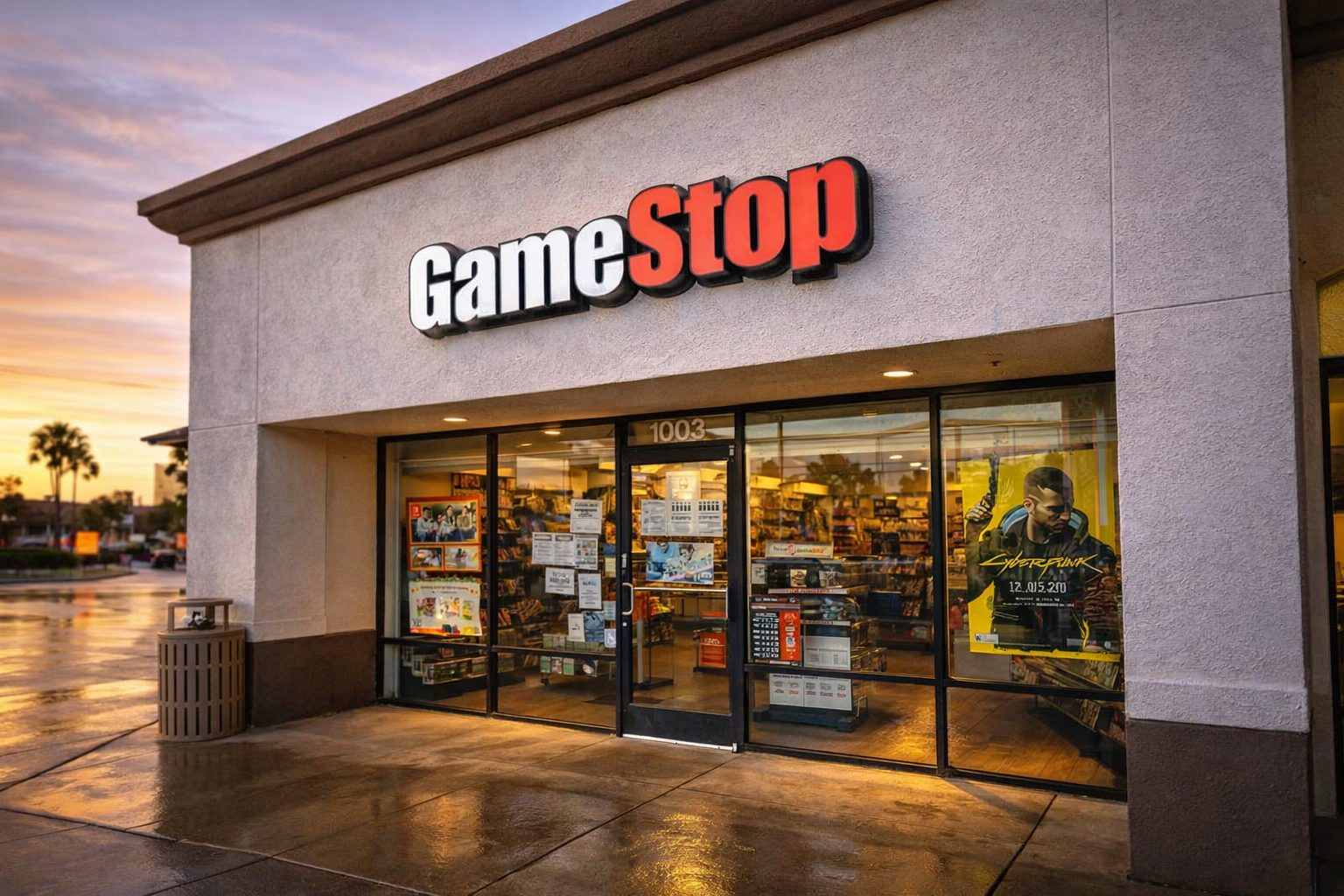
GameStop popped roughly 4.2% around midday in New York on Wednesday, with GME close to $25.49 as traders rotated back into the meme-stock following a quick promotional burst and new talk about CEO Ryan Cohen’s capital moves. Shares briefly touched $25.73, with more than 5.3 million changing hands.
GameStop isn’t just a videogame retailer anymore, and that’s driving investor interest. The focus has shifted to its $9.0 billion in cash, cash equivalents and marketable securities, as well as its Bitcoin bets and the hope that Ryan Cohen finds a way to leverage that balance sheet into something bigger—even as the retail operation keeps losing ground. GameStop last month reported that net sales for the fourth quarter dropped to $1.104 billion from $1.283 billion a year ago.
A quirky $420.69 trade-in deal for Xbox or PlayStation 5 consoles popped up on GameStop’s X account, running April 20–22. The cash offer—deliberately cheeky—lines up with the retailer’s history of catering to its meme-stock crowd.
IBTimes Australia reported a 4.7% jump for the stock, reaching $25.61 by late morning. Volume cleared 3.5 million shares, with a 2026 gain roughly at 21%. Not quite the fireworks of 2021, but it was enough to get GME showing up on traders’ monitors again after a stretch of quieter action.
Cohen is still the main focus here. Speaking to CNBC—per The Fly—he said GameStop is eyeing an acquisition of a publicly listed consumer company much bigger than GameStop itself, describing the potential takeover as “very, very, very big.” He didn’t drop any names but did say the company in question would be “high quality, durable, scalable,” and run by a “sleepy management team.” TipRanks
Cohen’s pay is directly linked to that goal. Back in January, GameStop rolled out a compensation deal worth around $35 billion, according to Reuters. For Cohen to see that payout, the company’s market cap must hit $100 billion and cumulative performance EBITDA—profit before interest, taxes, depreciation, and amortization—needs to reach $10 billion.
Michael Burry—known for “The Big Short”—has come out in support of the Cohen thesis, but he’s not buying the notion that GameStop’s prospects hang on another dramatic short squeeze. “Ryan is making lemonade out of lemons,” Burry said. For him, the real value lies in Cohen’s ability to deploy cash for “a big buy of a real growing cash cow business.” Reuters
Some investors aren’t eager to bid higher until there’s an actual deal. Eric Novinson, writing for Seeking Alpha earlier this month, called GameStop “fairly valued” where it stands, putting a one-year price target at $23.14. He pointed to “significant uncertainty” around possible acquisitions, regulatory hurdles, and the chance of shareholder resistance. Seeking Alpha
Not every nearby stock saw gains. AMC edged higher by roughly 2.7%, and Koss tacked on 1.4%. Best Buy, which has surfaced in previous takeover rumors, slipped 5.0% around midday.
GameStop is leaning into collectibles to build momentum outside its core gaming business. On April 14, the company announced Power Packs—digital trading cards linked to physical PSA-graded cards—are set to debut across Pokémon, football, basketball, and baseball, with prices ranging from $25 up to $2,500.
The risks stand out. GameStop, in its annual filing, warned there’s no guarantee it can identify good acquisition targets, strike favorable deals, get financing or regulatory green lights, or pull off integrations if it does buy anything. That same filing spells out an investment policy that permits securities, derivatives, options, and select cryptocurrencies like Bitcoin—leaving results at the mercy of market volatility.
Right now, GME shares are moving on hopes and possibilities—a hefty cash pile, a chief executive motivated to shake things up, and investors still hunting for a spark. The real question: Will Cohen pull the trigger on a deal that actually shifts the business, or is Wednesday just another wild swing in a stock known for sudden jolts?