
NEW YORK, April 30, 2026, 17:13 (EDT)
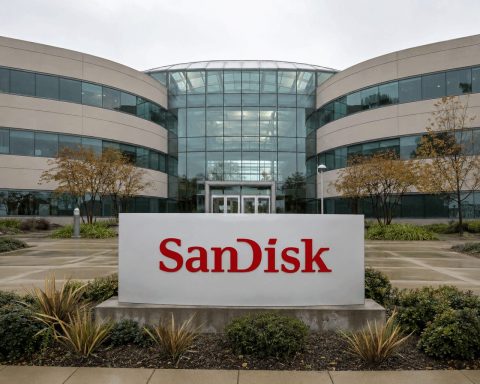
Sandisk dropped roughly 6% in post-market trading Thursday, despite posting a big profit increase and projecting yet another earnings surge. The flash-storage firm also rolled out a $6 billion buyback. Shares finished regular hours at $1,096.51, according to market data, but slid to around $1,030 just after 5 p.m. Eastern.
What’s striking isn’t a single soft spot in the report—it’s just how high the hurdle’s gotten for Sandisk. The stock has already exploded over 3,000% in the past year, fueled by a stampede into memory and storage plays linked to artificial intelligence. That kind of run-up leaves barely any breathing room for a standard “beat and raise.” Sherwood News
Sandisk produces NAND flash, a memory component found in solid-state drives, smartphones, and data-center hardware. Demand from AI, which relies on high-performance, resilient storage, has pushed what used to be a cyclical corner of the memory sector into the spotlight as a key AI supply-chain play.
The company turned in fiscal Q3 revenue of $5.95 billion, a 251% jump from last year. GAAP net income hit $3.62 billion, translating to $23.03 per share. Stripping out certain items, adjusted earnings landed at $23.41 a share—well ahead of the FactSet consensus of $14.62 that Sherwood referenced.
Gross margin surged to 78.4%, a sharp leap from 22.5% a year ago, driven by stronger pricing and a shift toward more lucrative customers. Datacenter revenue landed at $1.47 billion, soaring 645% year-over-year. Edge revenue—reflecting storage deployed closer to end users rather than just in the core cloud—shot up 295% to $3.66 billion. Consumer revenue was up 44% from a year back, but slipped 10% sequentially.
Chief Executive David Goeckeler called the quarter a “fundamental inflection point,” noting Sandisk’s pivot to what he described as “the highest-value end markets.” At quarter-end, the company reported three signed New Business Model agreements, picking up two more in the fiscal fourth quarter. All five deals, according to Sandisk, are multi-year customer engagements with solid financial backing. Business Wire
Sandisk is looking for revenue between $7.75 billion and $8.25 billion in its fiscal fourth quarter, with non-GAAP diluted earnings projected at $30 to $33 a share. The company is targeting a non-GAAP gross margin of 79% to 81%—numbers that, for a memory hardware outfit, are usually seen in software circles.
SanDisk’s board has signed off on a $6 billion buyback plan, according to a filing. The repurchase, which leaves out fees and commissions, will tap operating cash flow for funding. The filing also makes clear there’s no requirement for SanDisk to go through with the buybacks—they can pause or scrap the authorization whenever they want.
Sandisk finished the quarter holding $3.74 billion in cash, a clean slate on long-term debt—down from $1.83 billion just three months earlier at the end of June 2025. Free cash flow hit $2.99 billion. The company’s balance sheet offers management flexibility.
Wall Street didn’t wait for the numbers. Morgan Stanley’s Joseph Moore this week bumped his Sandisk target up to $1,100 from $690, sticking with his overweight call. For Moore, the real debate isn’t about short-term NAND momentum but “durability.” He sees pricing staying high “as long as we remain at maximum AI investment.” TheStreet
Storage stocks aren’t escaping the squeeze. Western Digital put out a quarterly revenue outlook on Thursday that landed above analyst forecasts, pointing to AI demand giving a lift to prices. Earlier in the week, Seagate issued a bullish outlook, a move that sent shares of Sandisk, Micron, and other storage players higher.
The risks are straightforward. In its own filing, Sandisk flagged choppy demand, pricing volatility, tough competition, potential supply-chain hiccups, and dependence on major partners—not to mention the chance that final results could diverge from the early numbers reported before the Form 10-Q lands. If AI infrastructure spending slips, or new supply ramps up quicker than anticipated, those high margins investors enjoy today could easily come under pressure.
Sandisk spun out from Western Digital as a standalone public company on Feb. 21, 2025. Investors were left holding a cleaner, flash-memory-focused play right as AI demand started to squeeze supply; but Thursday’s selloff makes one thing clear: it’s not just about strong demand anymore—now, the question is whether it’ll stay strong enough to keep up with the stock’s surge.
Related articles: NASDAQ:WDC