
NEW YORK, May 4, 2026, 13:04 EDT
- Around midday, the Dow slipped roughly 1% while oil prices shot higher, driven by fresh jitters over the Strait of Hormuz.
- The move landed right after record closes for the S&P 500 and Nasdaq, putting a rally driven by robust earnings to the test.
- Oil prices, the Federal Reserve, and Friday’s jobs data—those are the drivers traders are eyeing for the market’s next decisive move.
The Dow Jones Industrial Average dropped roughly 500 points Monday, as fresh worries over the Strait of Hormuz lifted oil prices and knocked the legs out from a U.S. stock rally fueled by earnings. As of 12:43 p.m. EDT, the 30-stock Dow sat at 48,993.46, a decline of 505.81 points, or 1.02%, according to Google Finance data.
It’s a bigger deal this week—Wall Street entered with the bar already high. On Friday, both the S&P 500 and Nasdaq notched record closes, lifted by strong earnings reports. The Dow, though, slipped a bit that same day.
By midday, the Dow was off 429.90 points, or 0.87%, sitting at 49,069.37, according to Reuters. The S&P 500 dipped 0.45%, with the Nasdaq Composite sliding 0.41%—all three benchmarks slipped after an early bounce faded. The CBOE Volatility Index, known as Wall Street’s “fear gauge,” climbed to 18.39. Reuters
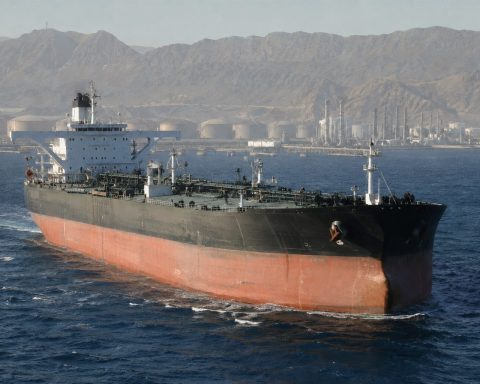
Selling accelerated after mixed accounts surfaced over U.S. naval operations near the Strait of Hormuz—an essential corridor for oil shipments. Iran claimed it forced a U.S. warship to retreat and, according to Fars, reported that two missiles struck the ship. The U.S. promptly denied those statements. Reuters noted it couldn’t independently confirm Iran’s version. In a separate development, the United Arab Emirates said it intercepted three missiles launched from Iran, while a fourth missile landed in the sea.
Brent crude jumped 5.4%, topping $114 a barrel, according to Reuters. That kind of move in oil prices tends to stoke inflation, pushing up expenses for both businesses and households—adding pressure on the Federal Reserve’s rate-cut plans. Brock Weimer, investment strategy analyst at Edward Jones, noted that if oil sticks above $100 for an extended stretch, last year’s tax-cut stimulus could end up acting more like a “shock absorber.” Reuters
Caution was visible among investors. For the week ended April 29, U.S. equity funds attracted just $911 million in new inflows, the lowest in six weeks, according to LSEG Lipper figures reported by Reuters. Lingering worries over oil prices and the Fed’s policy path continued to dampen risk appetite.
Stock moves weren’t just broad-based. Amazon announced plans to open its freight, shipping and distribution services to external businesses, ramping up the rivalry with UPS and FedEx. Both UPS and FedEx shares slumped more than 6%. Amazon ticked higher. Parth Talsania, CEO at Equisights Research, called the move a “structural warning shot” for the logistics giants. Reuters
Deal activity stirred action beyond the Dow: GameStop put out an offer to acquire eBay for roughly $56 billion in cash and stock, according to Reuters. GameStop’s stock dropped, while eBay climbed on Monday.
Fuel-sensitive stocks underscored the market’s headache. Norwegian Cruise Line slashed its yearly profit outlook—blaming spiking fuel expenses linked to Middle East tensions and softer bookings. Reuters noted that competitors Carnival and Royal Caribbean have raised similar warnings about higher fuel costs.
The setup across the market isn’t exactly tilted one way. This week, over 100 S&P 500 firms are on deck to release earnings, with Q1 profits running 27.8% higher year-on-year as of Friday, per LSEG numbers cited by Reuters. Chris Larkin, who oversees trading and investing at E*TRADE from Morgan Stanley, said any immediate gains rely on the market “sidestepping negative surprises out of the Middle East.” Reuters
Oil pushing higher as growth slows is the worry here. Mark Malek, chief investment officer at Siebert Financial, described Hormuz as the “wild card under everything” and said unresolved tensions could fuel stagflation pressures. That’s the combination of sluggish growth and elevated inflation—a tough setup for both equities and central banks. Investopedia
The Dow faces a key question: will the oil shock blow over before the bell, or does it set off a wider downturn? By midday, ten out of the eleven main S&P sectors were down, with losers outpacing gainers across both the New York Stock Exchange and Nasdaq.