
BEIJING, China, May 5, 2026, 01:03 (China Standard Time)
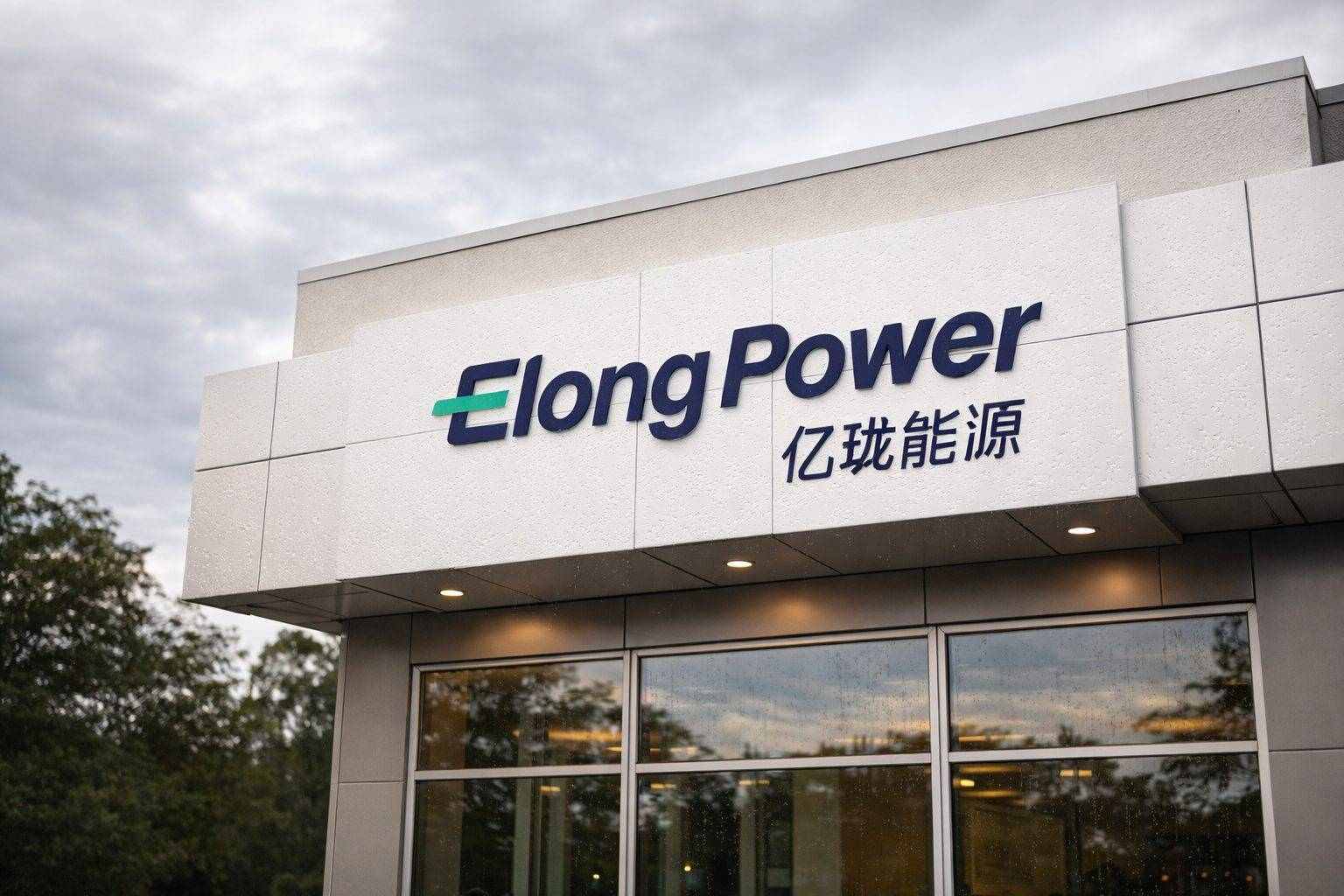
Elong Power Holding Limited’s Nasdaq-listed shares jumped about 72% in Monday midday trading, with volume above 32 million shares, as investors weighed a fresh lock-up expiry report for the battery-energy storage company. MarketScreener, citing S&P Capital IQ, reported that restrictions ended May 4 on 3,844,867 Class A ordinary shares and 361,090 Class B ordinary shares.
The timing matters because a lock-up is a set period when holders agree not to sell. When it ends, supply can become a live issue. Elong has warned in an SEC filing that sales of substantial amounts of Class A shares after lock-ups, or the perception that such sales could happen, could hurt its share price and make future equity raises harder.
The shares opened at $4.56, touched $10.14 and were last quoted at $7.59, up $3.17 on the day, according to market data. That move came while Nasdaq trading was still underway in New York.
The lock-up report said the covered shares had been restricted for 91 days, from Feb. 2 to May 4. It said directors and executive officers had agreed to a 90-day period in which they could not sell, encumber or otherwise dispose of covered securities without prior written consent from the underwriter.
The expiry lands after a run of financing and share-structure changes. On Feb. 3, Elong said it closed a $7.6 million public offering of 2.4 million units at $3.16 each, with each unit including one Class A share and one warrant; the warrants carried reset terms and a “zero exercise price” option, meaning holders could receive shares without paying more cash under the warrant terms.
More dilution followed. In a March 9 filing, Elong said all 24.955 million warrants from a separate March 2 issuance had been exercised through the zero-exercise option, leading to 77,764,364 new Class A shares. Days later, the company approved an 80-for-one share consolidation, a reverse split that combines shares to lift the price per share, cutting outstanding Class A shares to about 1.4 million and Class B shares to about 4,514.
Nasdaq compliance is still part of the story. Elong moved its Class A shares from the Nasdaq Global Market to the Nasdaq Capital Market effective April 1 and said Nasdaq had closed two market-value compliance matters after the transfer.
The company is not just changing its share count. In its 2025 annual report, Elong said it sold Elong Power International Co. and related subsidiaries for $10,000, citing slower growth and rising losses in battery packs, battery cells and spare parts, and said it would focus on research, development, sales and service of energy storage systems.
For 2025, Elong reported revenue of $2.05 million and a net loss of $5.57 million, narrowing from a $30.11 million loss in 2024. The revenue came mainly from trading and sales of energy storage batteries, part of what the company called an updated business strategy.
But the balance sheet remains a risk. Enrome LLP, the auditor, flagged a “material uncertainty related to going concern” — auditor language that means there is doubt about a company’s ability to keep operating normally — after Elong posted negative operating cash flow of $2.66 million and had a $14.0 million working capital deficit at the end of 2025.
The competitive backdrop is also tough. Elong’s annual report named CATL, BYD and Sungrow among larger battery-storage rivals and said the market is intensely competitive, with price pressure that could cut gross margins. That leaves Monday’s stock move tied less to a single operating milestone than to supply, liquidity and the company’s ability to fund a smaller, refocused business.
Related articles: Stock Market