ATLANTA, May 5, 2026, 09:08 EDT
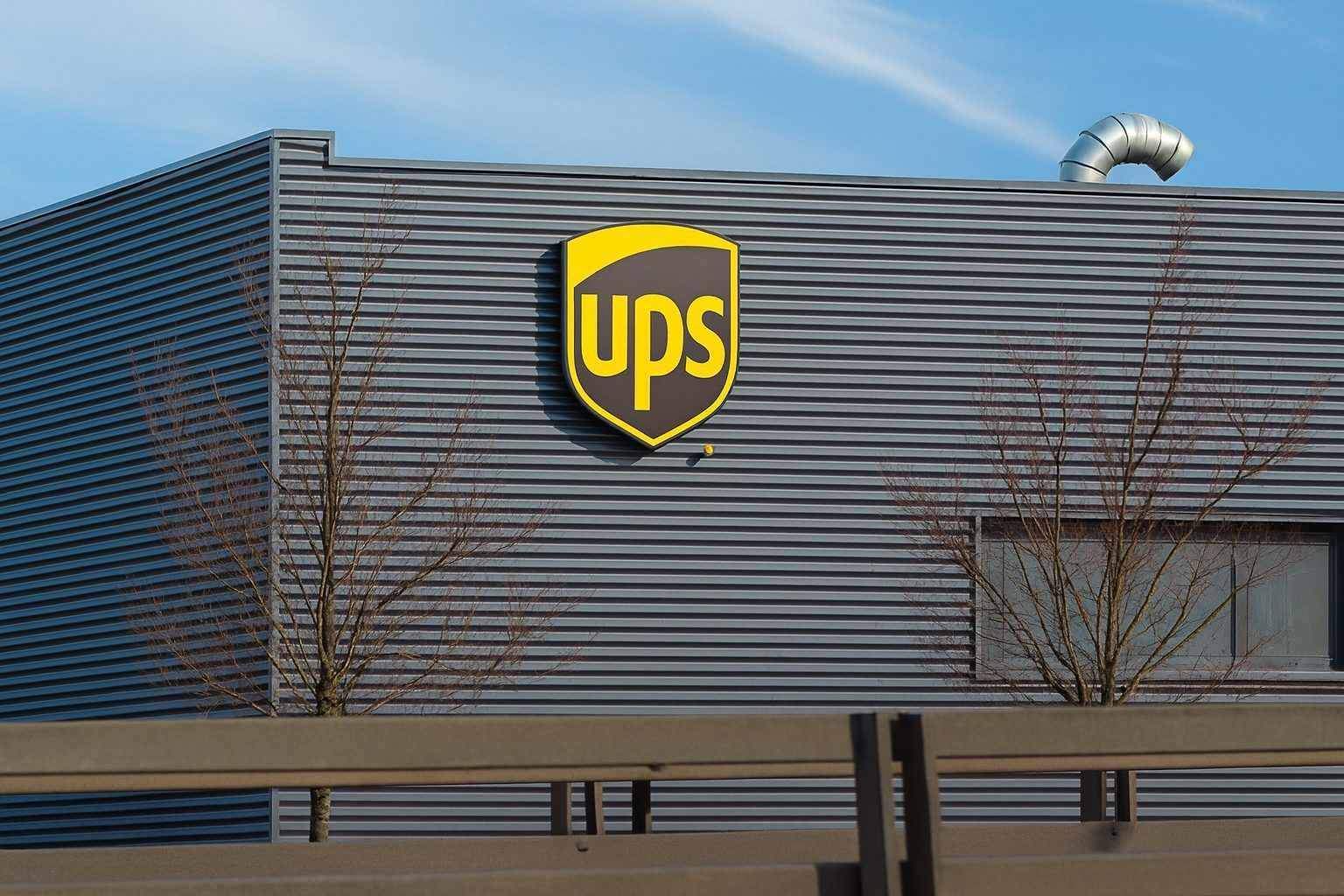
- Shares of UPS dropped roughly 10.5% to $96.31 after Amazon announced it would open up its logistics network to third-party businesses.
- Amazon has rolled out a new service spanning freight, distribution, fulfillment, and parcel shipping. Early adopters include Procter & Gamble, 3M, Lands’ End, and American Eagle.
- UPS is pulling back on Amazon volume, shuttering some locations, and chasing more lucrative shipments with this move.
United Parcel Service shares came under renewed pressure ahead of Tuesday’s New York open, as Amazon.com rolled out its logistics network for external businesses—a step that investors saw as a direct threat to UPS and FedEx’s grip on parcel delivery and freight.
It’s a tough moment for UPS. The Atlanta-based shipper has been scaling back its low-margin Amazon deliveries, aiming instead to drive more business-to-business volume—those higher-yield shipments that move between companies, instead of straight to consumers. Now, Amazon’s latest move targets exactly that business.
Amazon rolled out Amazon Supply Chain Services, offering companies end-to-end logistics—everything from moving freight by sea, air, road, or rail, to storage and delivery—using its vast network. Peter Larsen, the unit’s vice president, described the move as bringing “the infrastructure, intelligence, and scale” of Amazon’s supply chain to other businesses, much like how AWS opened up the company’s tech backbone. US Press Center
Shares across the board took a hit. UPS slid 10.5% to $96.31, with FedEx falling 9.1% to $357.80, market data showed. Reuters said Monday both companies dropped over 9% after Amazon’s move sparked renewed worries over competition.
Amazon counts over 80,000 trailers, upwards of 24,000 intermodal containers, and more than 100 planes in its network. The company is pitching the service for freight, bulk storage, order fulfillment, and parcel shipping, targeting two-to-five-day delivery windows.
Evercore ISI analysts described it as “a direct competitive blow” for parcel players like UPS and FedEx, according to Reuters. Parth Talsania, Equisights Research CEO, said Amazon’s move is about shifting logistics “from a cost burden into an infrastructure product.” Reuters
UPS is already in the middle of a restructuring, so the latest development lands in the thick of that process. Last week, the company posted first-quarter revenue of $21.2 billion, with diluted EPS coming in at $1.02 and adjusted EPS at $1.07. UPS kept its 2026 goals unchanged.
UPS CEO Carol Tomé called the first quarter a “critical transition period” in the earnings release and said the company is looking for consolidated revenue and operating profit to grow again in the second quarter. For the full year, UPS is still aiming for roughly $89.7 billion in revenue and an adjusted operating margin of around 9.6%—a figure that strips out certain items. United Parcel Service, Inc.
Back in January, UPS announced plans to cut as many as 30,000 positions and close 24 more facilities in 2026, a move tied to slumping Amazon volumes and a network overhaul. At the time, CEO Carol Tomé told analysts the company was entering the last six months of its accelerated “glide down” with Amazon, targeting another reduction of a million Amazon packages a day this year. Reuters
One hitch remains: Amazon has yet to demonstrate it can handle outside shipping at scale without sacrificing service quality or jumping into thin-margin territory. William Blair’s Dylan Carden sounded a note of caution on the disruption angle, MarketWatch reported. He pointed out that while Amazon’s moves into grocery and pharmacy rattled markets at first, the long-term outcomes were mixed.
Risks for UPS go beyond Amazon. Last week, CEO Carol Tomé flagged for investors the potential drag from high gas prices linked to the Middle East conflict, warning this could sap demand later in the year. CFO Brian Dykes, for his part, said rising fuel surcharges weren’t boosting profits, since costs were climbing in step. J.P. Morgan’s Brian Ossenbeck raised doubts about UPS’s ability to pass those extra fuel costs on, according to Reuters.
Now comes the tougher question: Can UPS keep prices firm and slash expenses quickly, as Amazon digs further into the very segment UPS has been fighting to protect—dense, reliable, and higher-margin business shipping? FedEx faces the same competitive squeeze, but with UPS stepping back from Amazon shipments, that new threat is becoming tougher to overlook.