NEW YORK, May 7, 2026, 20:02 (EDT)
U.S. stock futures edged lower in Thursday’s after-hours session, with oil prices surging after the U.S. and Iran traded fire, clouding the month-old Middle East ceasefire. S&P 500 futures slipped roughly 0.2%. U.S. crude futures jumped over 2%, reaching $96.8 a barrel.
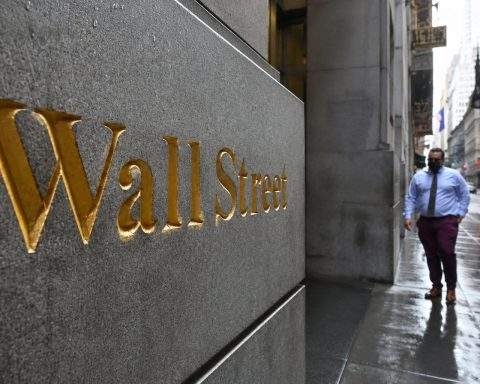
This comes as Wall Street retreats from recent highs fueled by the AI rally. Fresh gains in oil prices risk stoking inflation, squeezing margins and complicating the outlook for interest rates, right as investors look ahead to Friday’s U.S. payrolls data.
The S&P 500 slipped 0.38% to close at 7,337.11. The Nasdaq shed 0.13%, finishing at 25,806.20, while the Dow Jones Industrial Average dropped 0.63% to 49,596.97. Out of the S&P 500’s 11 sectors, nine ended lower—materials and energy posted the sharpest losses.
Chip stocks bore the brunt. Arm Holdings, traded in the U.S., slid after investors grew anxious about supply for its upcoming AI chip. Intel and Advanced Micro Devices both shed roughly 3%, erasing some of their earlier weekly advances. The PHLX semiconductor index lost 2.7%, but it’s still sitting on hefty quarterly gains.
This wasn’t a wholesale exit from AI names. Nvidia and Microsoft each gained close to 2%. Mike Dickson, who leads portfolio management at Horizon Investments, told Reuters the rebound was still “driven by fundamentals.” Reuters
AI infrastructure stories still grabbed attention after the close. Nvidia announced plans to put as much as $2.1 billion into data-center operator IREN, tying the investment to a push for up to 5 gigawatts of new infrastructure. IREN stock jumped roughly 9% in after-hours action. Neocloud, a newer cloud vendor, centers its computing services mostly on Nvidia chips.
CoreWeave highlighted a different angle to the boom, bumping the low end of its 2026 capex outlook to $31 billion (previously $30 billion), blaming pricier components. Shares dropped over 9% after the bell, even though Q1 revenue topped LSEG expectations. “CoreWeave is trying to become a dominant player in AI infrastructure,” said Andrew Rocco, stock strategist at Zacks Investment Research. Reuters
Nvidia tightened its partnership with Corning, with CEO Jensen Huang revealing a “multi-billion-dollar prepayment” aimed at backing new U.S. factory construction—distinct from an equity investment that could reach $3.2 billion. Corning’s Wendell Weeks, in the same CNBC conversation referenced by Reuters, backed up the prepayment details. Reuters
Crypto names and travel stocks also weighed. Coinbase slipped roughly 5% after hours, surprising investors with a quarterly loss amid slumping trading volumes tied to a wider digital-asset rout. CFO Alesia Haas noted both total crypto market value and trading volume dropped over 20% versus the previous quarter.
Both Airbnb and Expedia flagged weaker travel demand tied to the Middle East conflict. Expedia shares dropped 8% after the company projected second-quarter gross bookings would miss analyst expectations, and Airbnb dipped roughly 1.5%. Expedia CEO Ariane Gorin noted that while cancellations tapered off heading into April, “but certainly that was an impact.” Reuters
The uptick in jobless claims—up 10,000 to 200,000—did little to nudge expectations for a swift Fed rate move. That figure missed the 205,000 projected by the Reuters poll. Continuing claims, meantime, slipped to their lowest mark since January 2024. “Steady as a rock,” FWDBONDS chief economist Christopher Rupkey said, dismissing the case for rate cuts given current labor conditions. Reuters
Bulls now face a risk if this late surge in oil sticks around. U.S. crude jumped up to 3% after the U.S. military launched retaliatory strikes on Iran—Tehran, for its part, accused Washington of breaking the ceasefire. More gains in energy prices could put Friday’s jobs numbers under sharper scrutiny, especially for a market already betting on strong earnings, steady growth, and ongoing AI momentum.