
New York, May 14, 2026, 13:03 EDT
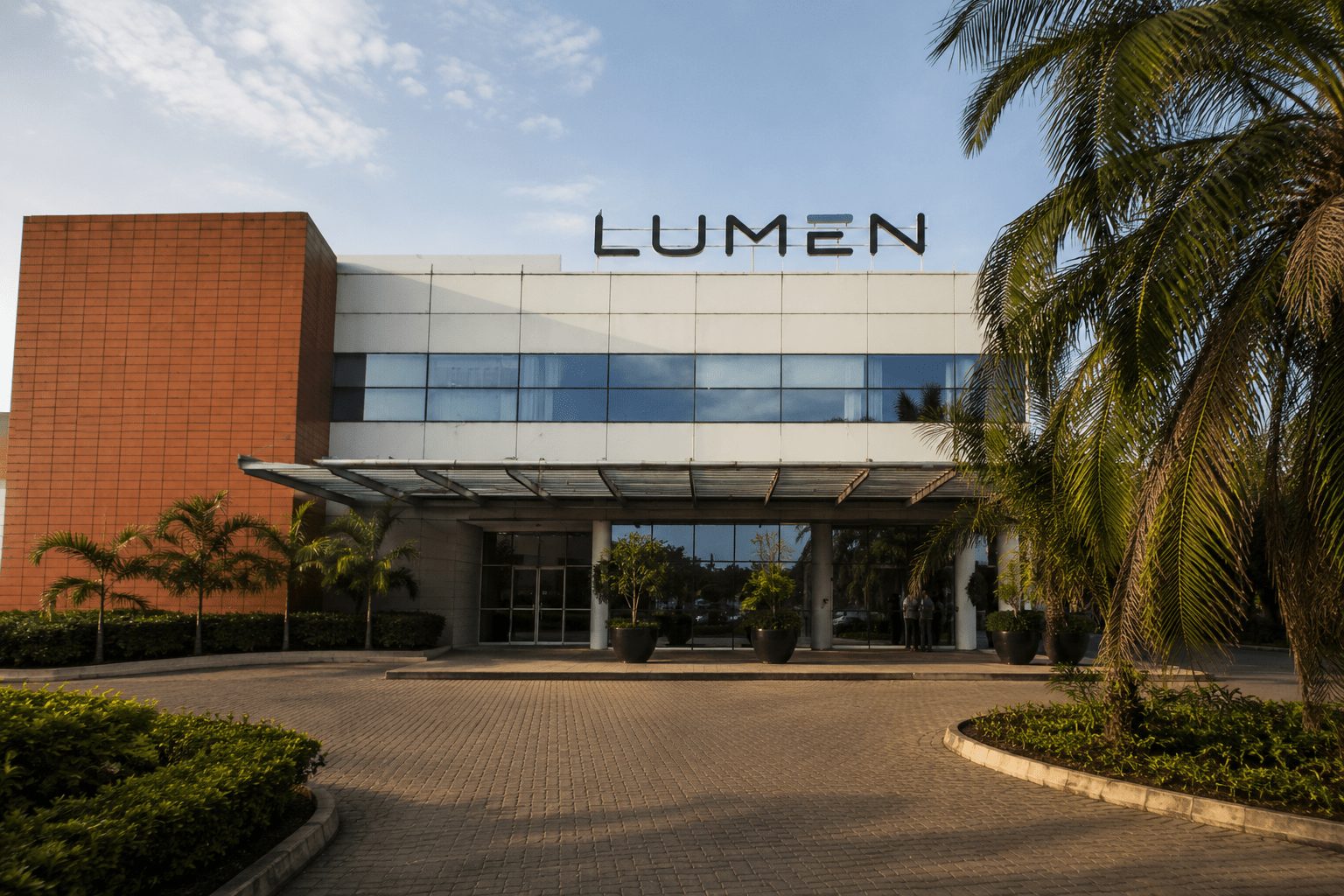
Lumen Technologies Inc. shares surged roughly 14% Thursday, as investors zeroed in once more on the telecom’s debt reduction efforts and its push to build a network tailored for AI. The stock was changing hands at $10.76, after earlier reaching as high as $11.27. Volume topped 20 million shares.
This move is significant for Lumen, which faces a two-part challenge: cutting the cost of its sizable debt load and proving its fiber network can capture more enterprise business linked to artificial intelligence. According to a May 13 filing, Level 3 Financing—an indirect, wholly owned subsidiary—has refinanced its secured Term B-4 loans. The company left $2.4 billion still outstanding under a newly repriced term loan facility.
The loan comes without amortization, giving borrowers the option to float off a base rate or Term SOFR—the benchmark for short-term dollar loans. According to the amended credit pact, the margin is set at 2.75% for Term SOFR borrowings, 1.75% for those tied to the base rate. Bank of America will take over as administrative agent from Wilmington Trust.
Traders aren’t counting on rate cuts any time soon. According to Polymarket’s Fed dashboard, there’s a 98% likelihood the Federal Reserve holds rates steady at its June 17 meeting. Over on Kalshi, the implied probability sits at 97.0%, while Polymarket’s odds for a June pause are at 97.6%. For Lumen, hopes for easier funding rest on refinancing and operational moves—not an imminent drop in benchmark rates.
Lumen this week announced plans for NorthLine, a new low-latency fiber link between Seattle and Minneapolis. The company expects to roll out 100- and 400-gigabit wavelength service along the route — a move aimed at handling heavy data traffic — with availability targeted for the end of 2026. “We’re not just building routes,” said Kye Prigg, chief commercial operations officer. “We’re building a national fabric.” Lumen Investor Relations
This route marks another step in the industry’s move away from consumer telecom, pivoting toward enterprise infrastructure. Under a deal announced May 5, Lumen plans to acquire Alkira for $475 million in cash, picking up a cloud-native control plane—essentially, software that orchestrates and manages networks across clouds, data centers, and carriers. CEO Kate Johnson described networking as “the central nervous system” that underpins AI spending. Lumen Investor Relations
The numbers are still mixed for Lumen. First-quarter revenue landed at $2.899 billion, slipping from $3.182 billion the year before, and the company posted a net loss of $200 million. On the flip side, strategic revenue accounted for 51% of business revenue. CFO Chris Stansbury pointed out leverage is now “below 4x” following the fiber-to-the-home divestiture. Lumen Investor Relations
The rally traces back to the sale earlier this year. In February, Lumen handed off its Mass Markets fiber-to-the-home operations in 11 states to AT&T for $5.75 billion, shifting over 1 million fiber subscribers and some 4 million enabled sites into AT&T’s portfolio. Lumen aimed to put roughly $4.8 billion of the deal’s proceeds—plus cash reserves—toward paying off super-priority debt, targeting an annual interest savings of around $300 million.
The deal highlights a growing divide in strategy. AT&T continues to double down on consumer fiber, while Verizon went for size with its Frontier buy. Lumen, for its part, is pushing into enterprise networking—aiming to sell capacity for cloud, AI, and data-center markets rather than chasing after traditional home broadband packages.
There’s a hitch. NorthLine isn’t coming online until late 2026, and Alkira still needs to close and get folded in. Part of the debt is floating-rate. If it takes more time for AI network demand to show up as steady revenue—or if the Fed keeps rates elevated—Thursday’s share reaction could mean less room to stumble.
At this point, investors are reading the new filing and the NorthLine plan as evidence that Lumen’s turnaround rests on more than a single move. Asset sales, debt repricing—those are already in the mix. Now, the company is pushing to reposition its remaining fiber footprint away from legacy telecom, aiming instead for the kind of infrastructure that can handle AI-driven traffic.
Related articles: NYSE:LUMN