
New York, May 16, 2026, 14:01 (EDT)
Verizon Communications Inc. heads into next week with its stock down 1.47% on Friday at $46.37, logging a third consecutive loss. Shares moved on 23.3 million volume, lighter than its 50-day average, in a sluggish session for U.S. markets. Two new network stories put more in front of investors.
U.S. markets are closed for the weekend. Trading resumes with the next session, when investors can react to the Federal Communications Commission’s green light for Verizon’s spectrum deal and the rural carrier partnership plan. NYSE core hours are 9:30 a.m. to 4 p.m. Eastern.
Verizon dropped roughly 1.8% this week, closing Friday at $46.37 after ending May 8 at $47.22. That trailed the S&P 500, which dipped 1.2% Friday but still gained 0.1% over the week. The Dow fell 0.2% for the week, while the Nasdaq edged down 0.1%.
FCC signs off on Verizon’s $1 billion spectrum buy from U.S. Cellular
Verizon got a boost Thursday after the FCC cleared its $1 billion buy of spectrum assets from U.S. Cellular, now called Array Digital Infrastructure. Spectrum refers to the licensed radio airwaves that wireless carriers use for calls and data. Verizon’s Kathy Grillo, SVP for public policy and government affairs, said the extra airwaves will help “better serve our customers.” The FCC said the deal may boost Verizon’s coverage, capacity and speeds, including for rural and indoor locations. Reuters
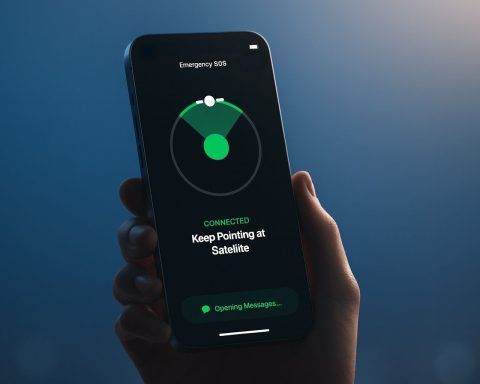
Verizon, AT&T and T-Mobile said Thursday they had agreed in principle to set up a joint venture focused on tackling wireless dead zones in the U.S., targeting rural regions with satellite-based direct-to-device tech. The direct-to-device system connects standard mobile phones directly to satellites when there’s no signal from towers.
But the satellite deal isn’t done. Risks are clear if talks drag out, or if satellite service takes time to reach customers, or if investors keep seeing the move as more of a strategic play than something that will help earnings soon. The carriers said the joint venture still needs formal approvals and has closing conditions. AT&T CEO John Stankey said the plan was about keeping “staying connected simple,” while T-Mobile’s Srini Gopalan pointed to “reliable connectivity,” and Verizon head Dan Schulman called it a step for “resilient digital infrastructure.” Verizon reported $142.5 billion in total unsecured debt at the end of Q1. Verizon
Verizon’s drop wasn’t alone. AT&T shares dropped 2.52% Friday to $24.03. T-Mobile lost 1.58%, closing at $185.22. The telecom names traded lower with the broader market selloff, not on company-specific news.
Verizon had reset investor expectations back in late April. The company lifted its annual adjusted profit outlook after posting a surprise first-quarter gain of 55,000 monthly postpaid wireless customers. Analysts were looking for a drop. Adjusted profit refers to earnings per share excluding certain items.
Schulman is up again next week. Verizon’s investor calendar lists him as a speaker Monday at the J.P. Morgan Global Technology, Media and Communications Conference. The annual meeting is Thursday, with shareholders set to vote on directors, executive pay, and the 2026 long-term incentive plan.
That puts the stock in a tight spot for now. Bulls are looking at spectrum, satellite reach, rising subscribers and buybacks. Bears are questioning if Friday’s drop was just the broader market or more proof Verizon still needs to show network spending can drive faster growth while managing heavy debt.
Related articles: NYSE:VZ