Toronto, May 19, 2026, 15:10 (EDT)
- Waabi gets a CNBC Disruptor 50 profile, released as autonomous freight shifts from tests to actual paid service.
- Aurora and Kodiak have started to offer investors harder numbers — trucks, routes, customers, hours, and revenue.
- The main question is scale — and if safety, regulation and capital expenses stay steady as fleets get bigger.
Waabi is now featured in CNBC’s Disruptor 50, putting the private Canadian autonomous trucking company closer in the spotlight with publicly traded peers Aurora Innovation and Kodiak AI. Both Aurora and Kodiak are reporting paid driverless freight runs, moving past demo drives.
The sector is moving into a measurable phase. Aurora said it plans to put more than 200 driverless trucks on the road by the end of 2026. Kodiak finished the first quarter with 28 customer-owned driverless vehicles and logged over 23,500 paid driverless operating hours.
Investors look to see if autonomous freight will lower the cost per mile, the main figure in trucking economics. On Monday, Seeking Alpha’s Michael McGrath wrote Aurora has logged 12 million self-driving miles, while Kodiak’s customer fleet has hit 28 trucks. He said the emphasis now is on deployment and scaling, not just proving the tech.
Waabi, a Toronto startup launched in 2021, pulled in $750 million in Series C cash back in January and got more milestone-based money from Uber linked to robotaxis. The company described the total package as $1 billion, saying it would help bring autonomous trucking to market and support a push into ride-hailing vehicles.
Waabi says its “Physical AI”—software built to run machines in the real world rather than just handle text or images—lets a single AI model operate both robotaxis and autonomous trucks. That claim helped Waabi secure new funding from Khosla Ventures, G2 Venture Partners, Uber, Nvidia’s NVentures, Volvo Group Venture Capital, and funds managed by BlackRock. Waabi
Waabi says its main selling point goes beyond highways. In November, it said the system can manage both highways and surface streets, which means trucks could run directly from shippers to customers with no hub stops. Waabi pointed to federal numbers that put over 40% of U.S. tractor-trailer trips on surface streets. Samsung Electronics America manager Matt Do called it “the only truly scalable approach.” Waabi
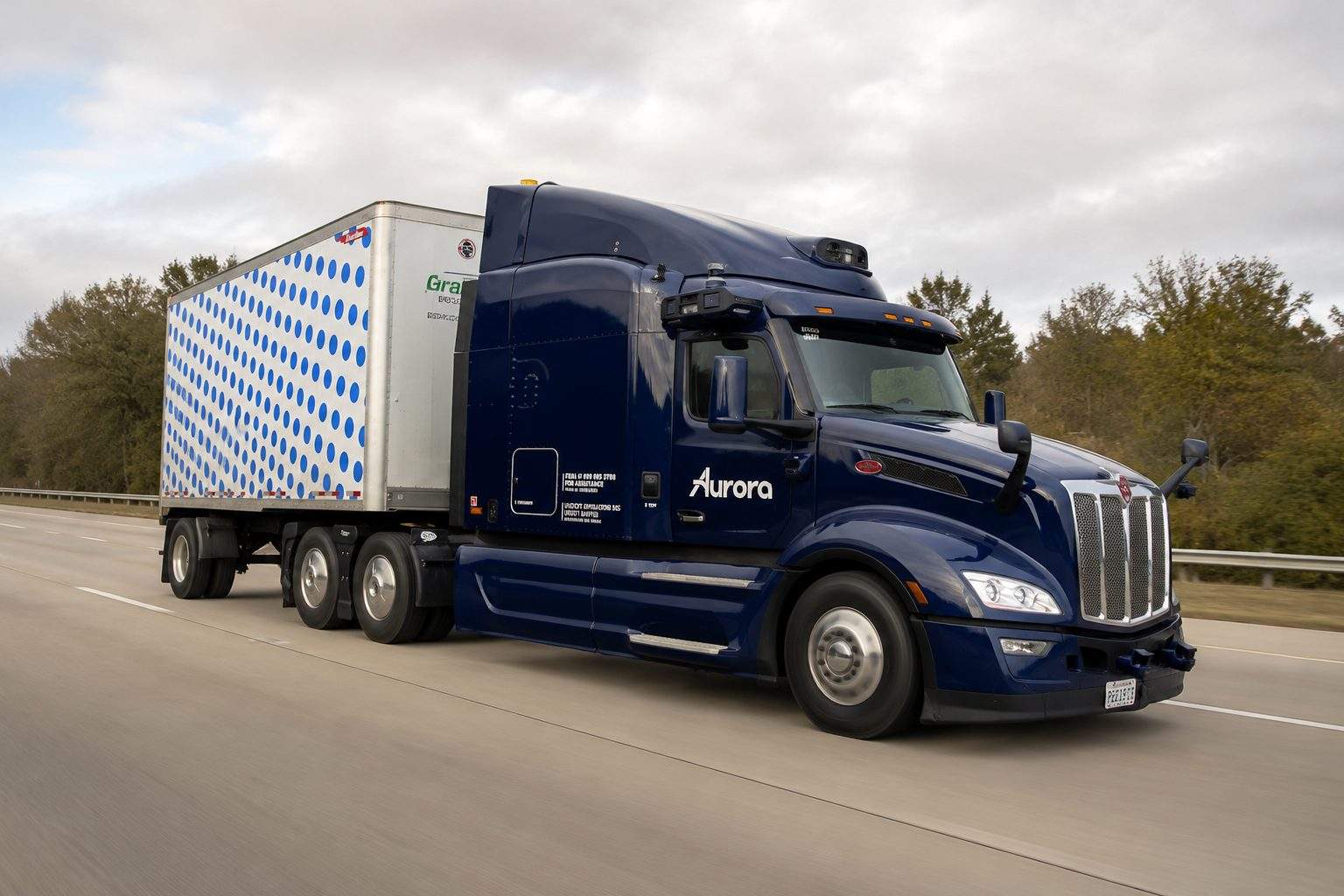
Aurora has taken a lead in driverless freight on public roads. The company, based in Pittsburgh, started commercial driverless trucking between Dallas and Houston in May 2025. Regular customer loads are moving in its heavy-duty trucks with no human in the cab. Aurora runs its trucks at SAE Level 4, which covers self-driving on set routes under certain conditions.
Aurora CEO Chris Urmson said this month the firm was “on the cusp of launching a new platform.” Urmson said early users like Hirschbach were preparing to deploy 500 trucks with the Aurora Driver system. Aurora said it’s begun driverless shipments for McLane, which is part of Berkshire Hathaway, and counted seven customers in its driverless group. Aurora Innovation, Inc.
Kodiak in Mountain View, California, is pushing forward with its strategy: sales of its Kodiak Driver tech for customer-owned trucks. In the first quarter, revenue hit $1.8 million, a 74% jump over the previous quarter. The company also secured a $100 million PIPE, or private investment in public equity, to support expansion. CEO Don Burnette said the company is sticking with its plan for a “long-haul driverless launch targeted for late 2026.” GlobeNewswire
Investors are not counting this as risk-free. Aurora shares slipped to $7.035 on the Nasdaq in the afternoon, with Kodiak down at $7.95.
Texas is still central for the sector. Click Petróleo e Gás said Tuesday that Aurora’s driverless freight runs between Dallas and Houston show autonomous trucks are now hauling real loads, not just in tests. The article also noted a warning that charging shippers per mile for self-driving freight could hurt human drivers if tech gets cheaper and trucks see higher use.
The outlook can shift. Aurora said in its latest release that customer intentions, like Hirschbach’s plan, aren’t yet binding orders. Kodiak flagged risks tied to rollout timing, capital, supply gaps, and fast tech changes. Regulation, safety numbers, and public trust will count as fleets start moving beyond restricted pilots.
The contest isn’t just Waabi, Aurora and Kodiak. The three are each leaning on different business models. Waabi is selling its AI directly to customers. Aurora is running a service for carriers. Kodiak lets customers own the trucks. Demos brought the sector to this point. Now the real hurdle is keeping the trucks on the road—at the right price and with enough uptime and safety to keep freight customers coming back.