NEW YORK, May 20, 2026, 15:03 EDT
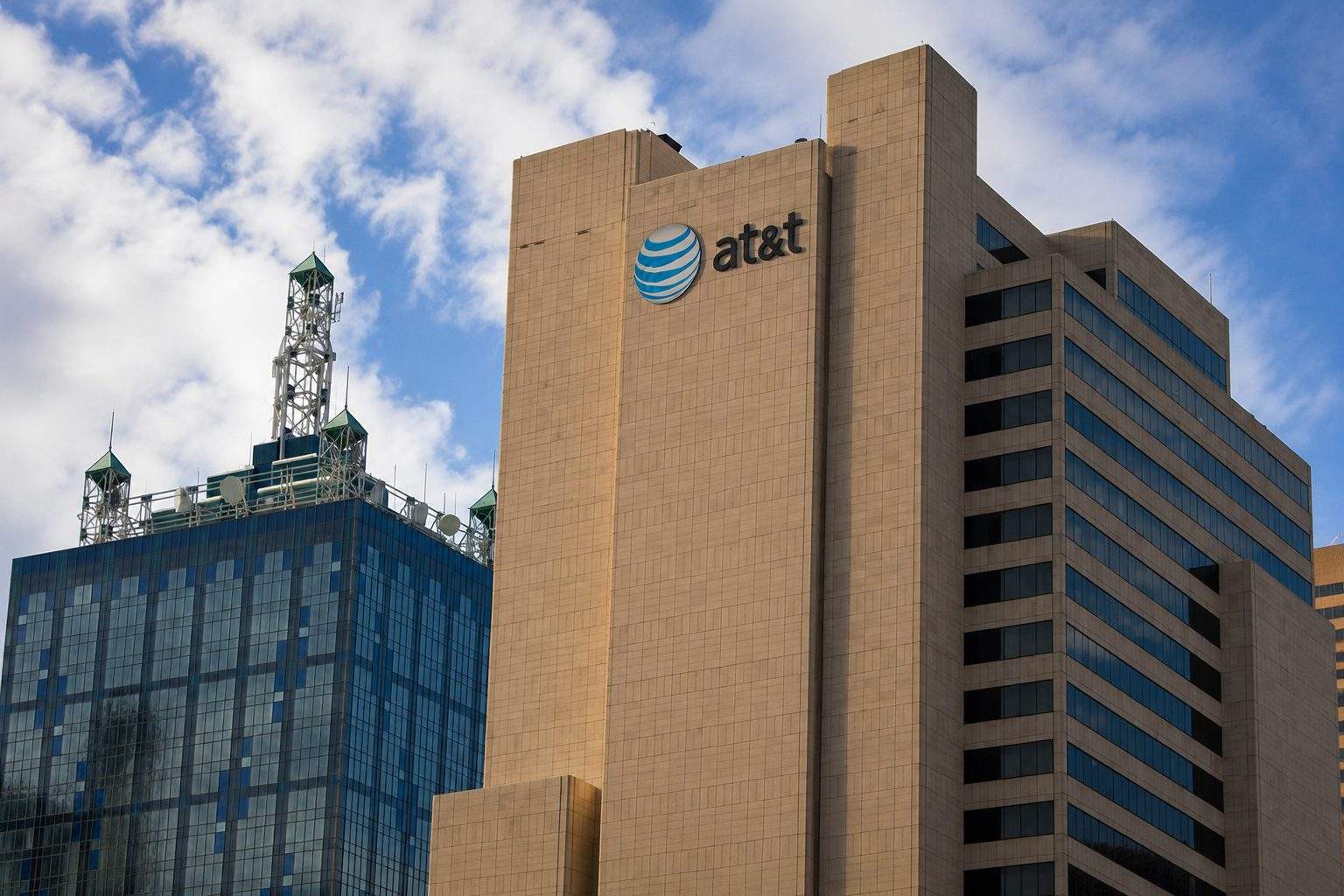
AT&T Inc. traded lower Wednesday afternoon while chips led gains elsewhere on Wall Street. The phone company repeated its cash-flow goals, but investors still faced concerns over stiffer competition in broadband and wireless. Shares were off roughly 0.3% to $24.91, after rising earlier to $25.27.
AT&T’s story now is about delivery, not big growth. The company is trying to show it can turn big bets on fiber and 5G into reliable cash, pay down debt, and buy back shares. This week, AT&T kept its second-quarter free cash flow outlook at $4.0 billion to $4.5 billion and said again it aims to return more than $45 billion to shareholders from 2026 to 2028.
AT&T CEO John Stankey told investors at J.P. Morgan’s tech, media and communications conference Tuesday that “our guidance is sound” and cash flow is on track to get better in the second quarter. Stankey said the company plans to add 7 million fiber passings this year, counting customer sites the network could reach. AT&T Investor Relations
AT&T’s newest company update follows first-quarter numbers that bulls liked. The company posted $31.5 billion in revenue and $11.8 billion in adjusted EBITDA, which is operating profit before interest, taxes, depreciation and amortization. AT&T added 584,000 advanced connectivity internet customers and 294,000 postpaid phone lines, which are paid monthly.
Fiber is still the main issue. AT&T on Tuesday said its fiber service led the American Customer Satisfaction Index for fiber internet providers for the fourth year in a row. Jenifer Robertson, executive vice president and general manager of AT&T Consumer, said this showed the “trust people place in AT&T Fiber.” AT&T Newsroom
The stock lagged even as the broader market moved higher. Reuters said Wall Street’s main indexes climbed Wednesday, getting a boost from chip stocks before Nvidia’s report. SPDR S&P 500 ETF and Invesco QQQ Trust were both trading up in the afternoon.
Verizon was flat. T-Mobile US slipped roughly 1.5%. All three big telecoms are after the same bundle of broadband and wireless, and they’re also teaming up on a satellite-to-phone project aimed at cutting U.S. dead zones.
Stankey called satellite a “great complement” to AT&T’s network. Last week, AT&T, T-Mobile, and Verizon said they’ve agreed in principle to create a joint venture aimed at boosting connectivity in areas with weak or no cell service. AT&T Investor Relations
AT&T is pitching its fiber network to meet demand from artificial intelligence workloads. CEO John Stankey called fiber the “lowest marginal cost” option for heavy usage. He said AT&T has been partnering with hyperscalers, or big cloud-computing companies, to link data-center access points using both dark and lit fiber. AT&T Investor Relations
The plan doesn’t leave much margin for error. Stankey said Comcast has ramped up its push to retain broadband users, and regulatory approval for the satellite joint venture is still up in the air. He also flagged a risk of higher churn in fixed wireless access if AT&T targets the wrong customer segments.
AT&T’s debt load remains in focus. The company reported $138.4 billion in total debt for the first quarter, with net debt at $126.4 billion. Its current capital return plan counts on leverage moving toward the target after the EchoStar deal wraps up.
AT&T faces a less flashy challenge than the recent satellite news. The key now is if it can meet its second-quarter cash-flow target and keep adding subscribers. That result will tell if Wednesday’s mild move is just a break, or if investors still need more evidence before buying the fiber story.