
NEW YORK, May 22, 2026, 06:04 (EDT)
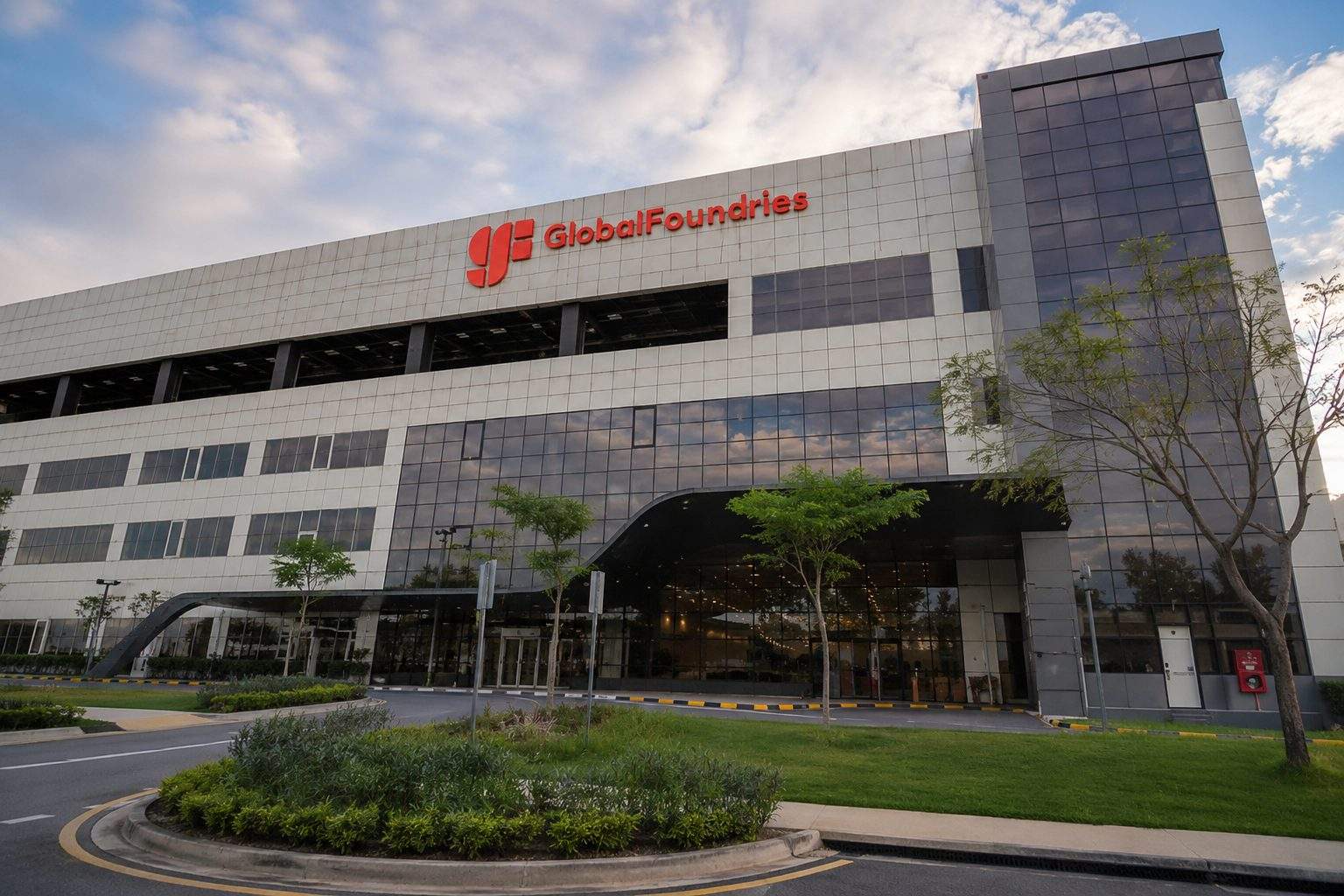
GlobalFoundries Inc. heads into Friday’s U.S. session with its stock back in the center of the quantum trade, after GFS closed Thursday at $81.35, up about 15%, on news that the Commerce Department plans a $375 million award and a roughly 1% government stake in the contract chipmaker. The shares traded 11.0 million times, more than triple Wednesday’s volume, company price data showed.
The timing matters. Washington is putting fresh money into quantum computing, a still-early technology that aims to solve some problems far faster than conventional computers, while also trying to keep more advanced chip work inside the United States. Reuters reported the broader package totals $2 billion across nine quantum-computing companies.
GlobalFoundries said it launched a new business, Quantum Technology Solutions, to make hardware for quantum systems, including quantum processor units, or QPUs, the parts that perform quantum calculations, as well as control chips built to operate at extremely low temperatures. A foundry makes chips designed by customers; GF is trying to make itself the manufacturing base for several kinds of quantum machines, not just one design path.
CEO Tim Breen said the deeper U.S. government partnership would help ensure next-generation quantum systems are “developed and manufactured in the U.S.” Gregg Bartlett, GF’s chief technology officer, said the hardware shift was moving “from lab-scale to industrial scale.” GlobalFoundries Inc.
The peer read-through was wide. IBM is set to receive $1 billion for a new quantum-chip venture called Anderon, while D-Wave Quantum and Rigetti Computing are among firms expected to get about $100 million each. IBM CEO Arvind Krishna told Reuters the new venture would offer outside customers the “exact same capability” IBM uses for itself. Reuters
The structure also caught investors’ eye. This is not just a grant headline; the U.S. government is taking equity stakes, meaning ownership shares, in companies it sees as strategically important. Commerce Secretary Howard Lutnick said the investments would create “thousands of high-paying American jobs,” while Infleqtion CEO Matthew Kinsella told Reuters the move suggested quantum was coming “much faster than anybody thinks.” Reuters
GF had already given investors a cleaner capital-return story this month. The company reported first-quarter revenue of $1.63 billion and non-IFRS earnings of 40 cents a share, with non-IFRS meaning adjusted results that strip out some items management says do not reflect core operations. Days later, it announced its first quarterly dividend, 12 cents a share, payable July 14 to holders of record on June 24.
But the rally leaves little room for loose execution. The Commerce agreement is a letter of intent, an early-stage pact rather than a final cash payment, and quantum computers still face hard technical problems, including error rates that limit practical use. GF also warned in its release that expected funding could be delayed or withheld, a downside that could push traders to take profits after Thursday’s sharp move.
Regular U.S. stock trading had not opened at the dateline time; the core session begins at 9:30 a.m. Eastern and runs to 4 p.m. Eastern. Friday is not a U.S. equity-market holiday, but markets will be closed Monday, May 25, for Memorial Day.
The next scheduled company-facing event is May 27, when GlobalFoundries is due to appear at TD Cowen’s technology, media and telecom conference. Until then, the stock’s near-term test is simpler: whether Thursday’s quantum premium holds once regular trading resumes, or whether investors treat the U.S. stake as a one-day repricing rather than a new base.
Related articles: NYSE:IBM