New York, May 26, 2026, 15:02 (EDT)
Co-Diagnostics shares jumped in heavy Nasdaq trading on Tuesday after the molecular-testing company said it had advanced a polymerase chain reaction, or PCR, assay strategy for the Bundibugyo strain behind a fast-moving Ebola outbreak in central Africa. PCR tests look for genetic material from a pathogen, often giving laboratories a way to confirm infection.
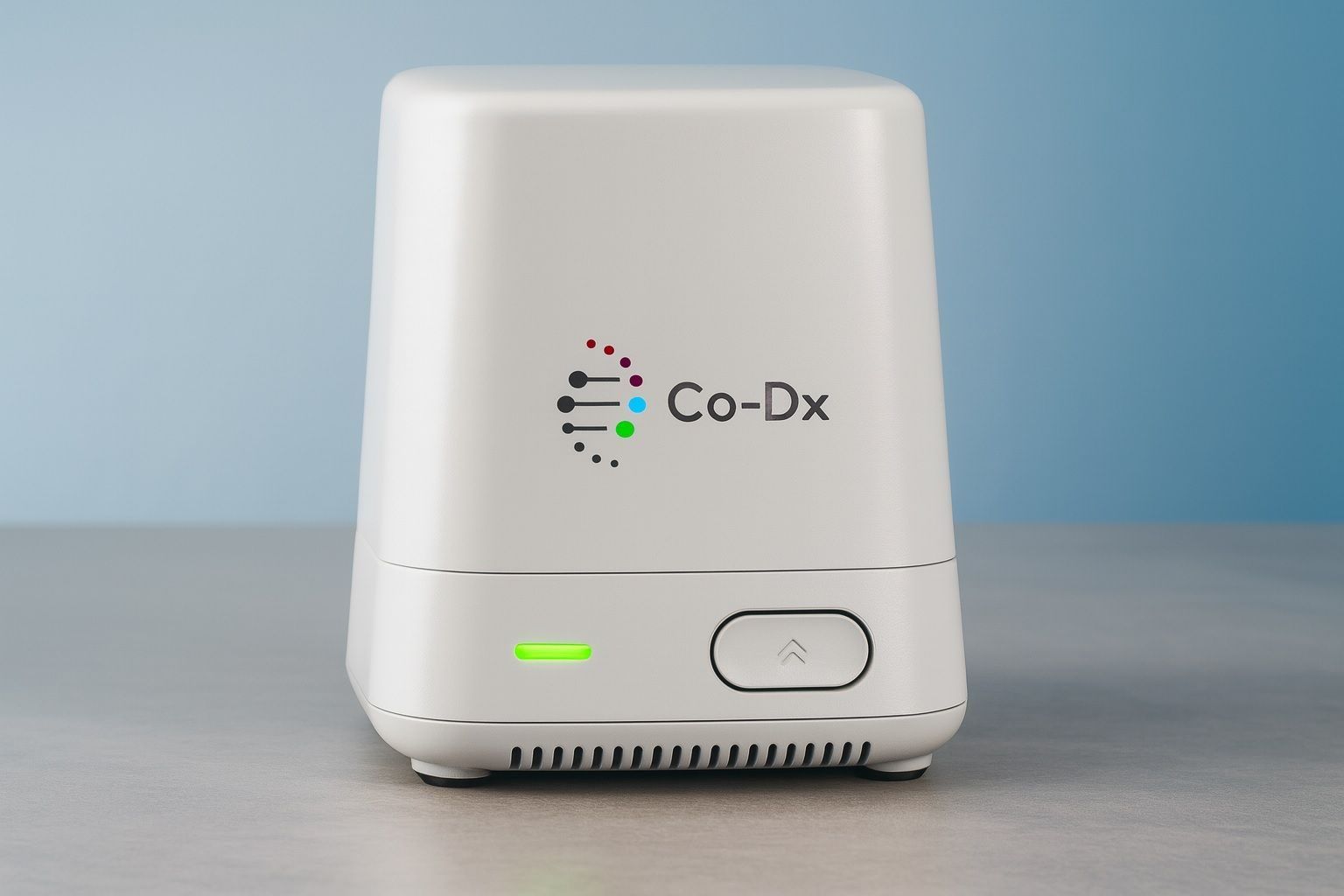
The Salt Lake City company said the work would be done with CoSara Diagnostics, its Indian joint venture with Ambalal Sarabhai Enterprises, and was aimed at possible international deployment if the outbreak expands or local support is needed in Democratic Republic of Congo and Uganda. Its Co-Dx PCR platform and related tests remain subject to regulatory review and are not yet for sale, the company said.
The stock was recently at $9.03, up about 78%, after touching an intraday high of $10.76. More than 46.5 million shares had changed hands, a large move for a company with a market value of about $20.3 million.
The timing explains the market’s reaction. WHO Director-General Tedros Adhanom Ghebreyesus said on Monday the outbreak was spreading rapidly, with more than 900 suspected cases and 220 suspected deaths, and warned responders were “playing catch-up” as the epidemic was “outpacing us.” He also said there were no approved vaccines or therapeutics for Bundibugyo virus. World Health Organization
The European Centre for Disease Prevention and Control said its page was updated on Tuesday at 17:40 and listed 105 confirmed cases and 10 confirmed deaths in DRC, alongside 906 suspected cases and 223 suspected deaths. Uganda had reported seven confirmed cases, including one death, ECDC said.
Chief Executive Dwight Egan said Co-Diagnostics could work with CoSara to provide “accurate, reliable PCR diagnostics” in response to emerging health crises. The company said it is evaluating both Bundibugyo-specific and pan-Ebola assay configurations, the latter designed to detect multiple ebolavirus species. Investors | Co-Diagnostics, Inc.
The rally also follows fresh financing. A May 21 filing showed Co-Diagnostics entered a $3.0 million private placement, a direct securities sale to selected investors, with common stock, pre-funded warrants and warrants, which are rights to buy shares later. The warrants carry an exercise price of $1.571 a share and are exercisable immediately, the filing showed.
That financing matters because the balance sheet is thin. Co-Diagnostics reported first-quarter product revenue of $145,954, a net loss of $9.14 million and cash and equivalents of $8.23 million at March 31. Operating cash use was $7.85 million in the quarter.
The company’s May 10-Q also said management had concluded there was “substantial doubt” about its ability to continue as a going concern for 12 months after the financial statements were issued. In plain terms, that means the company says it may need more money or a better operating result to meet obligations over the next year.
Competition is not light. Co-Diagnostics says it competes in diagnostic testing and point-of-care testing with larger names including Roche Diagnostics, Cepheid and Abbott Laboratories, firms with broader customer bases and deeper resources.
But the trade can turn fast. The assay strategy is still development-stage, regulatory clearance is not confirmed, and outbreak demand could change if public-health teams contain the virus or if larger diagnostics suppliers move faster. Financing risk also remains: new shares or warrant exercises can dilute existing holders, even when they bring in needed cash.
For now, traders are treating Co-Diagnostics as a small-cap outbreak-response name rather than an earnings story. The next checks are less glamorous: public-health case counts, any regulatory update on the assay, and whether the company can turn a scientific push into orders without raising more capital on harsh terms.