Paris, June 6, 2026, 21:01 (CEST)
- STMicroelectronics closed at 62.82 euros in Paris on Friday, giving up gains from earlier in the week.
- The stock finished the week up 6.6%, as a higher data-centre revenue target helped boost shares.
- The week for investors is set to be driven by the ECB call, worries around oil-driven inflation, and questions over Europe’s AI rally holding up.
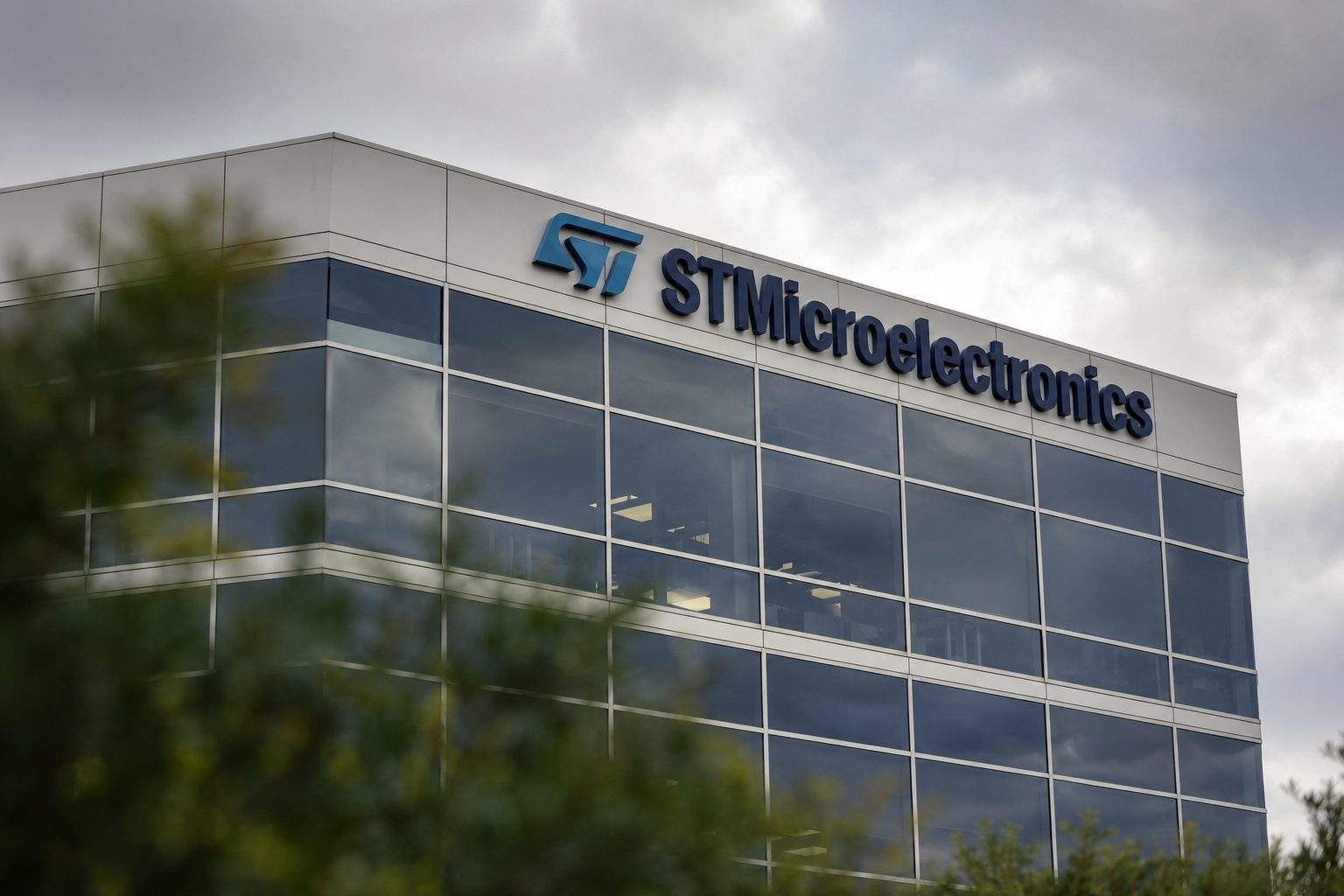
STMicroelectronics ended the week up, even after a steep drop on Friday. The chipmaker’s shares had jumped earlier this week when it raised its data-centre targets, pushing the stock to prices not seen since the dot-com years. Investors locked in profits on the move.
Euronext Paris shares last traded at 62.82 euros at 17:37 on Friday before markets closed for the weekend, with 3.55 million shares changing hands for a turnover of 225.6 million euros, according to Euronext data.
STMicro is drawing attention now as one of Europe’s cleaner public ways to get exposure to the AI infrastructure theme, not through GPU chips, but with products for servers, power, and optical links inside data centers. The stock climbed from 58.95 euros on May 29 to 62.82 euros by June 5, gaining about 6.6% in a week, despite falling 5.85% on Friday.
STMicro cut fresh guidance Tuesday. The company now sees data-centre revenue around $1 billion for 2026, a jump from “nicely above $500 million.” STMicro also said 2027 revenue could double from there if demand and customer activity stay at current levels. ST News
The shares surged as much as 15.1% on Tuesday, hitting 68.26 euros, the highest level since September 2000. Infineon and Schneider Electric traded higher too as AI stocks rallied. “Semiconductors are probably no longer merely a traditional technology sector. They are gradually becoming the central infrastructure of tomorrow’s global economy,” said John Plassard, partner and head of investment strategy at Cité Gestion. Reuters
STOXX 600 slipped 0.3% on Friday and finished the week down 0.5%. Tech shares in Europe were hit harder, off 2.9% after a two-month run that added about 30%. Infineon and Aixtron dropped, Reuters said, after U.S. chipmaker Broadcom cut guidance and weighed on the chip sector worldwide.
STMicro’s next move may ride on plant capacity. CEO Jean-Marc Chery said the group will probably decide by year-end on whether to expand at its Crolles, France, site as demand picks up for silicon photonics—tech that uses light to speed up data between chips and servers. “This is most likely what we will do,” Chery said about the possible expansion. Reuters
STMicro executive Remi El-Ouazzane made a direct pitch. “We are going to be the growth story of that market,” he said. STMicro started this year with a 5% market share, with 30% “really in sight,” according to El-Ouazzane. He credited the company’s push to its strategic partnership with Amazon Web Services. Reuters
ECB rate move in focus for coming week. The European Central Bank is seen hiking rates next week, as a Reuters poll showed that 74 out of 80 economists look for a 25-basis-point jump to 2.25% on June 11. A basis point equals one-hundredth of a percentage point.
STMicro shares often react to moves in bond yields and discount rates, with chip stocks generally seen as sensitive to this kind of change. Bas van Geffen, a senior macro strategist at Rabobank, said the ECB wants to avoid underestimating inflation again. He said the cost to credibility from keeping rates unchanged could outweigh the risks of a hike.
The rally faces risks if AI infrastructure orders drop off, subcontractors fall behind on packaging, or if higher rates push investors out of pricey growth names. STMicro flagged in its release that demand could fall short of estimates and that issues with third-party parts or subcontractors might impact new program launches.
STMicro shares got a pass from the market for now. The chipmaker covers automotive, analog, sensors, power, and microcontrollers, according to Reuters data. Last week, trading signaled that investors are watching how much of that product mix could move into AI data-centre demand.