New York, June 8, 2026, 08:02 (EDT)
- SUNation and Suniva reached a reverse-merger deal. The new company will use the Suniva name but will stay listed on Nasdaq as SUNation.
- SUNation traded at $2.995 in the premarket at 08:02 EDT, a 165% jump from Friday’s $1.13 finish.
- SUNation said in another SEC filing it’s selling 2.39 million shares at $1.13 each, raising about $2.7 million in gross proceeds.
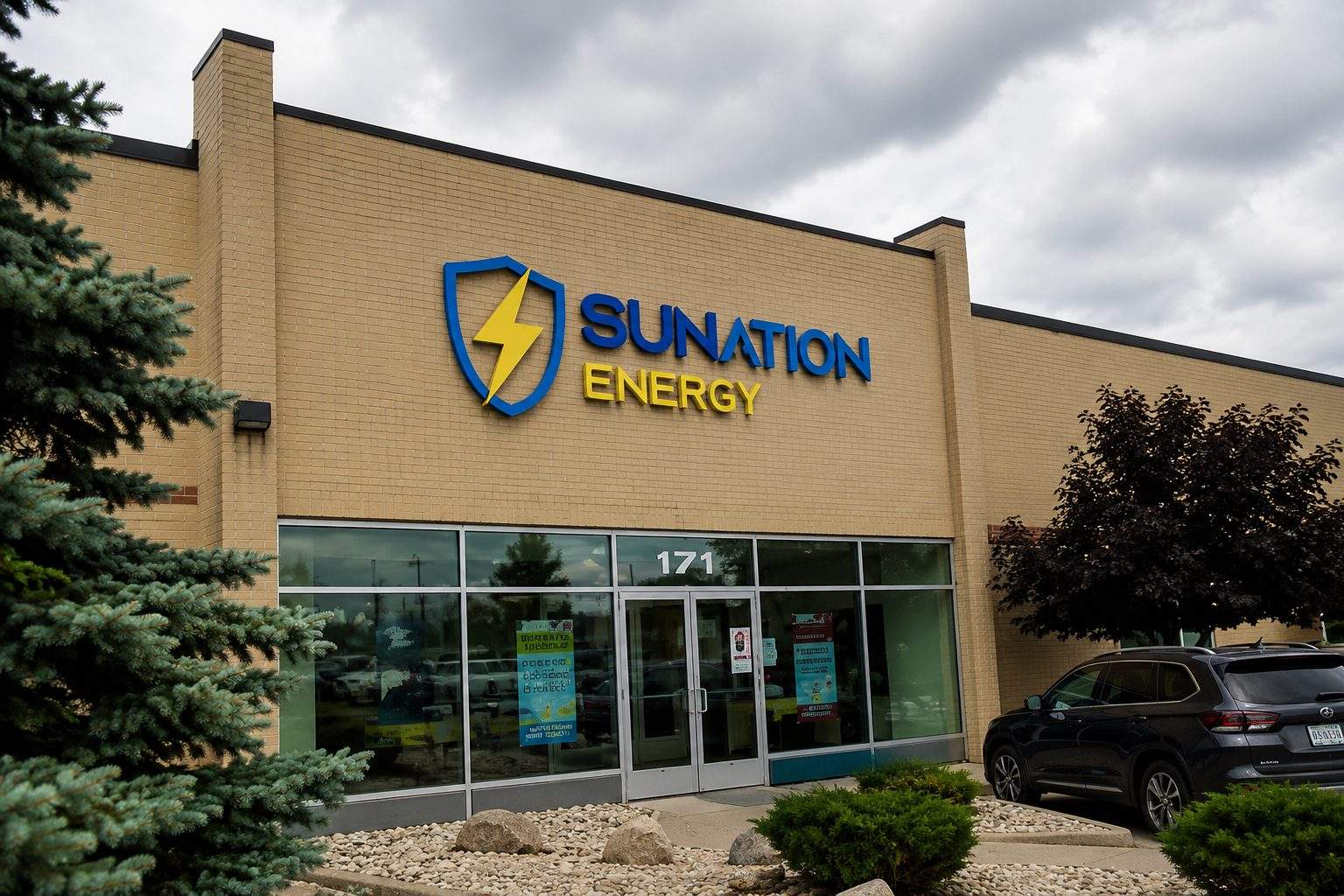
SUNation Energy shares jumped more than 100% premarket on Monday. The solar installer said it plans to merge with Suniva, a private U.S. solar-cell maker, in a reverse merger that would move SUNation’s public listing focus to domestic manufacturing.
The stock traded at $2.995 in premarket, up from its $1.13 close Friday on Nasdaq. Premarket volumes are often light, and price swings can be big. Shares were up 165% according to MarketScreener at 08:02 EDT.
SUNation is trying to pitch a new image after a rough first quarter in residential solar. Sales dropped 43.1% to $7.2 million, with net loss deepening to $4.1 million and cash down to $1.7 million at March 31 from $7.2 million at the end of last year, the company said last month.
Suniva will be the name of the new company after SUNation and Suniva merge, the companies said. The group will stay on the Nasdaq Capital Market. The deal is a reverse merger, letting a private firm go public through a merger with an already public company.
Suniva shareholders are set to own around 98.2% of the combined company after the merger. SUNation holders before the deal will take about 1.8%, but that could change based on SUNation’s net cash at closing.
SUNation CEO Scott Maskin called the proposed deal the “next logical step.” Suniva CEO Tony Etnyre said, “America’s energy future must be built here at home.” That language plays to a market looking for U.S.-made solar parts and meeting tax-credit rules. SUNation Energy, Inc.
Suniva has a 1-gigawatt cell plant in Georgia. The company wants to build another 4.5 gigawatts in Laurens County, South Carolina. The governor’s office in South Carolina said in April the project is a $350 million investment adding 564 jobs.
The deal would place the company in direct competition with Qcells, T1 Energy, and Canadian Solar for domestic cell capacity. In April, Reuters said the U.S. had about 3.2 GW of solar-cell capacity compared with 60 GW for modules, so most cells used by U.S. module makers are still shipped in from abroad.
Suniva President Matt Card told Reuters there is “a dearth” of solar cells in the U.S. He said most of the South Carolina plant’s supply is already pre-sold through 2030, but did not share more. Reuters
SUNation is still dealing with tough conditions in its legacy business. Residential demand for Q1 dropped after Section 25D, a federal solar tax credit for homeowners, ended. Weather also dragged on installs in New York and Hawaii. Commercial revenue climbed 15% and helped cushion some of the residential weakness.
An SEC Form 8-K filing revealed SUNation signed a securities purchase agreement on June 7 to sell 2.39 million shares for $2.7 million in gross proceeds. The filing said the company expected to close the deal around June 9. SUNation plans to use the net proceeds for working capital and general corporate purposes.
There are big risks in play. The merger is set for the back half of 2026, but SUNation and Suniva shareholders still have to sign off. There’s also SEC approval needed for a Form S-4, plus Nasdaq needs to clear the listing. The SEC filing notes the deal can get called off if it isn’t wrapped up by Jan. 30, 2027, though there’s a possible 60-day extension.
SUNation holders face a simple trade: the chance to own a piece of a homegrown solar manufacturing play, but with big dilution and real execution risk. Premarket buyers have a lot to weigh.