
NEW YORK, June 20, 2026, 15:02 EDT
• Seagate shares finished at $1,070.23 on June 18, rising 0.39% for the day and up almost 15% since the previous Friday’s close at $931.04. Investing.com
• U.S. equity markets didn’t open Friday for Juneteenth. Nasdaq’s calendar puts June 19, 2026, as another market holiday. NASDAQ Trader
• AI storage demand and a lack of hard disk drives fueled the week’s rally, alongside new Wall Street target bumps for Seagate and Western Digital.
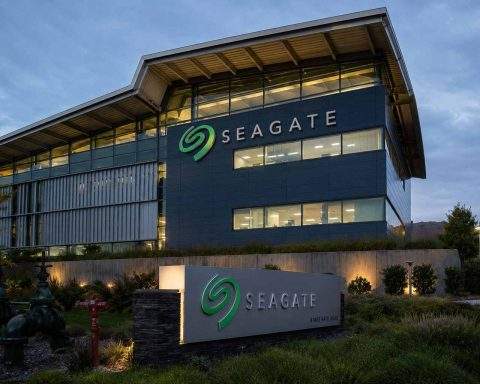
Seagate Technology Holdings plc (STX.O) starts the week trading close to its 52-week high, coming off four strong sessions. Investors remain willing to pay a premium for the stock, which some see as one of the steadier storage names tied to AI infrastructure.
The shift is clear now that the rally is stretching past the latest quarter’s earnings. Investors are bidding up hard disk drives, or HDDs, viewing them less as aging PC hardware and more as tough-to-get AI gear. HDDs still cost less than flash memory for big data-center storage.
Shares on the Nasdaq ended Thursday at $1,070.23. The stock hit $1,145 during the session, right at the top of its 52-week band. Volume for the day was 8.42 million, outpacing several sessions from earlier in June. The Nasdaq Composite was up 1.91% on the day.
Shares moved after Morgan Stanley’s Erik Woodring boosted Seagate’s target to $1,035 from $767 last week and upped Western Digital to $650 from $488. He pointed to a growing HDD shortage as AI inferencing and cloud data-center demand pick up, according to MarketWatch. That report also quoted J.P. Morgan’s Samik Chatterjee, who expects steady HDD demand in data centers.
Storage stocks joined the move. Reuters wrote after Seagate’s April forecast that Western Digital, Micron Technology and SanDisk shares also gained, as investors saw Seagate’s guidance as a signal that AI money was still supporting hardware demand. Reuters cited Seagate CEO Dave Mosley, who said AI was driving up demand for storage in video and other cloud content.
Seagate reported its fiscal third-quarter results with revenue at $3.11 billion, GAAP gross margin of 46.5%, non-GAAP EPS of $4.10, and free cash flow of $953 million for the quarter ended April 3. The company expects fourth-quarter revenue of $3.45 billion, give or take $100 million. CEO Mosley said Seagate is entering a “new era of structural growth” as “AI applications amplify data creation.” Seagate Investors
Traders shrugged off fresh headlines about insider selling. Two days ago, Barron’s said Mosley unloaded 1,768.25 shares at $880.19, while CFO Gianluca Romano sold 903.25 shares after RSUs vested. Barron’s called the sales routine “sell-to-cover” for taxes, not a sign they’re cashing out. Barron’s
Seagate isn’t set for much company news this week, but the stock is still in focus. Micron reports on June 24, and investors are watching, Reuters reported, to judge if the AI-driven rally keeps earnings backing. For Seagate holders, the Micron read-through is about pricing—if memory and storage supply stay tight, the market may still pay up for capacity.
Seagate set June 24 as the record date for its $0.74 quarterly dividend, which is due July 7. But with shares at current levels, the dividend isn’t moving the stock. Instead, the story is contract visibility, pricing power, and a view that cloud players need more big storage than vendors can bring online fast.
But as Seagate’s stock climbed, so did the risks. WSJ market data put the price above both the median analyst target at $951.50 and the average at $903.55. That shrinks the safety net on misses. A weaker quarter, softer AI demand, bad pricing, or faster supply could all hit harder.
The trade comes down to this. Seagate’s valuation looks less like a hardware name and more like a key supplier for data centers. If supply stays tight, bulls might keep coming. But if that changes and the cycle opens up, shares trading well above most analyst targets could see a quick turn.
Related articles: NASDAQ:STX