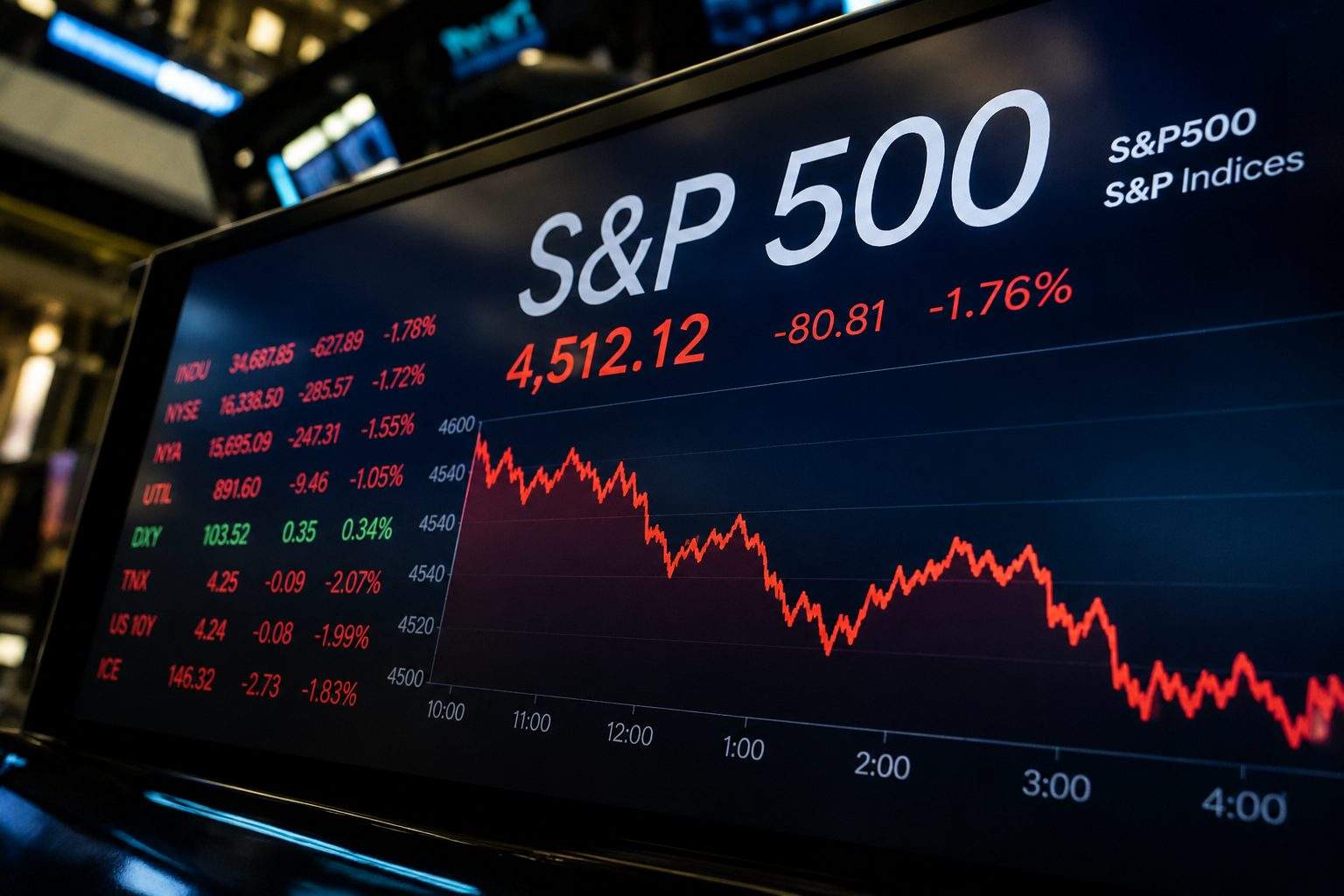
NEW YORK, July 16, 2026, 15:28 EDT — U.S. cash markets opened with the S&P 500 declining after tepid headline retail sales figures, as expectations for a possible Federal Reserve rate hike in September persisted.
- U.S. retail sales increased by 0.2% in June, while sales excluding gasoline climbed 0.7%.
- Fed funds futures showed a 12% probability of a rate hike in July and a 53% chance for September.
- The S&P 500 slipped roughly 0.5% in late session trading.
U.S. retail sales growth lost momentum in June, with lower gasoline prices offsetting stronger consumer spending in other categories. The mixed report maintains the possibility of a Federal Reserve rate hike in September.
Sales excluding gasoline increased by 0.7%, outpacing the overall headline advance by more than three times. According to Census series calculations, the difference amounted to 0.50 percentage point, marking the largest gap since August 2022.
That is the key point for investors. The composition provided limited backing for expectations of lower short-term rates.
This is evident in the monthly comparison:
| Measure | June, m/m | May, m/m | Investor read |
|---|---|---|---|
| Total retail and food services | +0.2% | +1.0% revised | Growth slowed |
| Excluding gasoline | +0.7% | +0.9% | Broad spending persisted |
| Control group | +0.5% | +0.8% revised | Backs up GDP strength |
| Gasoline stations | -5.3% | +2.6% | Prices weighed on sales |
These figures represent preliminary advance estimates. They have been seasonally adjusted, but inflation adjustments have not been made.
Receipts at gasoline stations dropped 5.3%, following a 2.6% increase in May. The control group tied to GDP was up 0.5%.
CME Group NASDAQ:CME futures indicate a 12% probability of a July rate hike, down from 45% at the beginning of the week. The likelihood for September is at 53%.
Softer June inflation was the primary cause behind much of this week’s short-term market repricing. Meanwhile, retail sales indicated the Federal Reserve has room to hold steady, as there is no sign of a sudden demand drop.
The two-year Treasury yield hovered around 4.17%, rising by roughly two basis points. The 10-year yield stayed close to 4.58%.
Equities sent mixed signals. The S&P 500 dipped 0.5%, and the Nasdaq declined by 1.2% amid weakness in chip stocks. The Dow Jones Industrial Average slipped 0.35%.
“This kind of data is unlikely to influence the Fed’s decision,” said Ellen Zentner, chief economic strategist at Morgan Stanley NYSE:MS Wealth Management. She noted the report continued to reflect economic strength. Reuters
Dallas Federal Reserve President Lorie Logan supported the case for “modestly higher” interest rates, pointing to steady consumer spending and ongoing inflation pressures. Reuters
Risks are balanced in both directions. A resurgence in fuel inflation may increase rate pressures. Initial online sales promotions might shift consumer spending to earlier in the season, potentially softening July numbers.
The Federal Reserve convenes on July 28-29, with the advance reading on second-quarter GDP set for release July 30. For the time being, the weak headline appears to be deceptive.