NEW YORK, July 17, 2026, 09:16 EDT — U.S. premarket
- Buffett holds a 13.2% economic interest in Berkshire, which accounts for 29.7% of its voting rights.
- Dividing the disposal evenly across eight years would result in an average of 35.3 million Class B-equivalent shares sold each year.
- Switching Class A shares to Class B results in a loss of 85% of their voting power.
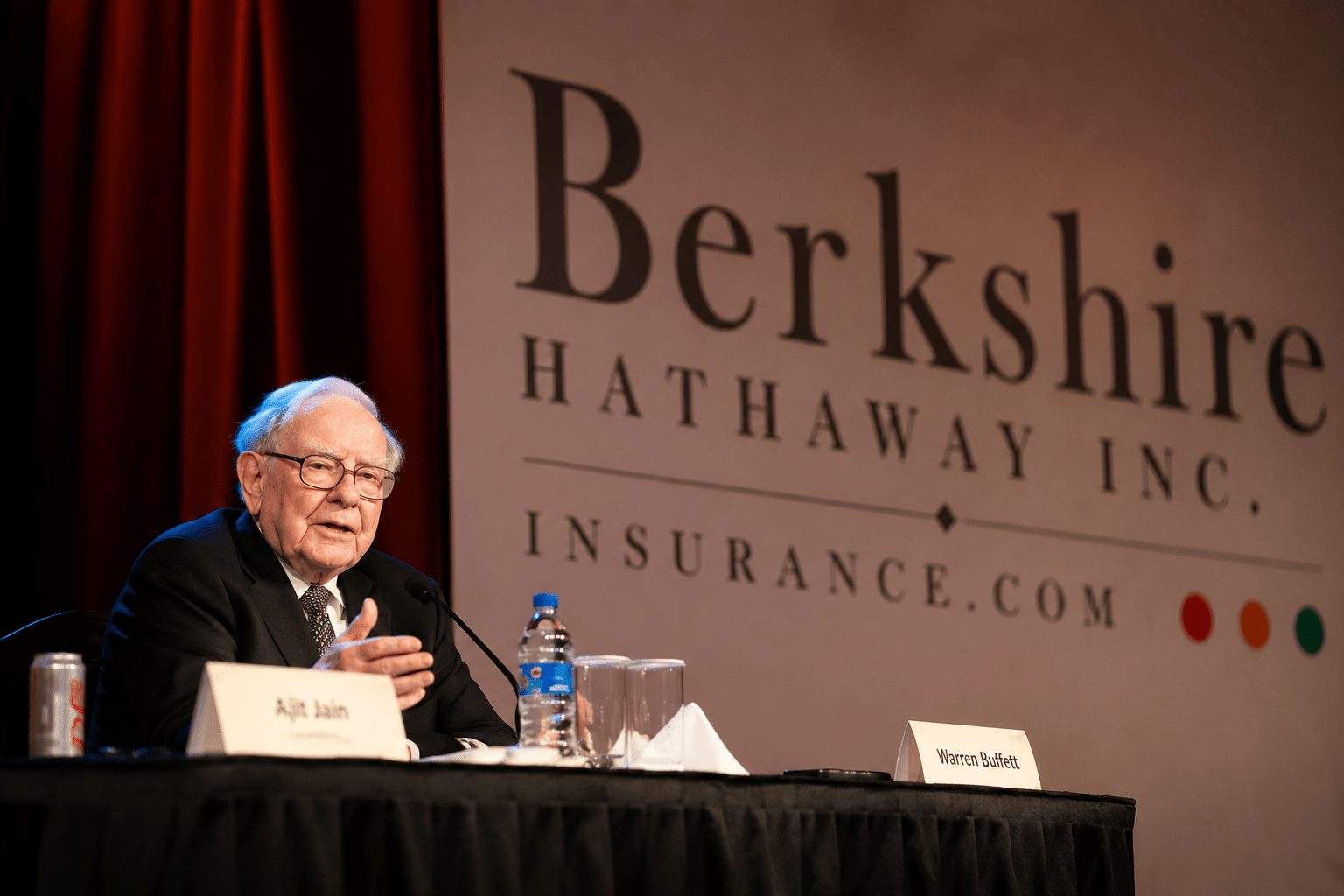
Warren Buffett’s scheduled eight-year share sale will hasten Berkshire Hathaway Inc. (NYSE:BRK.A; NYSE:BRK.B) toward governance after his tenure. For investors, the plan’s timeline outweighs Buffett’s personal musings on fortune.
Buffett aims to sell all of his remaining Berkshire shares by December 31, 2034. His most recent filing indicates he holds a 13.2% economic stake and 29.7% of voting rights. The disparity highlights the plan as a key governance issue.
He retains ownership of 188,290 Class A shares and 1,162 Class B shares. In terms of economic value, this matches 282.4 million B shares. A uniform 2027-2034 distribution needs 35.3 million per year, almost triple the amount of Tuesday’s gift.
| Measure | Latest disclosed | Even 2027-2034 pace |
|---|---|---|
| Economic interest | 13.2% | Approximately 1.65 percentage points per year |
| Class B-equivalent shares | 282.4 million | 35.3 million each year |
| July 2026 donation | 12.0 million B shares | Mean annual pace is 2.94 times greater |
| Votes on one A-equivalent | 10,000 before conversion | 1,500 after conversion |
Initial reporter estimate. This assumes equal transfers and a constant share count. Berkshire indicated the grants are expected to rise each year, which could result in an irregular pattern.
The impact on voting rights is more significant than on economic interests. One A share, prior to conversion, holds 10,000 votes and can be exchanged for 1,500 B shares. As a result, the conversion eliminates 85% of the voting power attached to those shares.
Existing shareholders remain unaffected by dilution. Buffett is transferring already outstanding stock rather than issuing new shares or using Berkshire cash. Foundations might sell in the future, which could raise the tradable supply.
Berkshire B shares were set to open 1.0% higher at $493.12 before markets opened on Friday. As of Thursday, A shares had declined about 2% for the year. The S&P 500 had gained approximately 11%, according to Barron’s.
The delay has turned focus to Greg Abel’s approach to capital allocation. Abel took over as chief executive on January 1, with Buffett continuing as chairman. Buffett told CNBC his trust in Abel was “100 percent.” Securities and Exchange Commission
The interview indicated Buffett continues to influence key decisions. He stated he was the one who started Berkshire’s investment in Alphabet Inc. (NASDAQ:GOOG; NASDAQ:GOOGL). The holding topped $31 billion, though Abel held the ultimate authority.
Buffett described his wealth as partly the result of chance. “Out of eight billion people, I may be one of the 10 luckiest in the world,” he said. He credited his early start in finance to his father’s work in brokerage. Versant Press Room
Warren Buffett’s most recent donation of 12 million shares was distributed to four family foundations. The Susan Thompson Buffett Foundation was allocated nine million shares, while three foundations overseen by his children each received one million shares.
The Gates Foundation did not get any funds, breaking a tradition that lasted for two decades. Buffett explained the decision was largely due to his children now being prepared to handle the distribution of his wealth. He did not withdraw or deny his previous contributions.
Berkshire’s own purchases may offset some of the impact. Preliminary estimate: Barron’s estimates second-quarter share buybacks at between $5 billion and $11 billion. In the first quarter, Berkshire repurchased just $235 million. Official numbers will be released in the upcoming quarterly report.
The balance sheet offers Abel flexibility. As of March 31, Berkshire’s cash, equivalents and Treasury bills totaled $397.4 billion. That capital could be used to absorb share supply, finance acquisitions, or be left unused.
Risks: Buffett’s timeline might not follow a set pattern, and foundations could still hold shares. Share buybacks might counteract share supply, while valuation could be largely affected by insurance losses or changes in equity.
The next key update will arrive with second-quarter results, anticipated in early August. These figures will indicate if Abel is reducing the share count as Buffett gradually hands over control. This detail is more significant than the luck narrative.